Dolphin, Turtles, and Seabirds: The Wildlife You’ll See Fishing in Miami
A typical day on the Double Threat isn't just about what's in the cooler at the end of the trip. Between the bites, we see plenty of wildlife working alongside the fish. Many of these species actually help us find fish in addition to putting on a show.
Bottlenose Dolphins
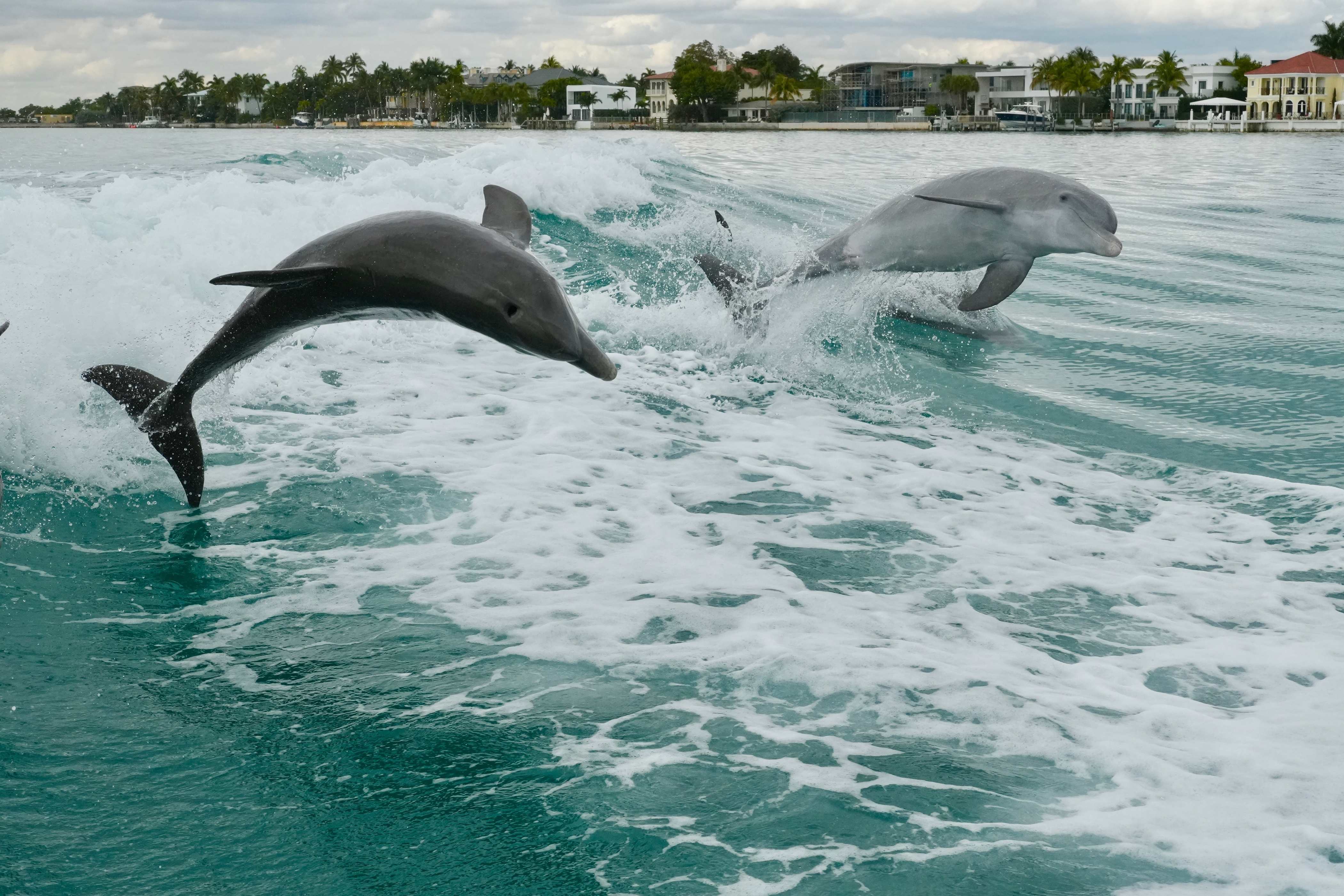
The dolphin we see most often offshore Miami is the Atlantic bottlenose. They run in pods along the reef edge and in the Gulf Stream, and they will surf the wake of just about any boat moving at trolling speed. Spring and summer are slightly more consistent for sightings because the bait is moving along the coast, but bottlenose are around year-round. There isn't really an off season for seeing them.
We don't actively try to fish near pods of bottlenose. When they're hunting, they're working the same baitfish we want, and they're more efficient than we are. The honest truth is that a feeding pod of dolphins usually shuts down a bite for as long as they're around. We give them space and look elsewhere.
Risso's dolphins show up occasionally on longer trips out in deeper water. They are larger, scarred, and grayer than bottlenose.
The Most Useful Wildlife Out There
Birds are still better than most electronics. We watch them as closely as we watch the sounder.
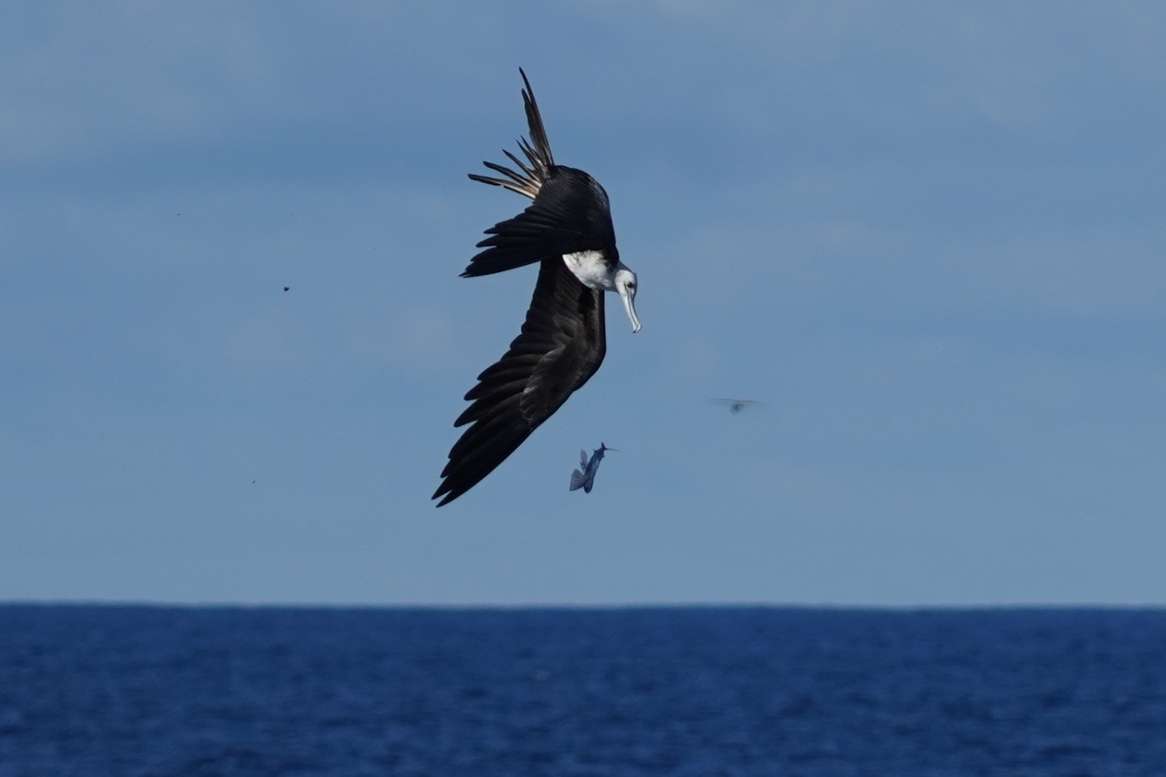
Frigate birds are the offshore bird. When a frigate is high and lazy, it's not showing us much. When a frigate drops down and starts working low and tight, there is something feeding underneath it — usually mahi or tuna pushing flying fish to the surface. We will run a long way to a working frigate. We do not bother running to one that is just cruising. This is one of the most interesting dynamics we encounter because frigate birds can't actually land on the water so they rely entirely on predator-bait interaction to push bait fish to the surface and make them jump out of the water where they are easy prey.
In addition to frigate birds, brown pelicans and seagulls can be helpful for finding bait and schools of fish. Pelicans dive on baitfish closer to the beach and on the reef edge. They're a good sign that bait is around. Terns and gulls working low and erratically usually means small fish on bait — sometimes that's bigger fish underneath, sometimes it's just smaller pelagics like skipjack tuna or bonita. Not every bird is useful. A bird sitting on the water is resting, not feeding. A high flock moving in a straight line is traveling, not working bait. The trick is learning which birds matter and which don't, and that's something the mate on the boat is doing constantly while you're fishing.
Sea Turtles
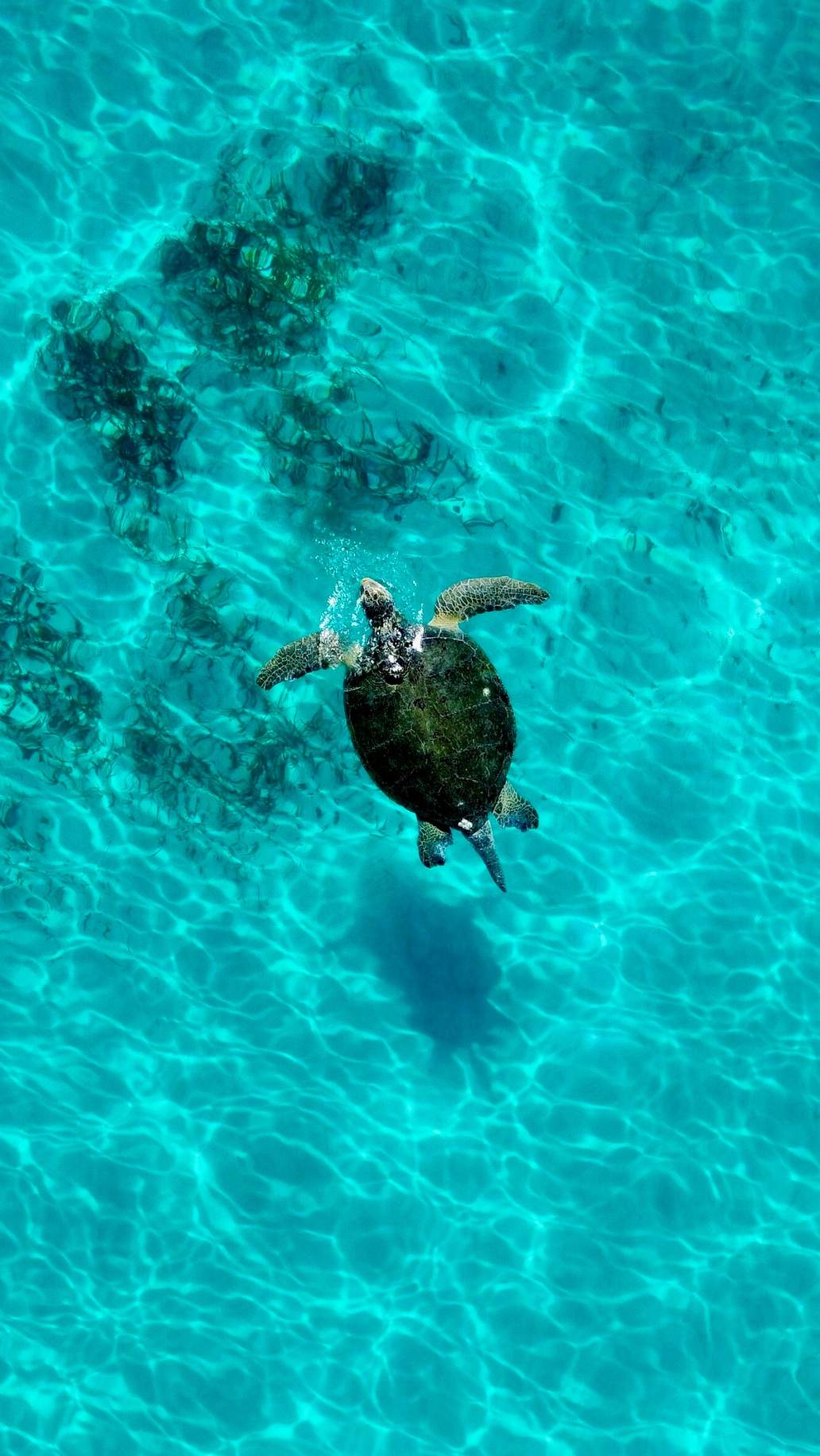
Loggerhead, green, and hawksbill turtles all show up offshore Miami. They're mostly just cool to see — we don't really use them as a signal for finding fish. Loggerheads sometimes eat man o' wars, which from a distance looks like a turtle trying to eat a balloon. That one always gets pointed out on the boat.
Leatherbacks are the exception. They're the biggest of the sea turtles, rare to see, and they cruise open water rather than hanging close to the reef edge. When we do spot one, we look closely because cobia sometimes follow leatherbacks the same way they follow stingrays and whale sharks. A live bait pitched in front of a leatherback can turn a wildlife sighting into a fish in the box. It doesn't happen often, but it's the kind of thing that's worth being ready for.
A Great View from the Double Threat
Most of our spotting happens from the tower on the 43-foot Hatteras. Elevation makes a real difference — we can pick up working birds, weed lines, and color changes a mile or more out. On a sight-fishing day for mahi during the summer, you'll typically have a captain in the tower with binoculars while a mate stands ready with live bait on a spinning rod. If you want to see how the boat is rigged for this, take a look at the boat page.
‹ Back






Comments