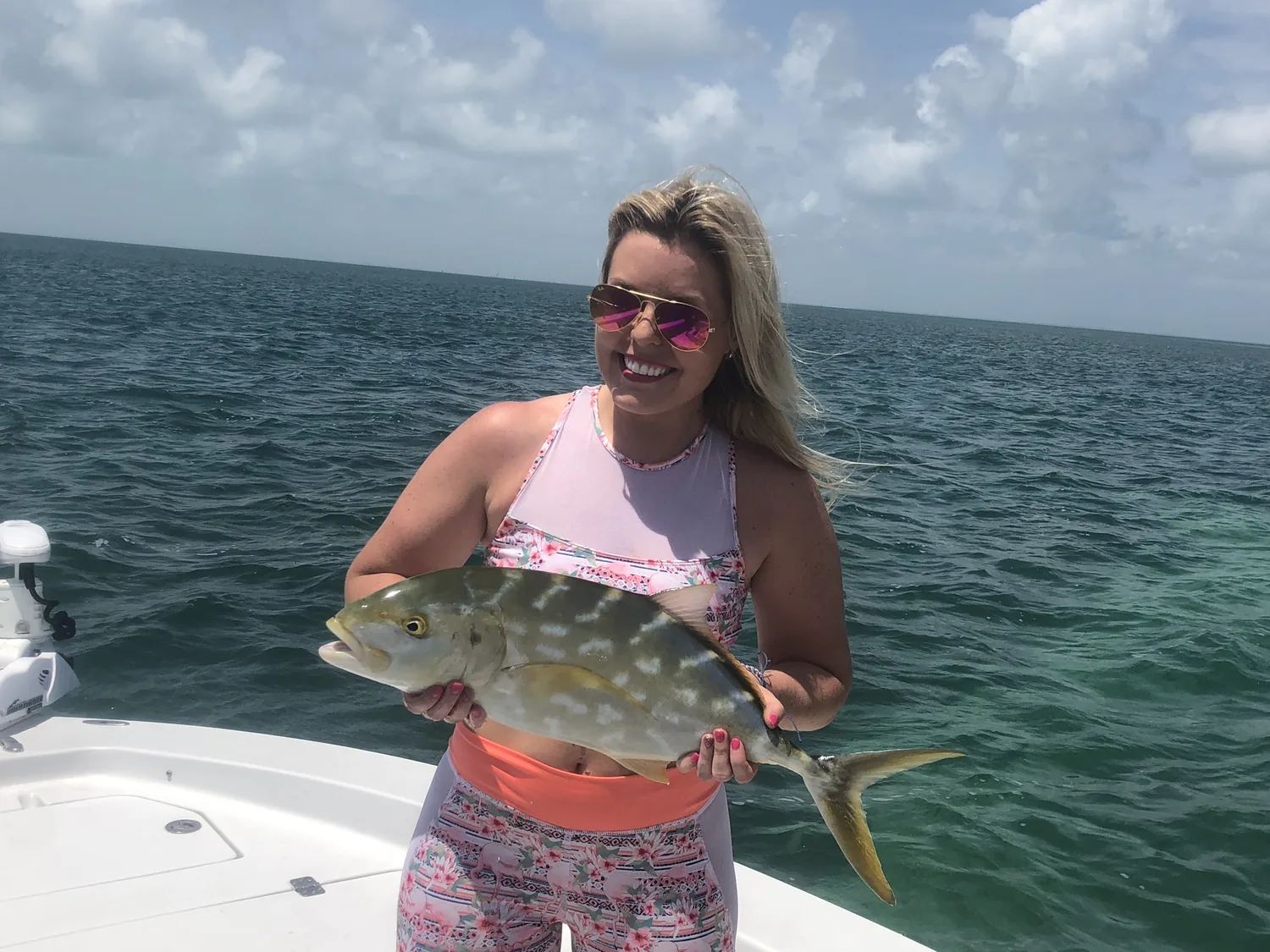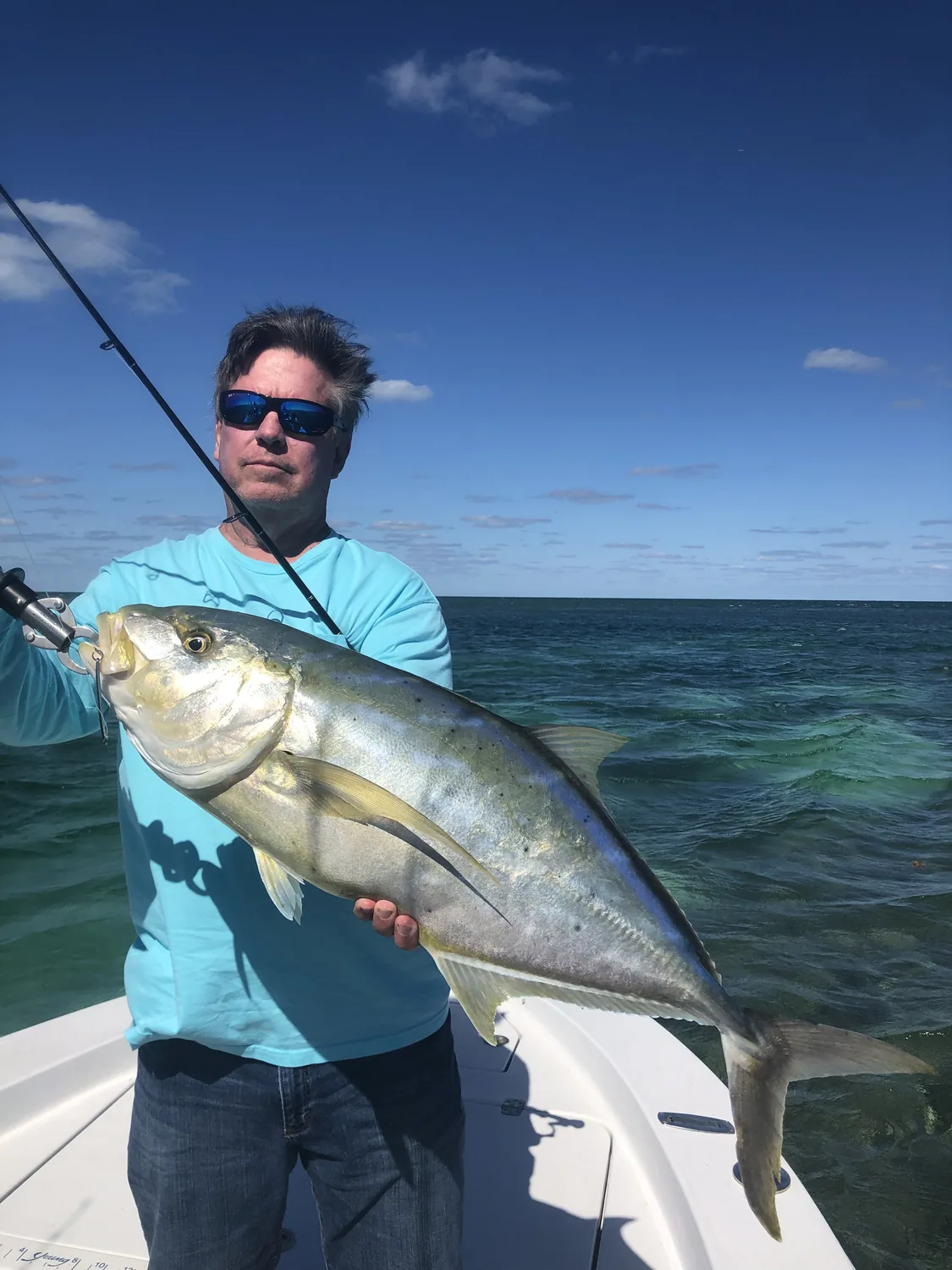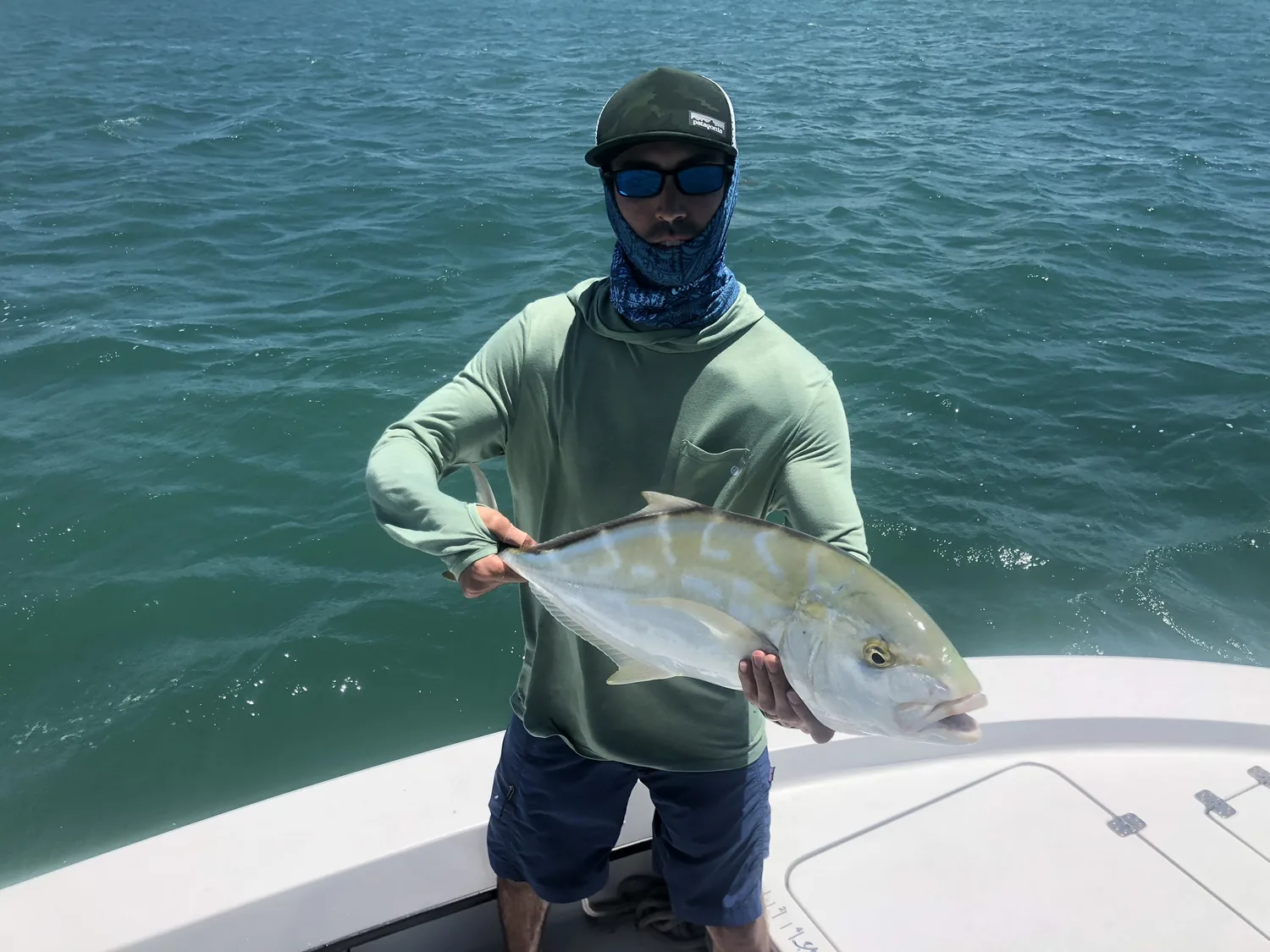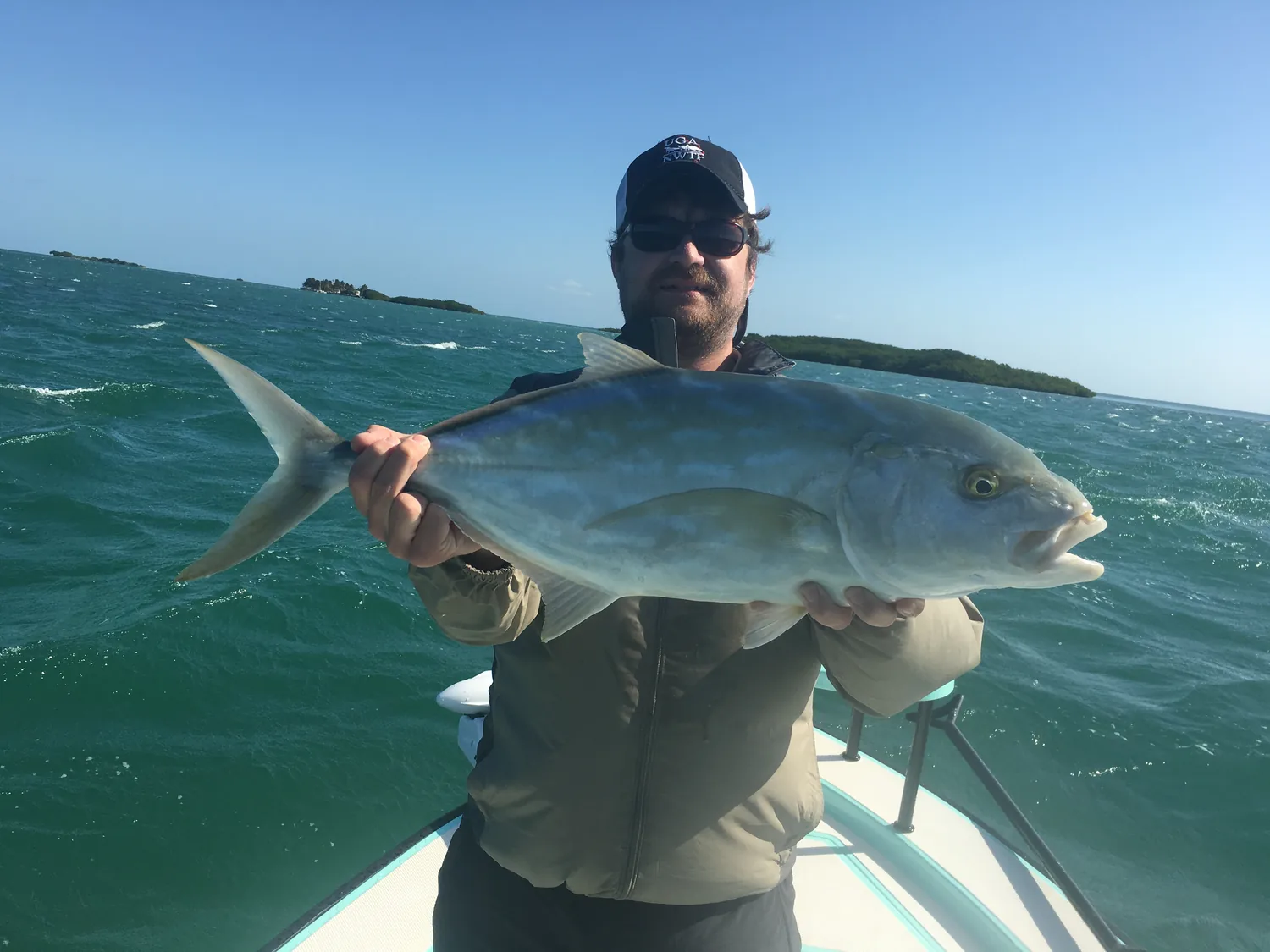
The yellow jack (Carangoides bartholomaei) is a nearshore reef fish that earns its name as it ages, when the flanks and fins take on a bright yellow wash over a silver body. Younger fish show a paler green-blue back with faint vertical bands that fade as they grow. It belongs to the jack family, and like its relatives it is a fast, schooling predator that runs down smaller baitfish. In the western Atlantic it ranges from Massachusetts to Brazil, including Bermuda, the Bahamas, and the Caribbean, holding around reef edges and current-swept structure everywhere in between.
Where We Catch Yellow Jacks in Miami
Off Miami the yellow jack shows up just about everywhere clean water meets structure. They range from the finger channels and the eastern side of Biscayne Bay, across the patch reefs, and out onto the drop-off. In the bay they hold on the cleaner-water side, in the spots where a little current runs, and they stack up on the finger channels, the bay wrecks, and the shipwrecks. We catch them as shallow as three feet and as deep as around a hundred. They travel in schools, and in the finger channels they mix in with mutton snapper, though the jacks tend to ride higher in the water column than the muttons when the water gets deep.
How to Catch Yellow Jacks
We fish light tackle for them on purpose. Yellow jacks have sharp eyesight and shy off heavy leader, so dropping down gets more bites, and a good one on light gear is a lot more fun to catch. Most of ours come out of the finger channels on shrimp-tipped bucktails and live pilchards. They will also eat jigs, chunk bait, and plenty else, and they come up in a chum slick fairly reliably. Live chum brings them up even better. We pick up a lot of them working the patch reefs or sitting on a yellowtail slick, and spearfishermen shoot them when the chance comes.
Size and Fight
A typical yellow jack runs two to four pounds, and a genuinely big one pushes fifteen. They pull hard for their size, and the thing that sets them apart from the other jacks is that they jump. Jack crevalle and the rest of the family do not do much of that, so on light tackle a leaping yellow jack turns into one of the better fights you will find in that weight class.
Are Yellow Jacks Good to Eat?
Yellow jacks are one of the best-eating jacks in our water. We keep the better fish and release the smaller ones. The meat works well as sashimi or pan-seared, and it holds its own next to the snapper that come off the same structure.
Sources: Range and identification from FishBase and FWC. Maximum size roughly 40 inches and 31 pounds, per FishBase.