
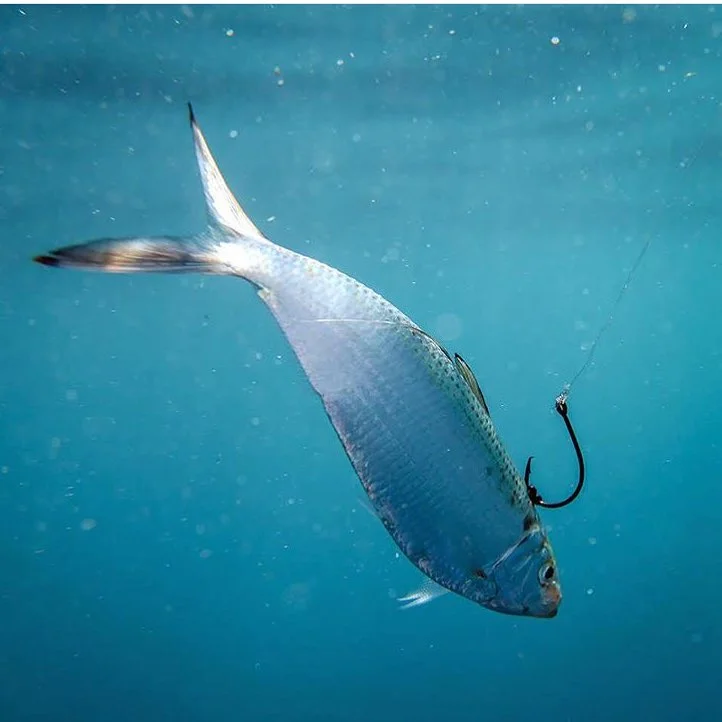
Threadfin herring are the most popular kite bait on tournament boats in South Florida. They are shiny, fast, and frisky. A big threadfin is one of the best overall kite baits you can fly. They are also the delicate and bougie counterpart to the goggle eye. They are harder to keep alive and easier to ruin with one careless touch, but they are worth the trouble.
Where Threadfins Live
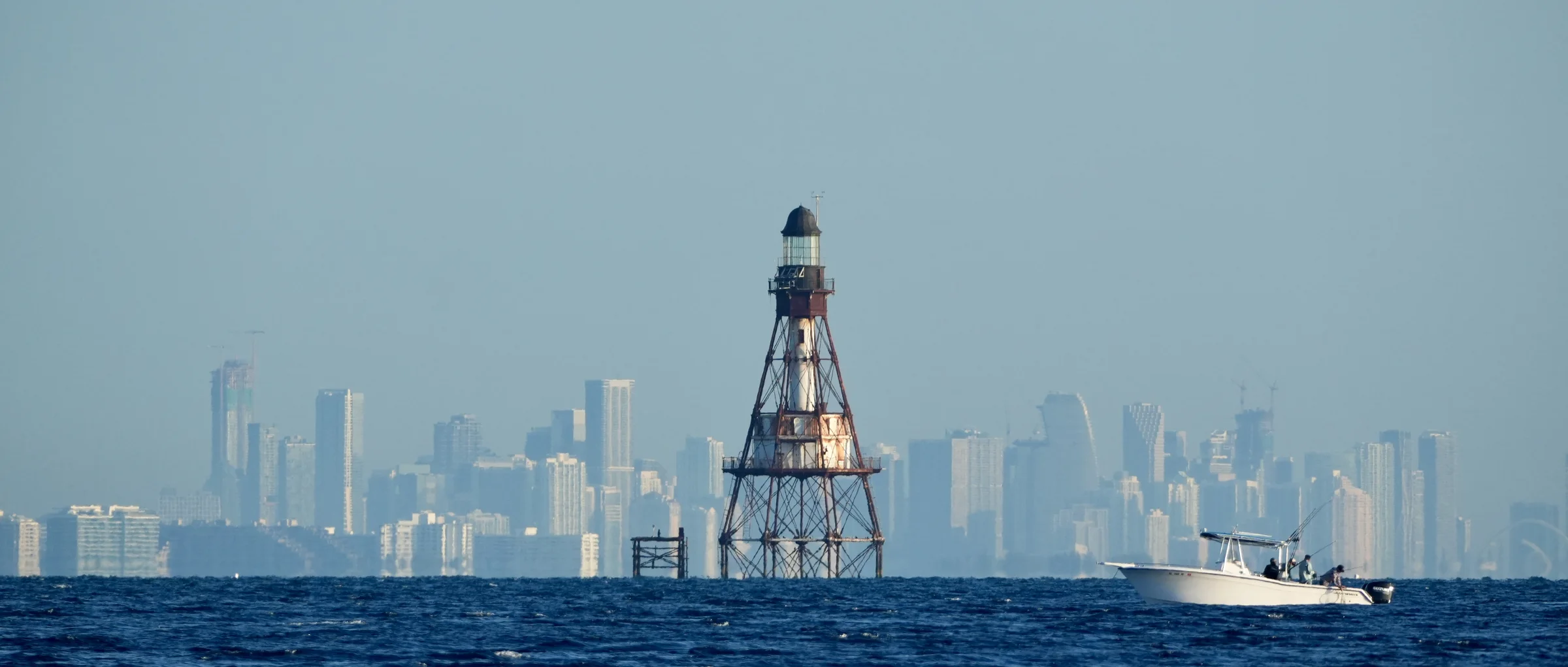
Threadfins hold on the beaches, in the channels, on the eastern side of Biscayne Bay, and out on the reef, usually in ten to thirty feet of water. They travel in schools, sometimes very large ones, and they are migratory fish that move around constantly. They hold in similar areas all season, but where they were yesterday is not where they are today, so it pays to communicate with other boats about where they are biting and when. The staple spots off Miami are Marker 21 near Stiltsville, the range marker off Government Cut, and the stretches off Key Biscayne and South Beach, where you drive around looking for schools on the sonar.
Reading the Water
Calmer days help, because threadfins show themselves on the surface. You can see them dimpling or raining on top, and you can see a school shimmering just under the surface. That surface read is a nice complement to the sonar, and between the two you can run a stretch of beach and find fish without dropping a rig blind. In the fall you can sometimes see really big schools on the beaches, which makes it a great time of year to load up for the season. The tournament boats tend to load up early in the season for exactly that reason, so they are not stressing about bait when the fishing matters.
The Method: Hold the School
The basic approach is to drive around, cast at the schools you can see, and drop on the schools you mark. As with most bait fishing, a crew helps. You can catch threadfins by yourself, but you are not going to catch as many, because they come in flurries. You might have a school under the boat for ten seconds, and the more rods that drop in those ten seconds, the more strings you are going to get.
There are a few tricks that stretch a flurry out. When someone hooks up, have another angler slowly reel a hooked string toward the boat, because the school will sometimes stay with you, the same way schooling mahi stay with a hooked fish. If one person is constantly hooked up and the rhythm is good, you can extend your time on a school well past those first ten seconds. Threadfins also chase the sabiki, so it helps to cast behind whoever is hooked up. They like to eat on the drop, so open the bail and let the rig sink fast. Just do not let a hooked bait swim to the surface and jump, because that is how tangles start.
The Sabiki Setup
We use number four and number six sabikis. I prefer the number four, because we think it has the best hookup ratio, and fluorocarbon is non-negotiable if you want to get more bites.
Handling and Keeping Them
Handling threadfins follows the same rules as the rest of our bait program, just with less margin for error. Do not touch the bait, do not let it hit the deck, and do not knock scales off. We use dehookers, and the fish goes straight from the rail into the livewell. There is one exception: if you are catching bait at first light and fishing it that same morning, you can get away with a touched bait or one that hit the deck. If the bait is headed for the pens, all the standards apply.
In the pens, threadfins run the same process as our other baits at the same stocking density of roughly one bait per gallon, but they are more delicate, and the die-off shows it. Goggle eyes might lose ten percent in the slip even with perfect care — threadfins can easily lose twenty. Once you get them going, though, they hold up well, they eat in the slip, and they season the same way. The one place they fall short is the round trip. A seasoned goggle eye can go fishing and come back to the pen unused. Once threadfins leave for a trip, plan on using them that day.
Where Threadfins Shine
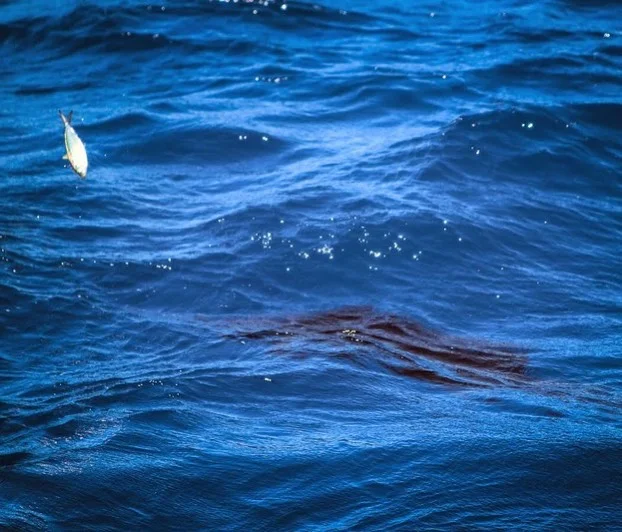
Everything eats a threadfin. They are great kite baits, and they are more versatile than goggle eyes, because they are also excellent on flatlines and for pitching at tailing sailfish or free jumpers. A threadfin runs at full speed the second it hits the water and tends to stay on or near the surface, which is exactly what you want from a flatline or a pitch bait. The same softness works for you on the bite: threadfins have softer meat and spines, so when one gets eaten, the hook dislodges from the bait more easily, and they fight less while they are being eaten. We find threadfins get a better hookup ratio on sailfish than goggle eyes do, especially on smaller sails, and you get cleaner bites more often. Their weak spot is the bottom — if you are dropping baits on a wreck, a threadfin is not the right tool. Everywhere near the surface, it is hard to beat.