Miami Shark Fishing
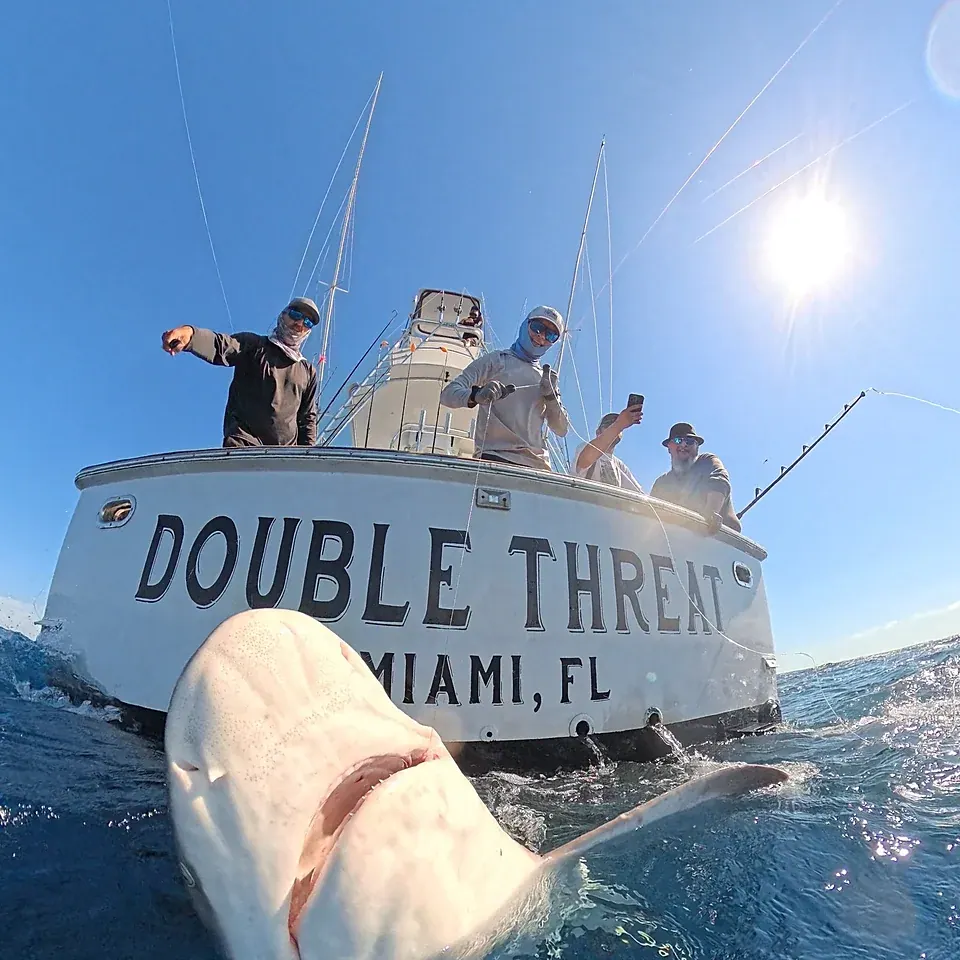
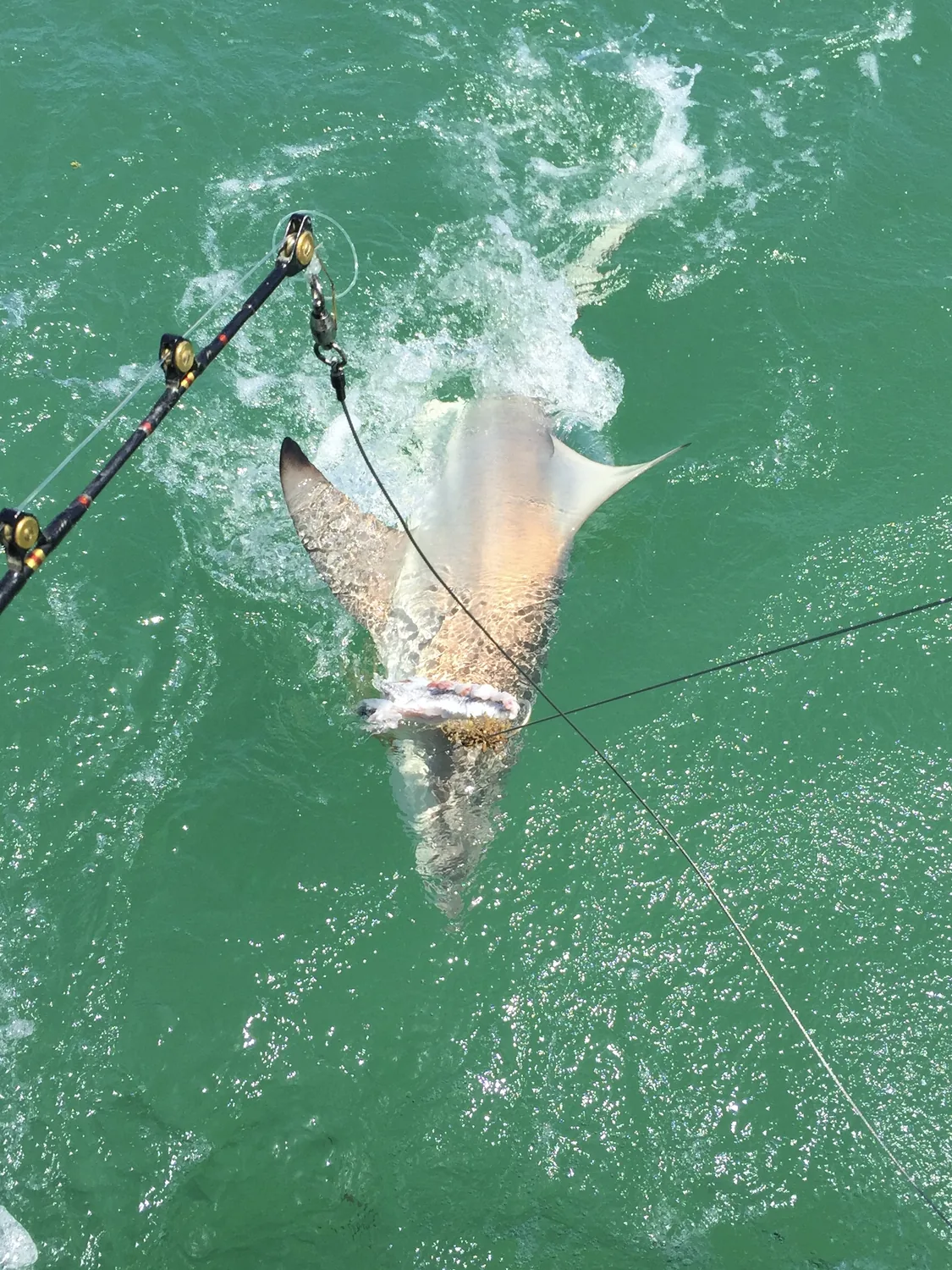
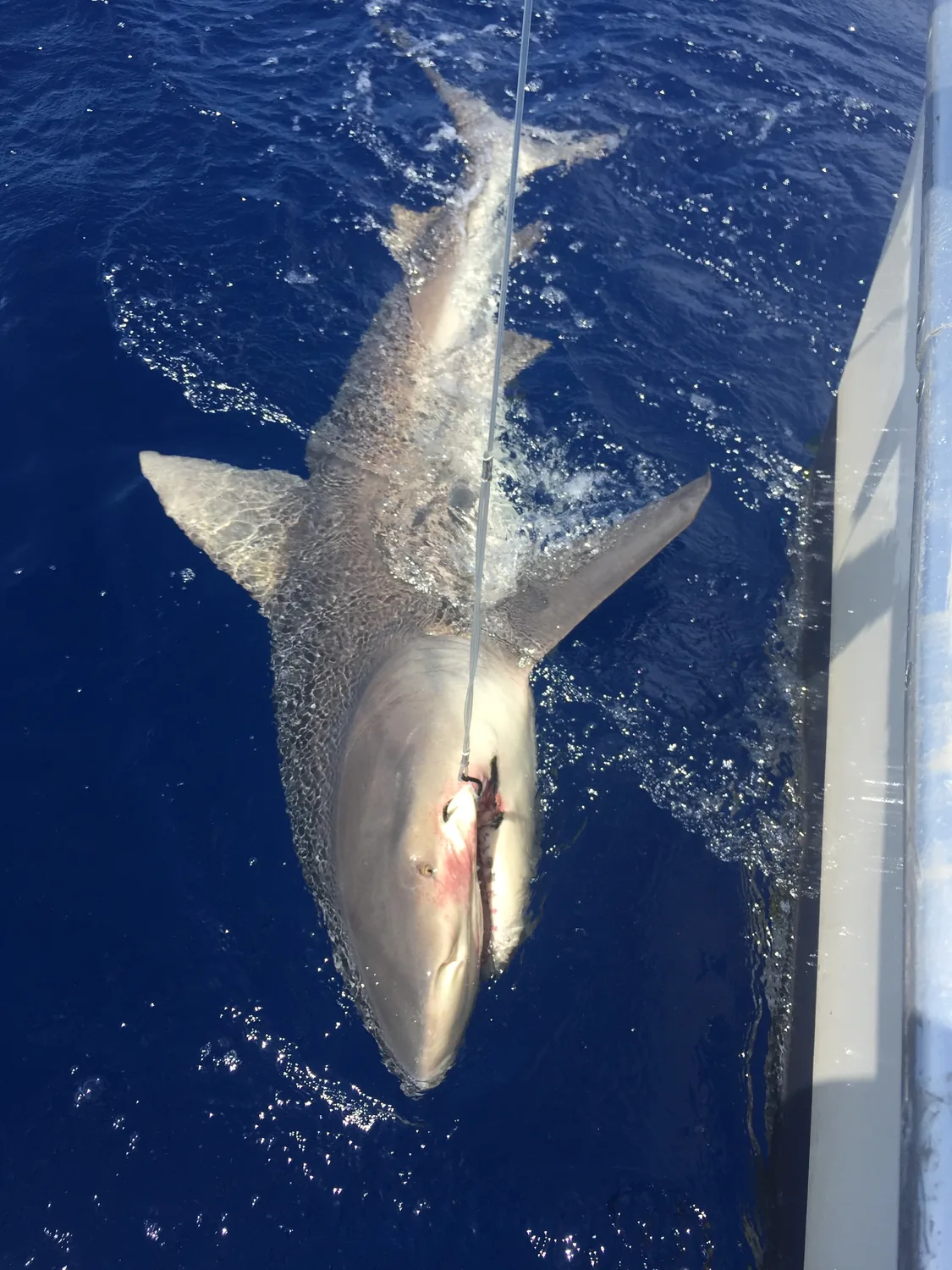
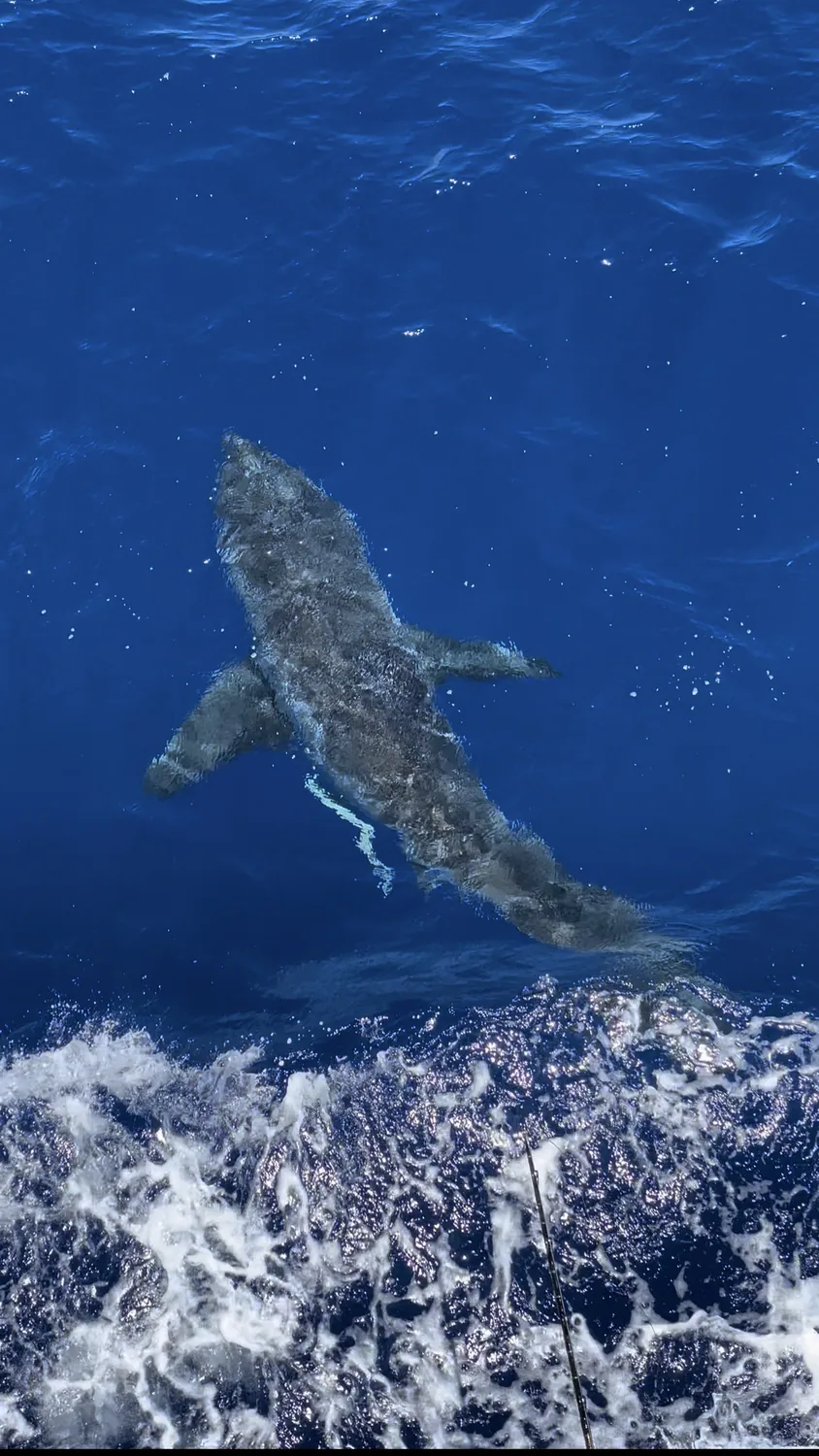
Sharks are part of fishing Miami regardless of whether you target them intentionally. The Florida Straits hold one of the most diverse shark fisheries on the planet, from bonnetheads in the bay to makos in the Gulf Stream, and on any given trip you might hook one without ever planning to. We can put a shark rod in the water on any charter, inshore or offshore. We always like to shark fish while targeting other species simultaneously so we don’t put all your eggs in one basket. Offshore that may involve dropping a shark bait to the bottom while kite fishing. Inshore we may put out a shark bait while drifting and casting artificials. Either way, sharks are a real possibility in addition to all the other species we target.
The Gulf Stream Conveyor
The Florida Straits function as a migration highway. Almost everything moving between the Gulf of Mexico and the eastern seaboard passes through here at some point, and the water carries species past Miami that have no business being this far south or this far inshore. That is why even fish we rarely catch, like big makos and the occasional great white, turn up at random. The current and their migrations have them passing through.
The practical version: on any offshore trip you might encounter a shark nobody has caught off Miami in years. Most charters never mention this. It is one of the real differences between fishing the Straits and fishing almost anywhere else.
Coastal & Inshore Sharks
These are the sharks of the bay, the beaches, the inlets, and the finger channels, the ones you are most likely to meet on an inshore trip or a nearshore offshore run.
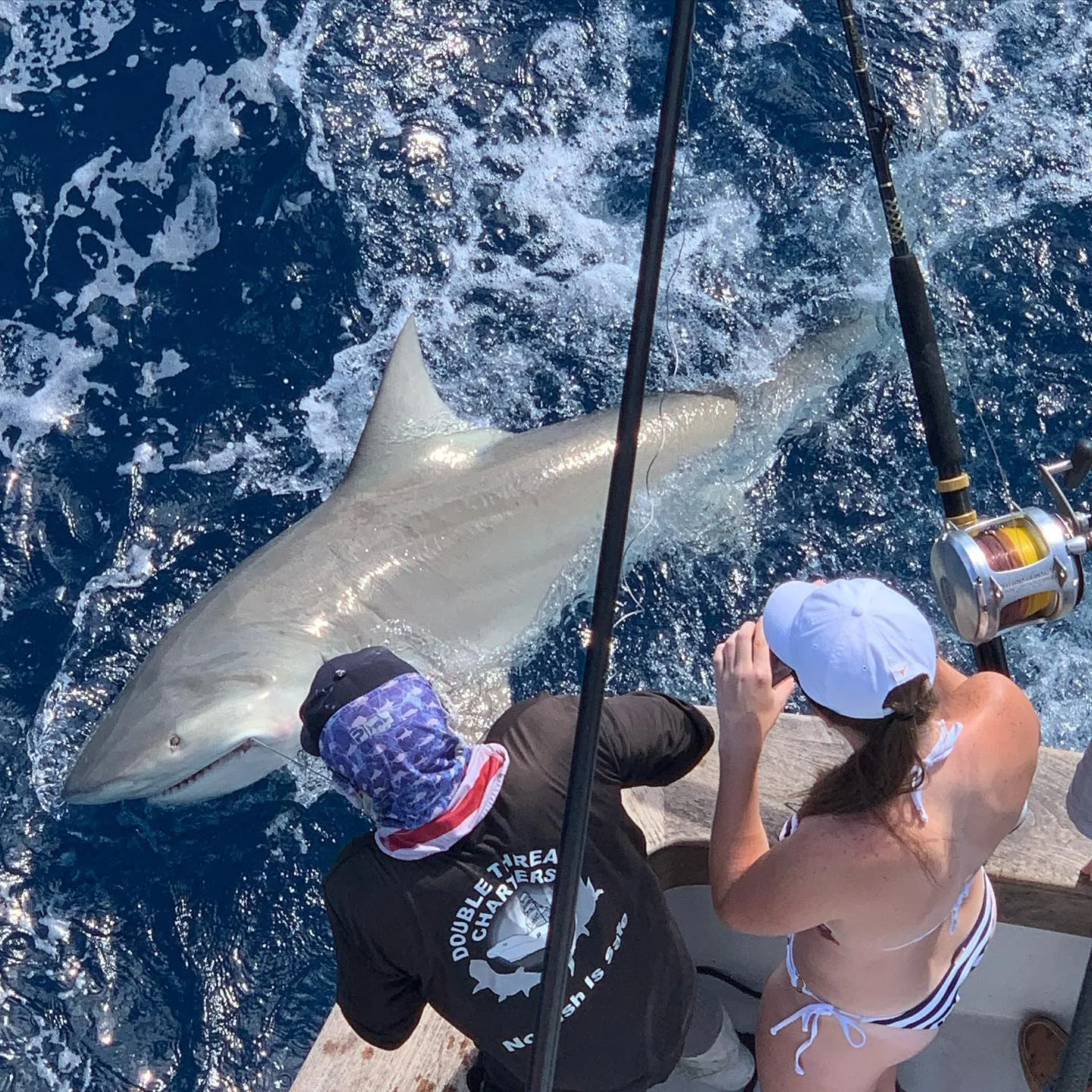
Bull Shark
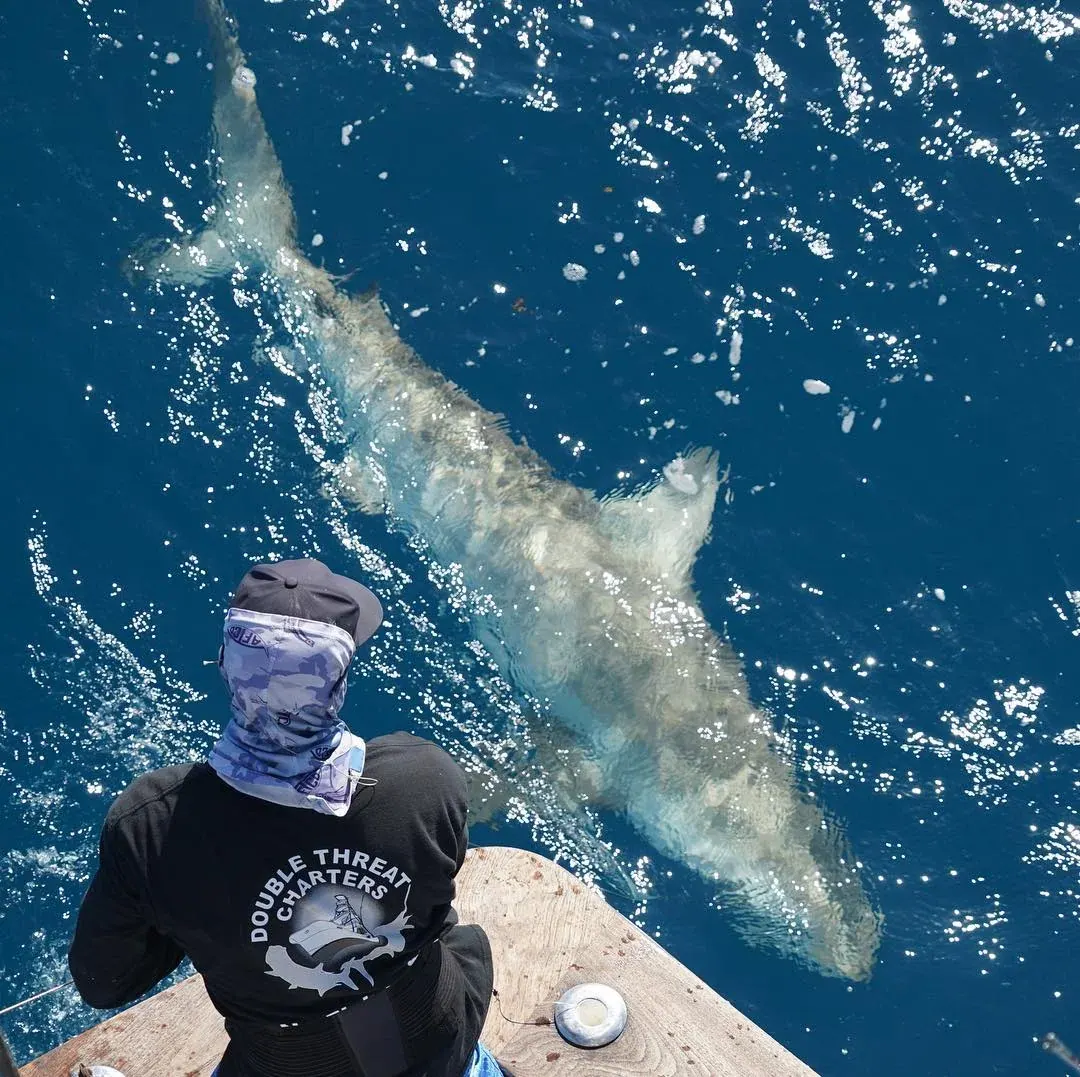
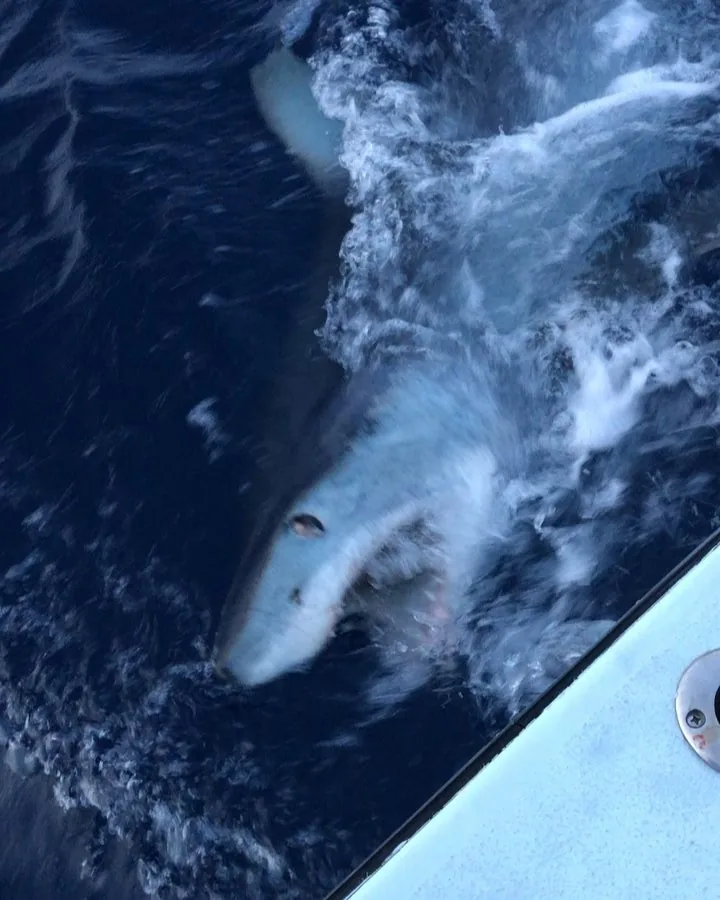
The bull is the workhorse of Miami shark fishing and the one you are most likely to catch. Its range runs from six feet of water inside the marina out to the reef edge, with the wrecks and the drop-off in 100 to 300 feet as the most reliable zone. Bulls are here year-round. They are territorial, and a fish that shows up in our marina will sometimes hang around for a month. They are blunt-nosed and heavyset, and they stay powerful right up to boatside, with a strong first run that settles into shorter runs as they come to the leader.
A smaller bull might make it to the boat in five to ten minutes on heavy tackle, but a big one is a twenty-minute fight or more. For reference, our targeted shark setup is a 130-pound-class conventional reel on a bent butt, 200-pound braid, and a 1,000-pound cable leader. Tackle does not get much heavier than this. If you hook into a big bull shark on light tackle it can take hours to try and catch it.
If we catch one bull during a trip, that is usually plenty, and we will often pivot to targeting other species so the day has some variety. Bulls also deserve a lot of respect. They are responsible for more provoked attacks than most sharks, and they will go after a hooked or speared fish without hesitation. They are Florida-harvestable, which makes them one of the few sharks on our list that legally could be kept. We release them anyway.
Blacktip Shark
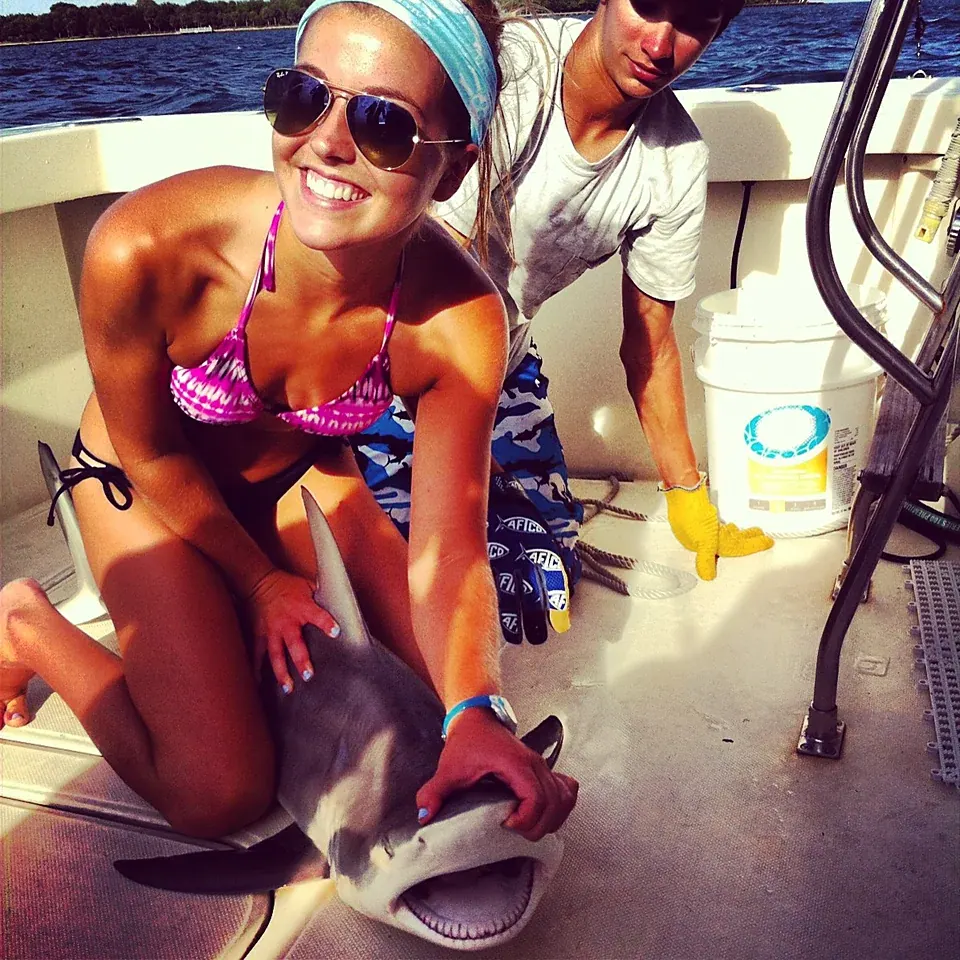
Blacktip sharks are an underrated gamefish. Hook one and it is almost guaranteed to come up jumping, often greyhounding and spinning in the air. They are a coastal shark, usually stacking up along the beaches and in the finger channels. They are often visible breaking the surface just beyond the surf line on the beaches. The fall mullet run is prime time, though they are catchable year-round. Blacktips are a great target on spinning tackle as opposed to the 130lb class broomsticks we use for bull sharks. With the shallower water and the jumping that often wears them out, you can have an exciting fight on 20-30lb spinning tackle. Pound for pound, the blacktip is a strong light-tackle game fish. Don’t be surprised if they straighten even the heaviest gauge circle hooks when they come up jumping. Sometimes lighter drag can actually be good insurance against this.
Lemon Shark
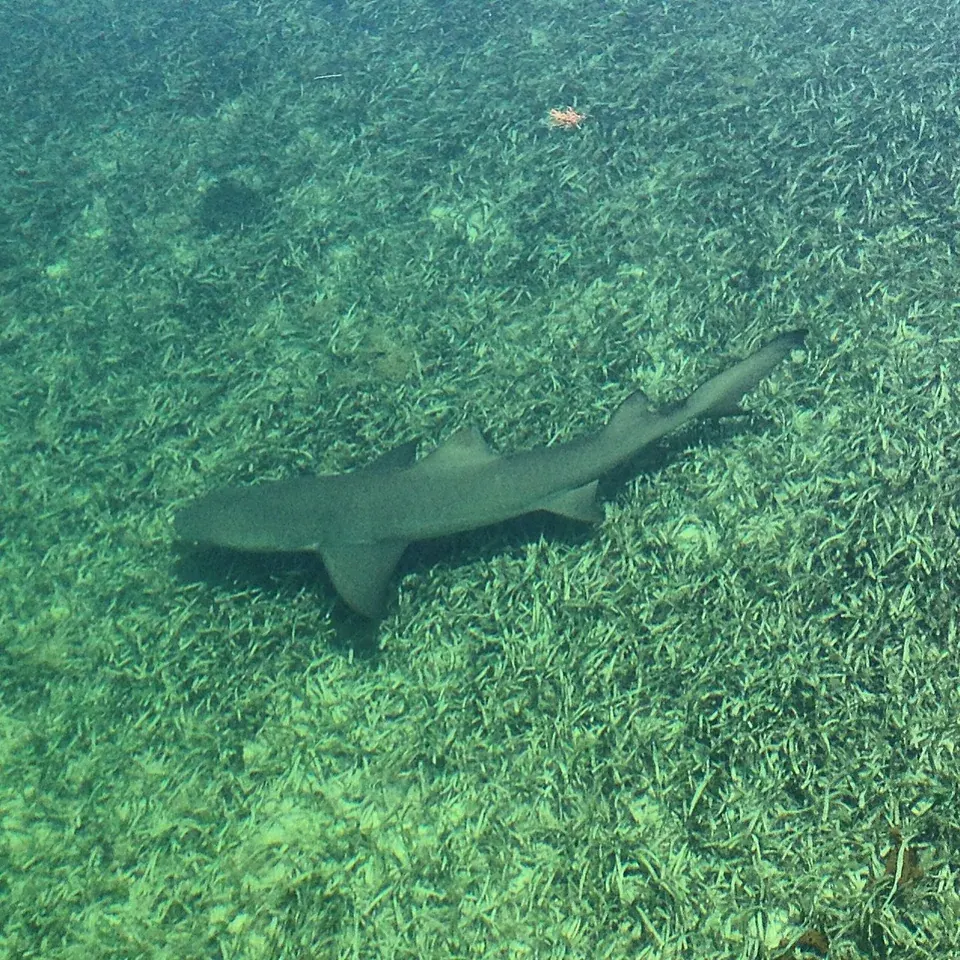
The lemon is an inshore animal through and through, never pelagic, holding in the bays and around docks and inlets where there is current and moving water. Despite a soft, nurse-shark-ish look, it fights nothing like one. Lemons are fast, hard fighting sharks that will rip drag on light tackle. Bait on the bottom in current is the way to get them. They are currently protected, so we catch and release only.
Nurse Shark
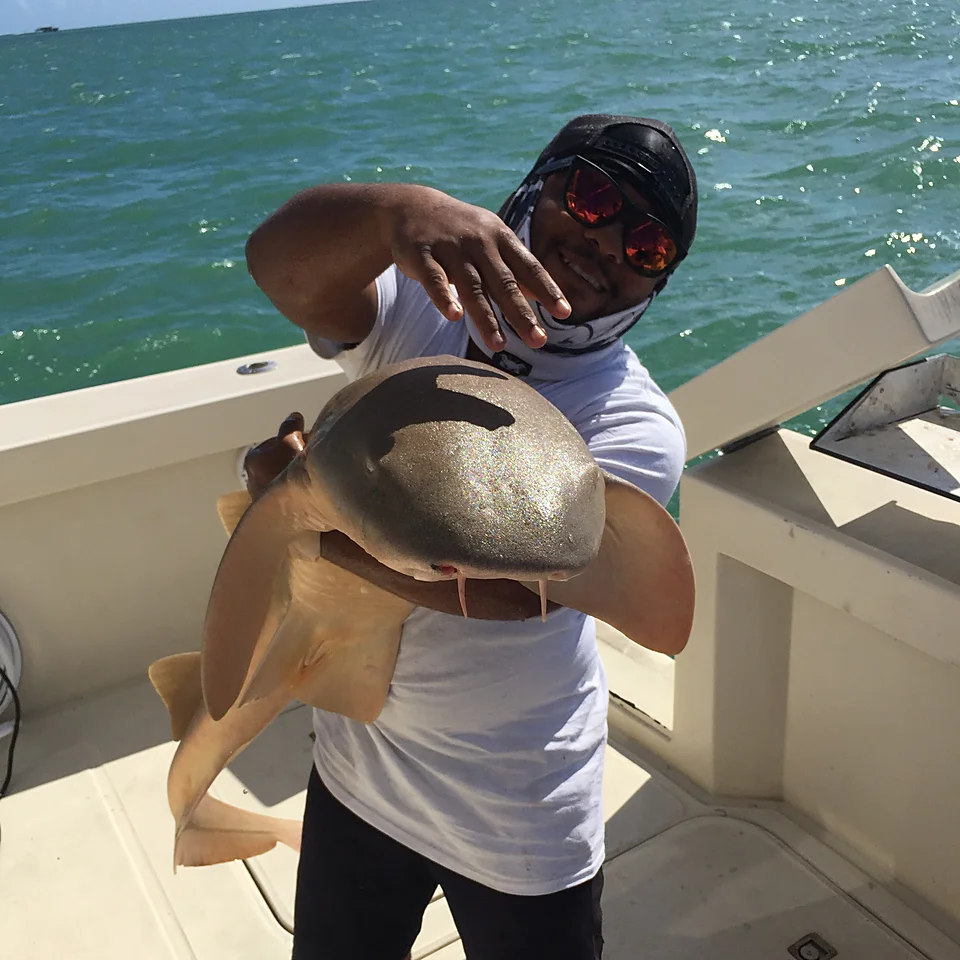
The nurse is the one shark we will be honest about: not much of a fight. They dog you and roll, with no real runs, closer to reeling in a heavy catfish than battling a game fish. They can be caught year-round from the docks to the reef. Nurse sharks are bottom scavengers and like eating carcasses as well as lobster and crustaceans if they can find them.
Bonnethead
The bonnethead is the smallest member of the hammerhead family, with a rounded, shovel-shaped head instead of the classic hammer. It tops out around five feet, lives in the bay, and comes in on light tackle, usually by accident. It looks like a fun, bay-sized version of a hammerhead. Bonnetheads are Florida-harvestable, but as with all sharks, we default to release.
Offshore & Gulf Stream Sharks
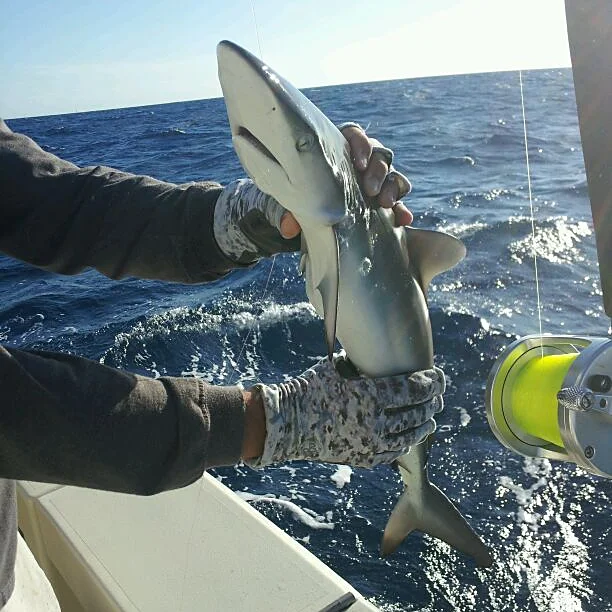
These are the deeper-water sharks that may show up anywhere from the edge in 100 feet to the swordfish grounds. These species can be caught while kite fishing, swordfishing, and anywhere in between.
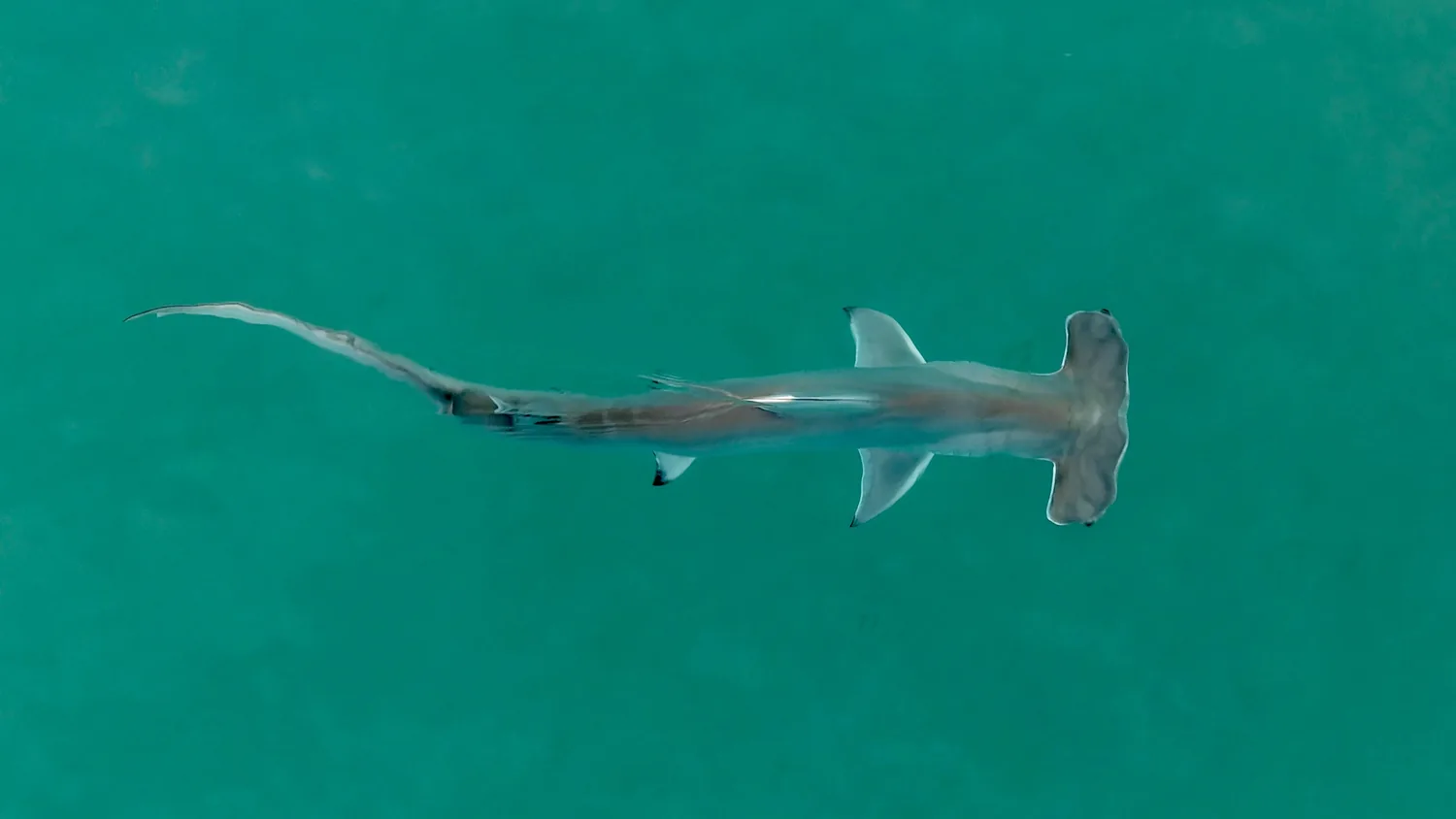
Great Hammerhead
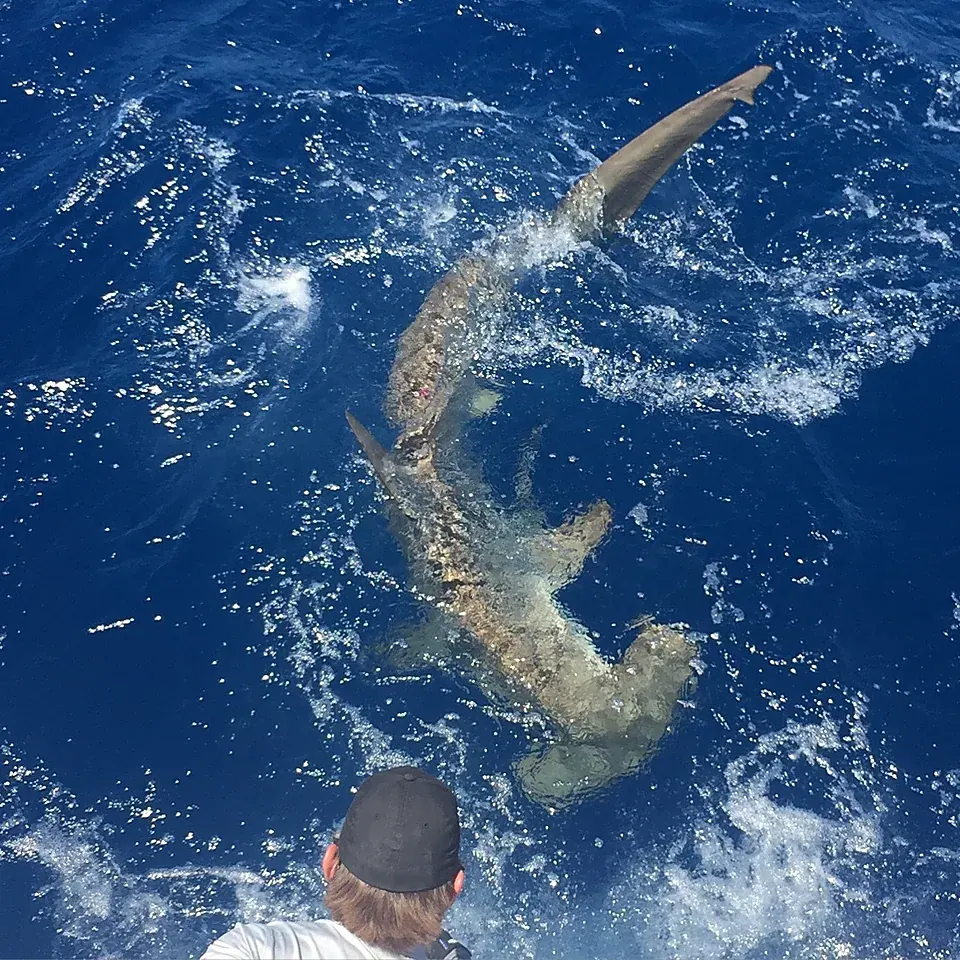
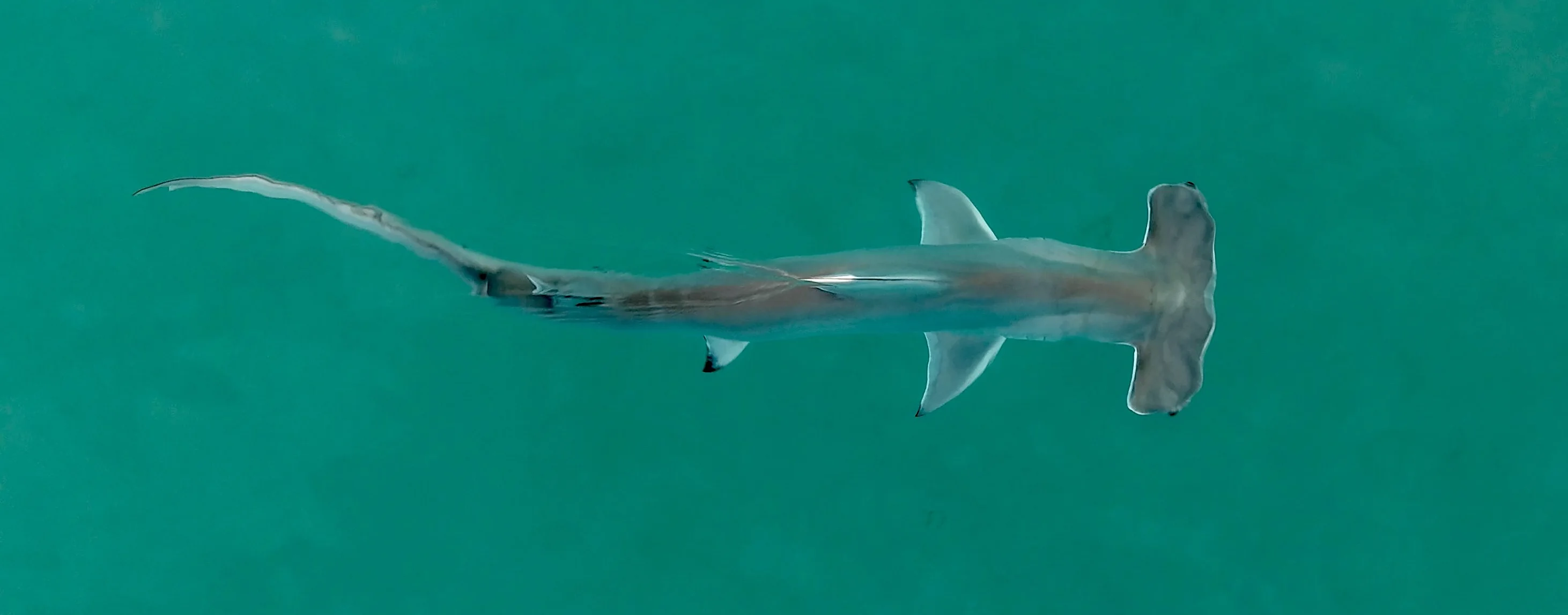
The great hammerhead is one of the most unique sharks we catch. They have a wide range from the finger channels out to the swordfish grounds in 1,200 feet, and they show up on a consistent migratory run during sailfish season so we hook plenty of them on the kite. They are big, and they are oddly precise hunters for their size. Their broad head is a sensory organ, and it makes them careful and selective. We have watched a 400-pound fish spend five minutes working the kite spread trying to eat a six-inch threadfin. The fights are usually long because we often hook them on lighter tackle while kite fishing and sometimes the fish wins. Hammerheads are known to cruise the beach but there have been no confirmed human fatalities on record attributed to great hammerheads.
Hammerheads are Florida-prohibited and must be released in the water. They have a reputation for poor survival after release, but that is largely a beach-fishing problem. Our boat-based releases in deeper water hold up well.
Scalloped Hammerhead
The scalloped hammerhead is the great hammer’s smaller cousin, topping out around twelve feet but usually running well under that. They hold the same zones and show up on the same kite-during-sailfish-season pattern, and they are more manageable to handle at boatside. They are Florida-prohibited and released in the water like their larger relative.
Silky Shark
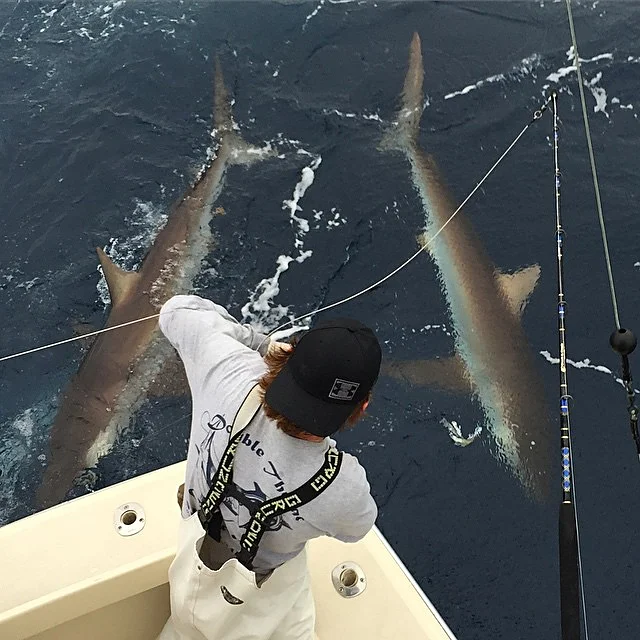
The silky is a true offshore species, named for its smooth hide, holding from the drop-off out past 1,000 feet with the 600-to-1,000-foot band as the sweet spot. Juveniles hit kite baits during sailfish season often enough to be a nuisance, and bigger ones turn up as bycatch on the tilefish grounds. They are Florida-prohibited and CITES-listed, so every silky is released.
Caribbean Reef Shark
The “reef shark” we catch is specifically the Caribbean reef shark. It is far more common over in Bimini than here, but we pick them up off Miami on the reef edge and drop-offs, on the bottom, usually on bait. They run smaller than bulls, so lighter tackle works. They are Florida-prohibited and IUCN Endangered, so every one is released in the water.
Bigeye Thresher
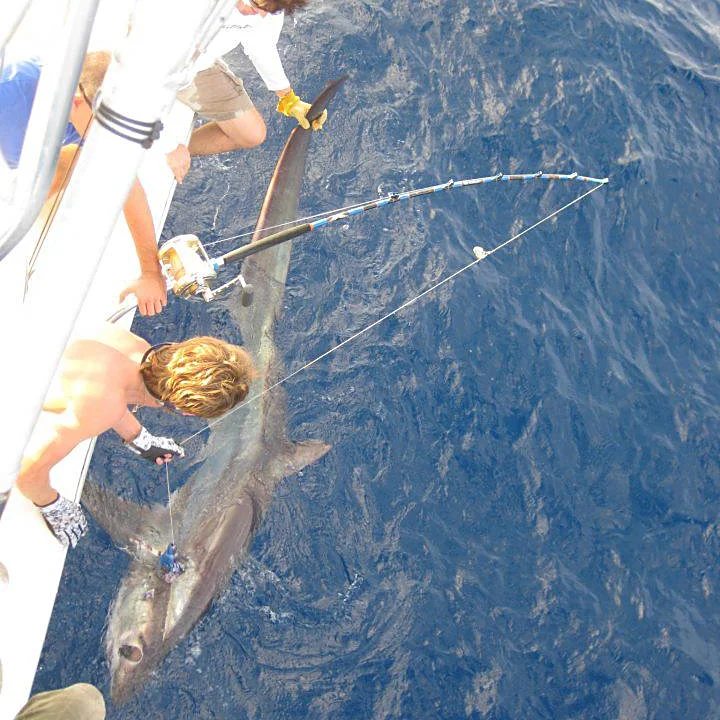
The bigeye thresher is the alien of the deep-water grounds, all giant eyes and a whip-like upper tail as long as its body, which it uses to stun prey. We catch them as bycatch on the daytime swordfish drift, roughly one in twenty daytime sword catches. They fool you on the bite and the fight, but there is a tell: a swordfish swims the lead up, a thresher does not. If you think you have a big sword down deep and it never swims the lead up, it might well be a thresher. They fight hard, top to bottom, through the whole water column. They are Florida-prohibited, IUCN Vulnerable, and CITES-listed, so every thresher is released.
The Rare Ones: Mako, Tiger, and Great White
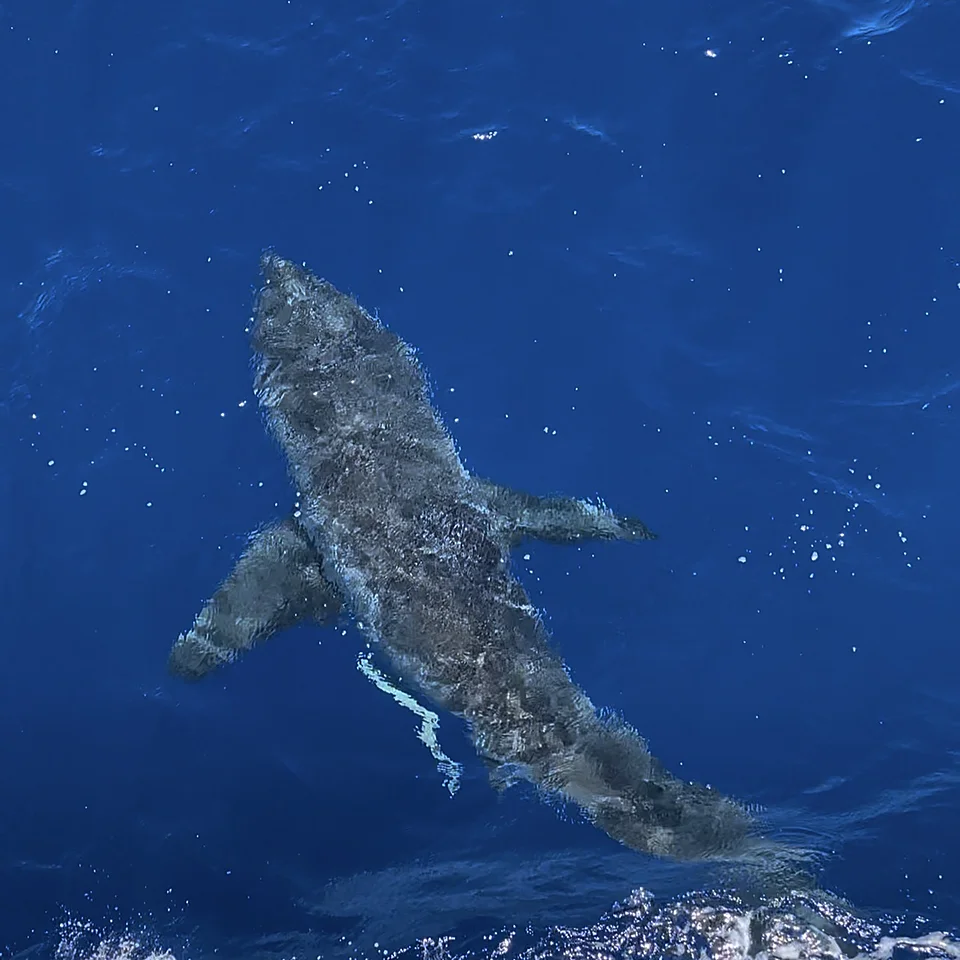
A handful of sharks turn up rarely enough that they are encounters rather than targets, and the Gulf Stream Conveyor is why.
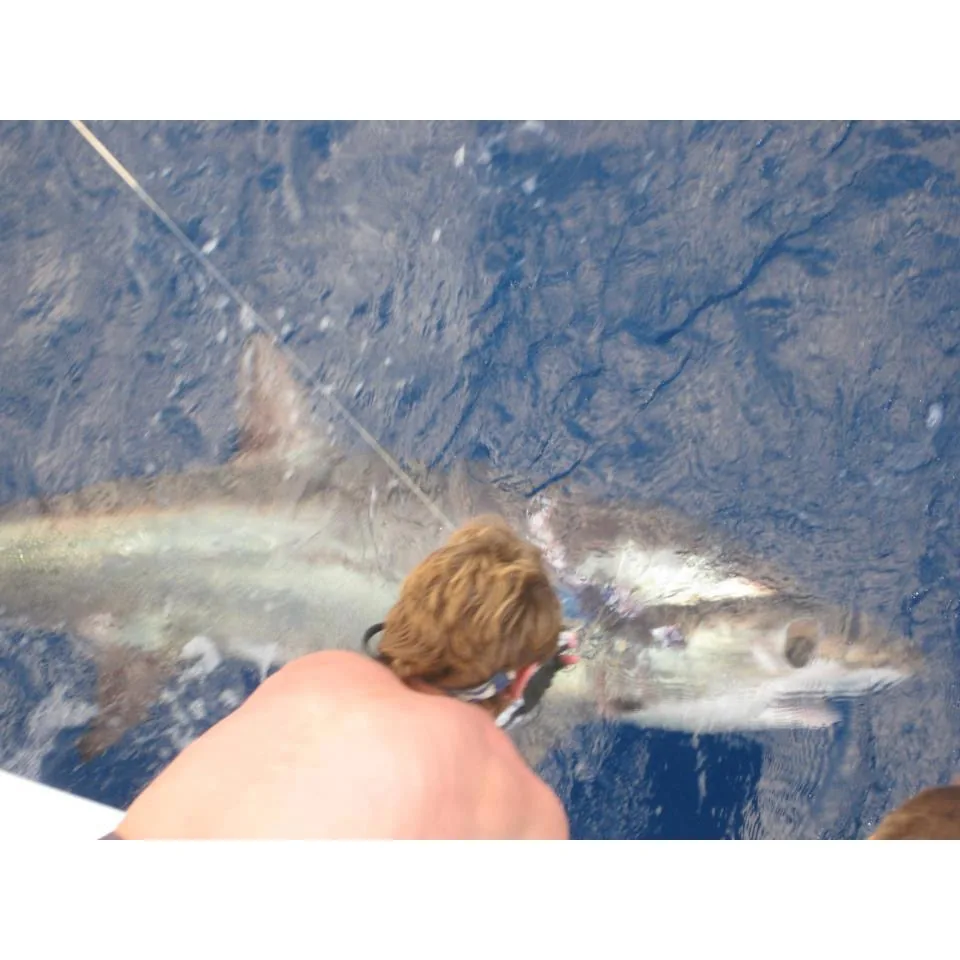
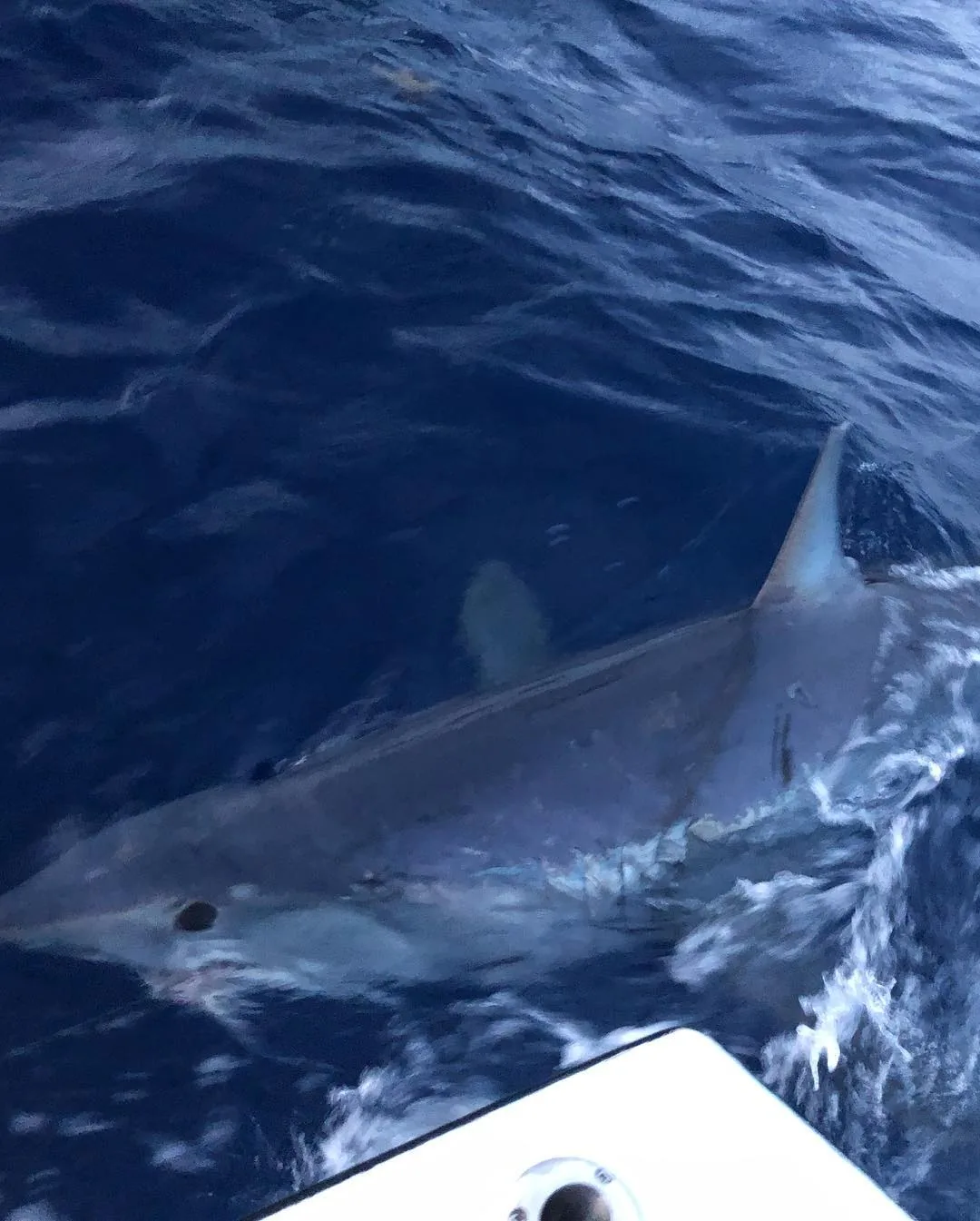
The shortfin mako is the fastest shark in the world and one of the great game fish anywhere. It is also one of the best eating, though retention is currently prohibited in the Atlantic. You never know when a mako might show up anywhere from the sword grounds to the edge while kite fishing.
Tiger sharks are rare off Miami but are occasionally seen passing through. They are one of the largest sharks and known to be aggressive when encountered. If you do try to catch one, 80-130lb tackle is recommended.
The great white appears off Miami a couple of times a decade, always just passing through. We don’t target them but if we can we’ll try to get a few pictures.
All three are protected, and any one of them is a fish that defines a season.
How We Fish For Sharks
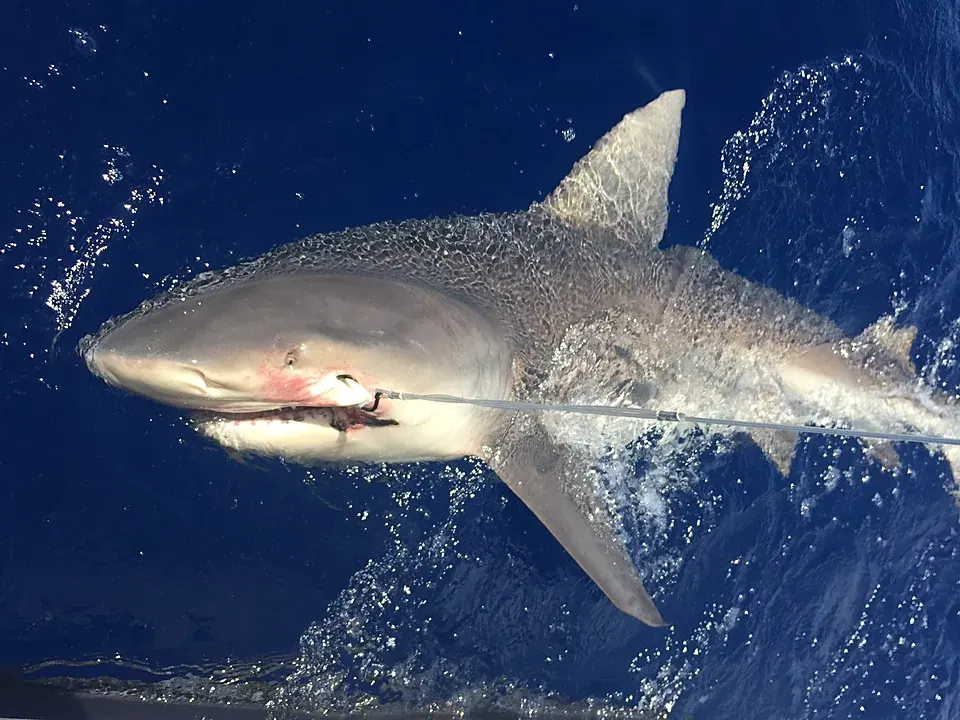
When we target sharks deliberately, the gear is heavy. The 130-pound-class bent-butt setup described above is the top end, with standup 30-wide to 50-wide tackle an option depending on conditions. Wire or cable traces are standard, and heavy gauge hooks are a necessity. We prefer circle hooks over j hooks for improved hook up ratios and release rates. Offshore, the fish have free rein to run deep and far, so the tackle reflects it. While inshore fishing, sharks up to six feet are reasonable on light tackle, and a lemon or a blacktip on a light setup in the bay is genuinely good fishing. On the boat, the encounters often come unplanned with hammers eating kite baits, blacktips hitting flat lines, bulls chasing hooked tuna, and inshore, bulls and lemons taking baits in the finger channels. We release every shark we catch.
Sharks Are Part of Fishing Miami
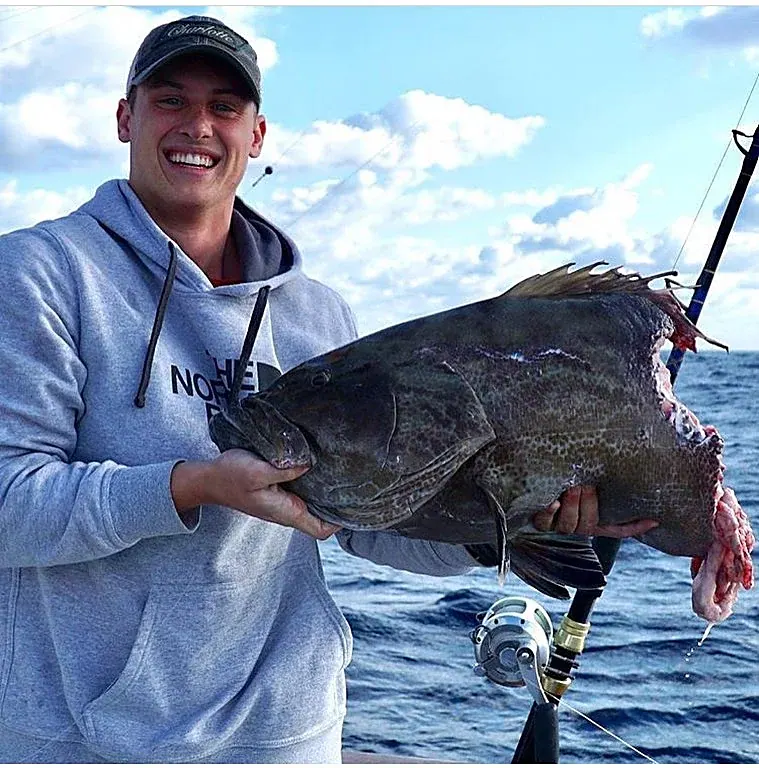
Miami has a diverse shark fishery and you really never know what you might see inshore or offshore. There is a notion in the industry that sharks are exclusively a “problem” because of depredation, the process where they eat fish you have already hooked. This is definitely an inconvenience but it’s part of fishing and the sharks have been out there long before we were. Overall, sharks add variety to both inshore and offshore fishing and are typically a welcome catch on any given day.