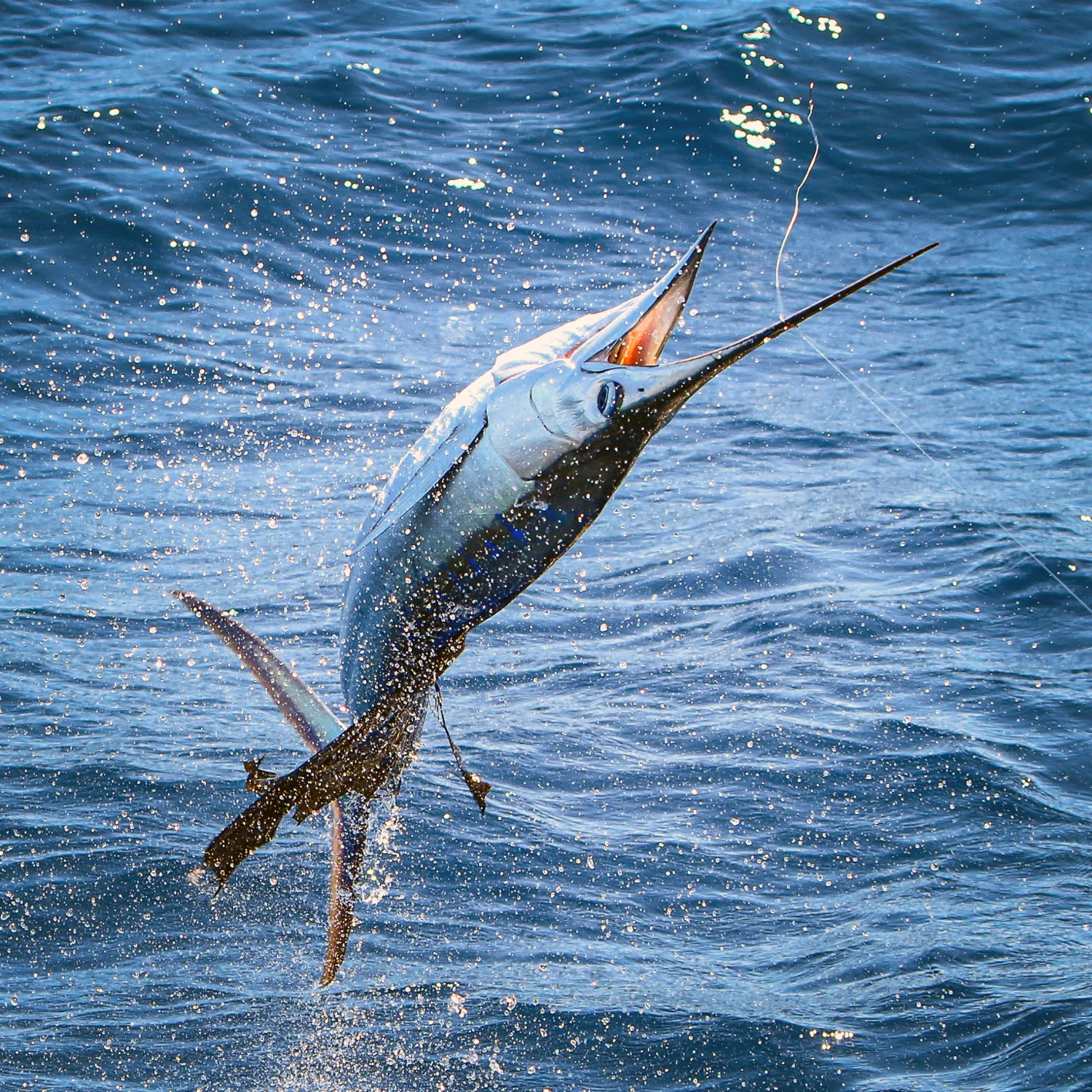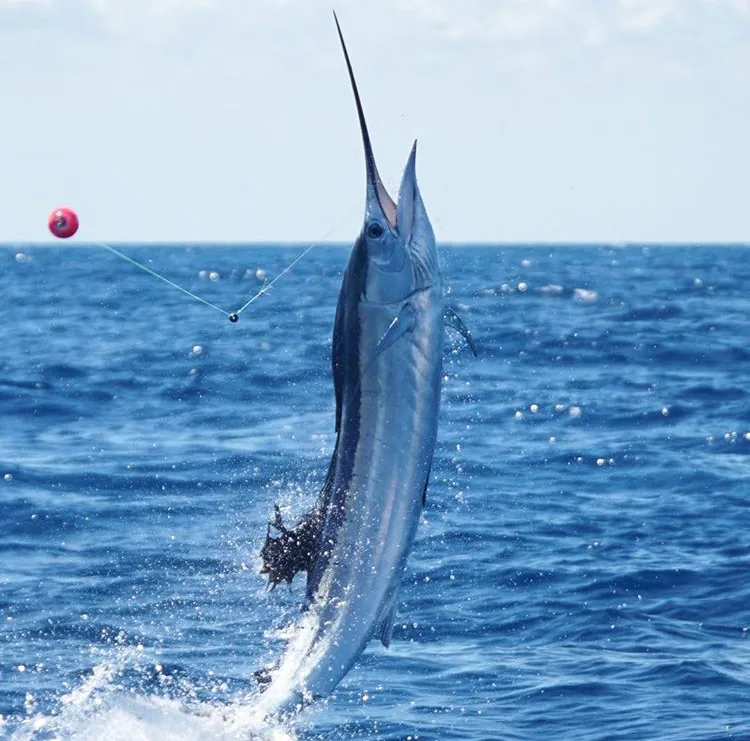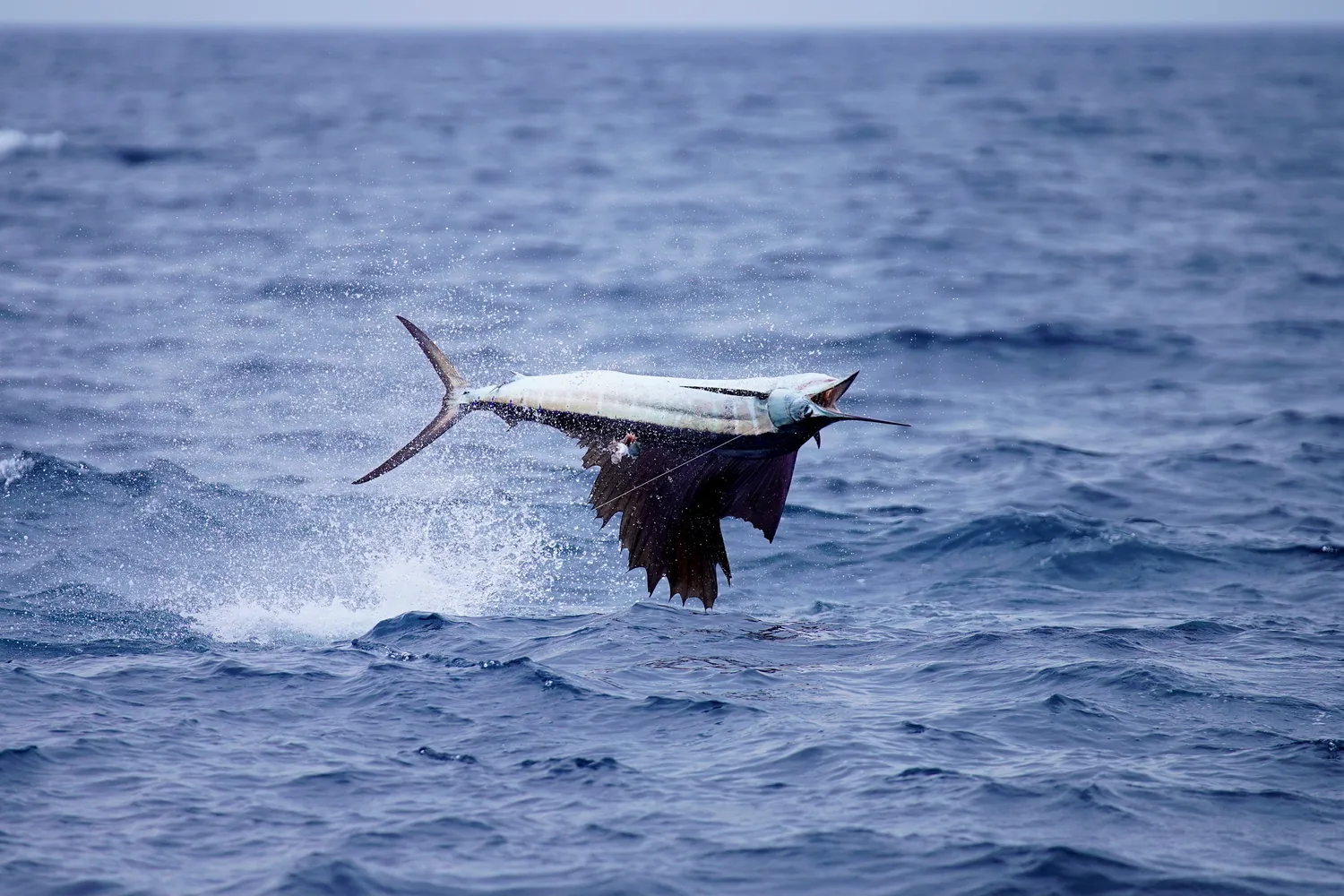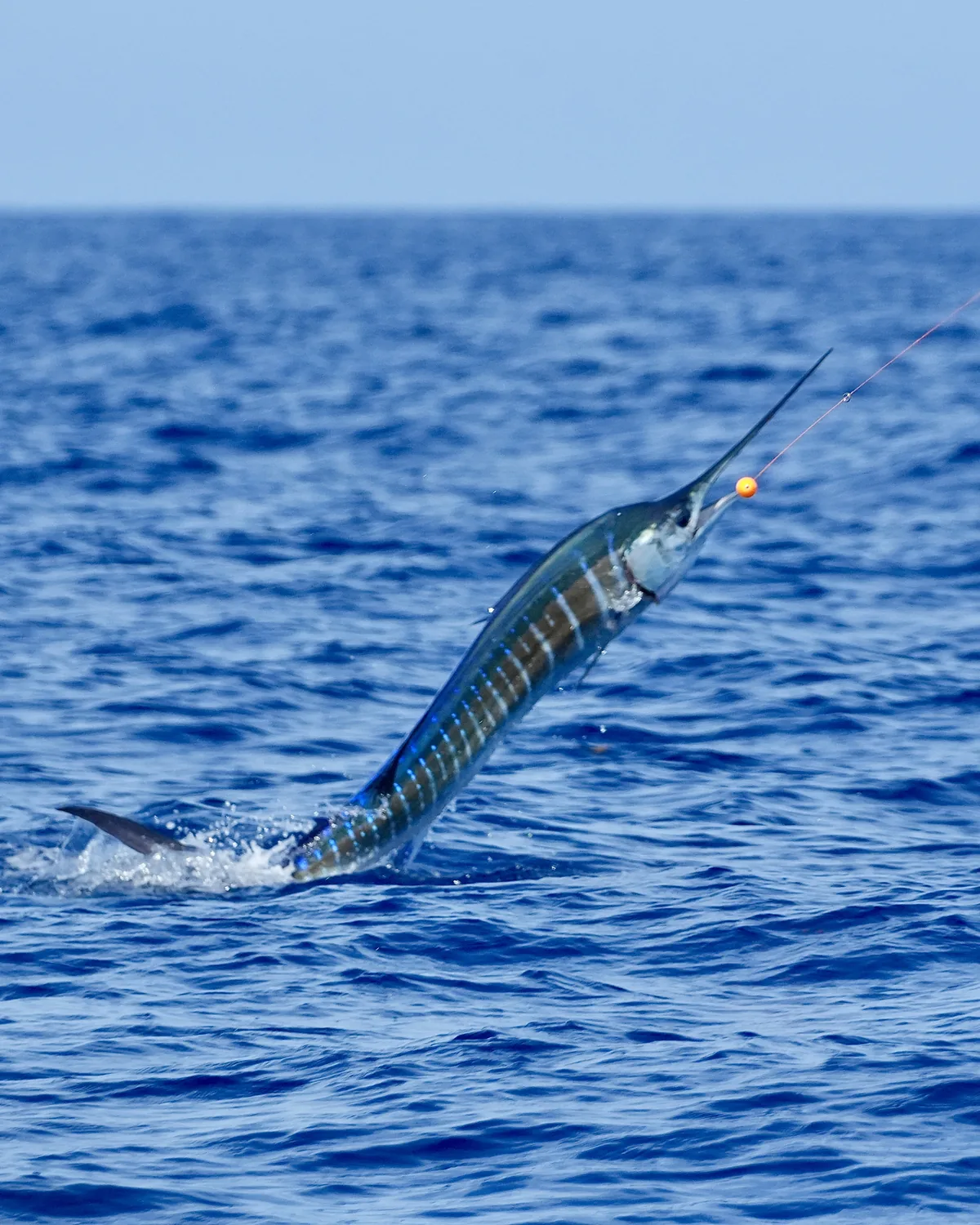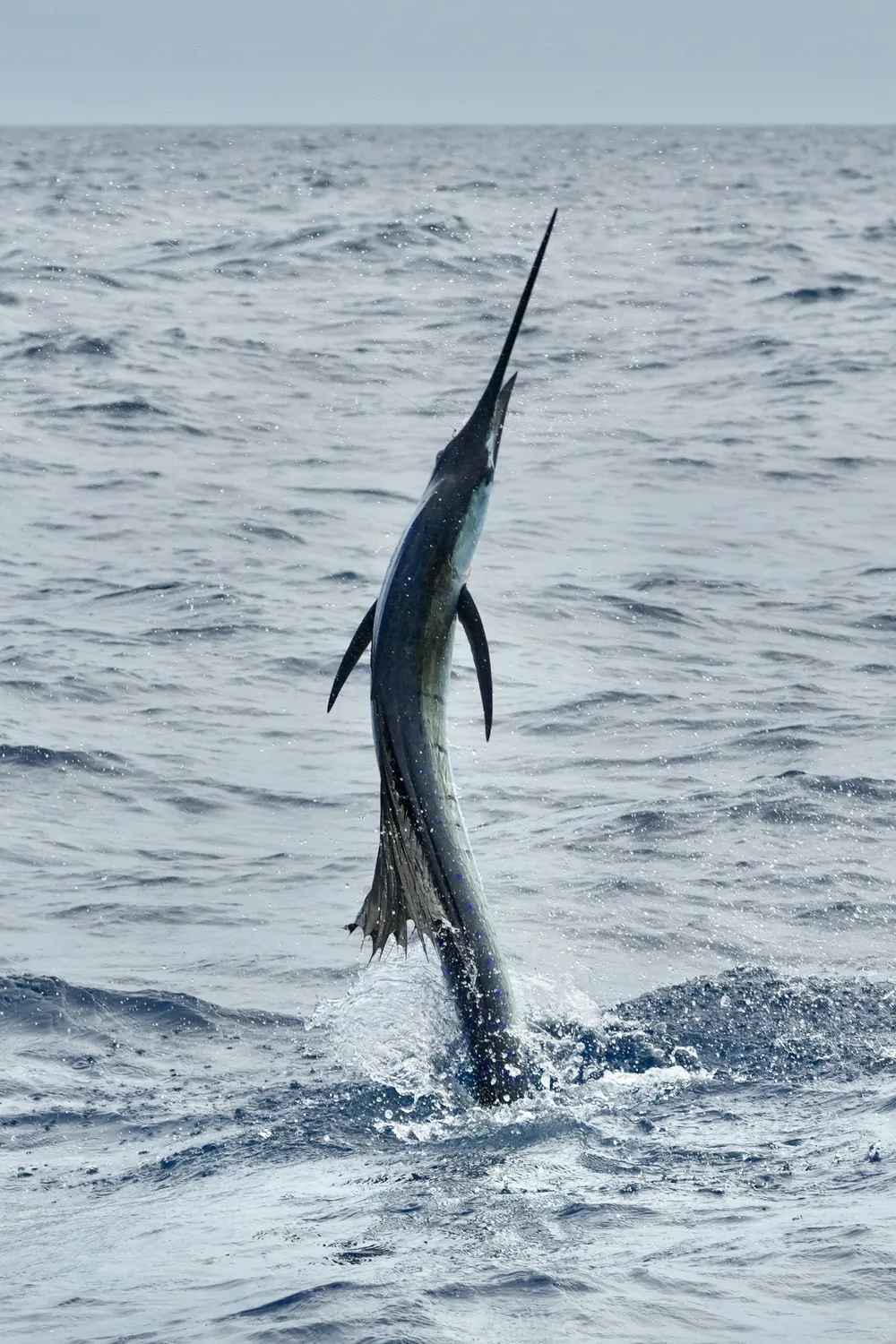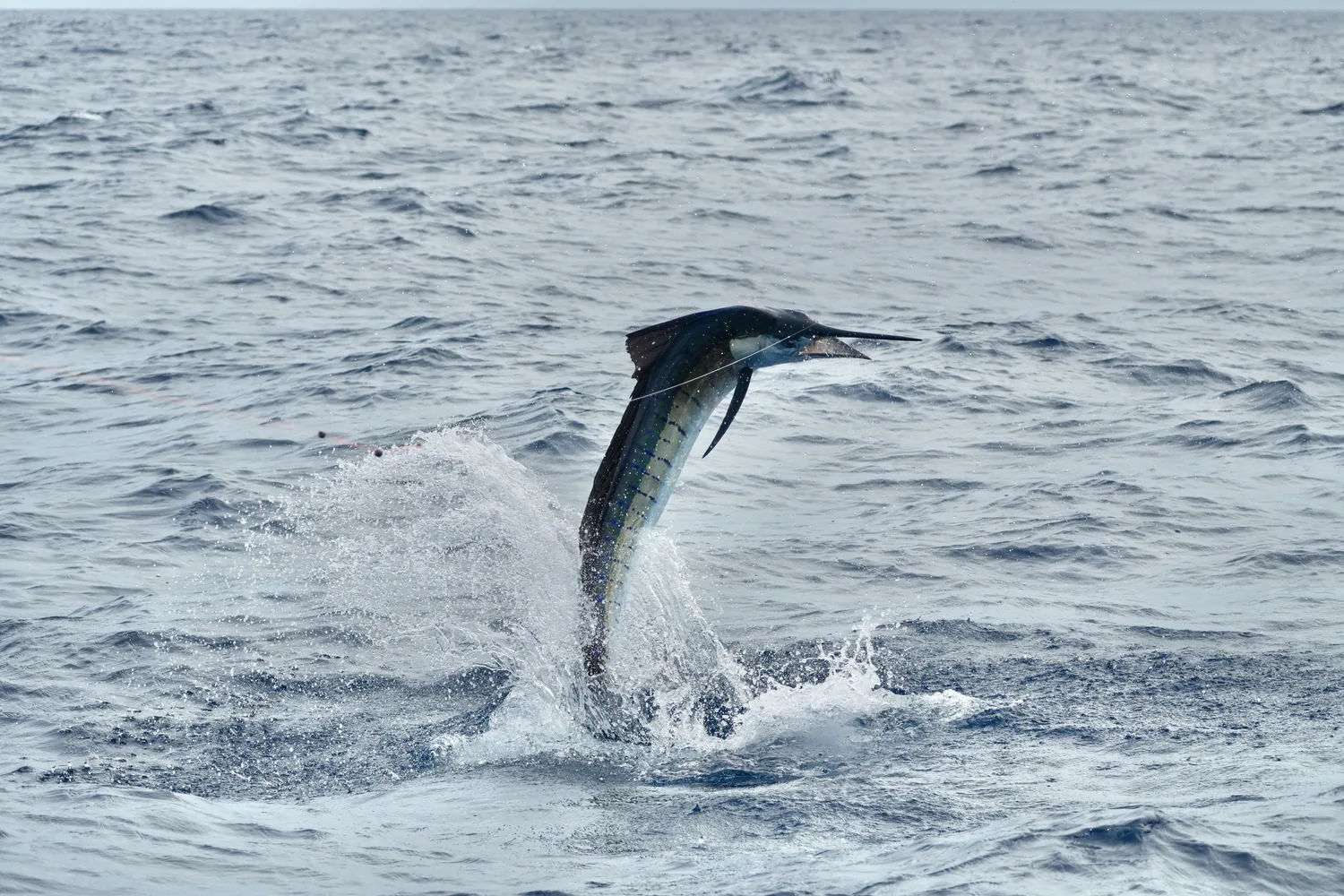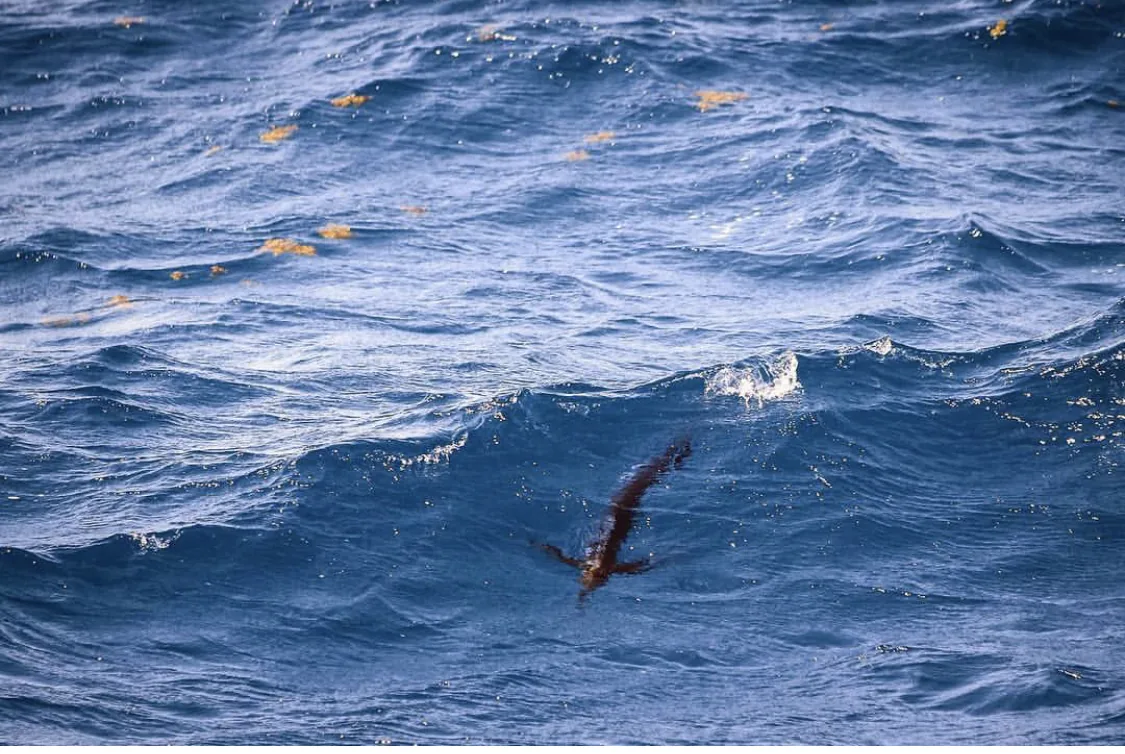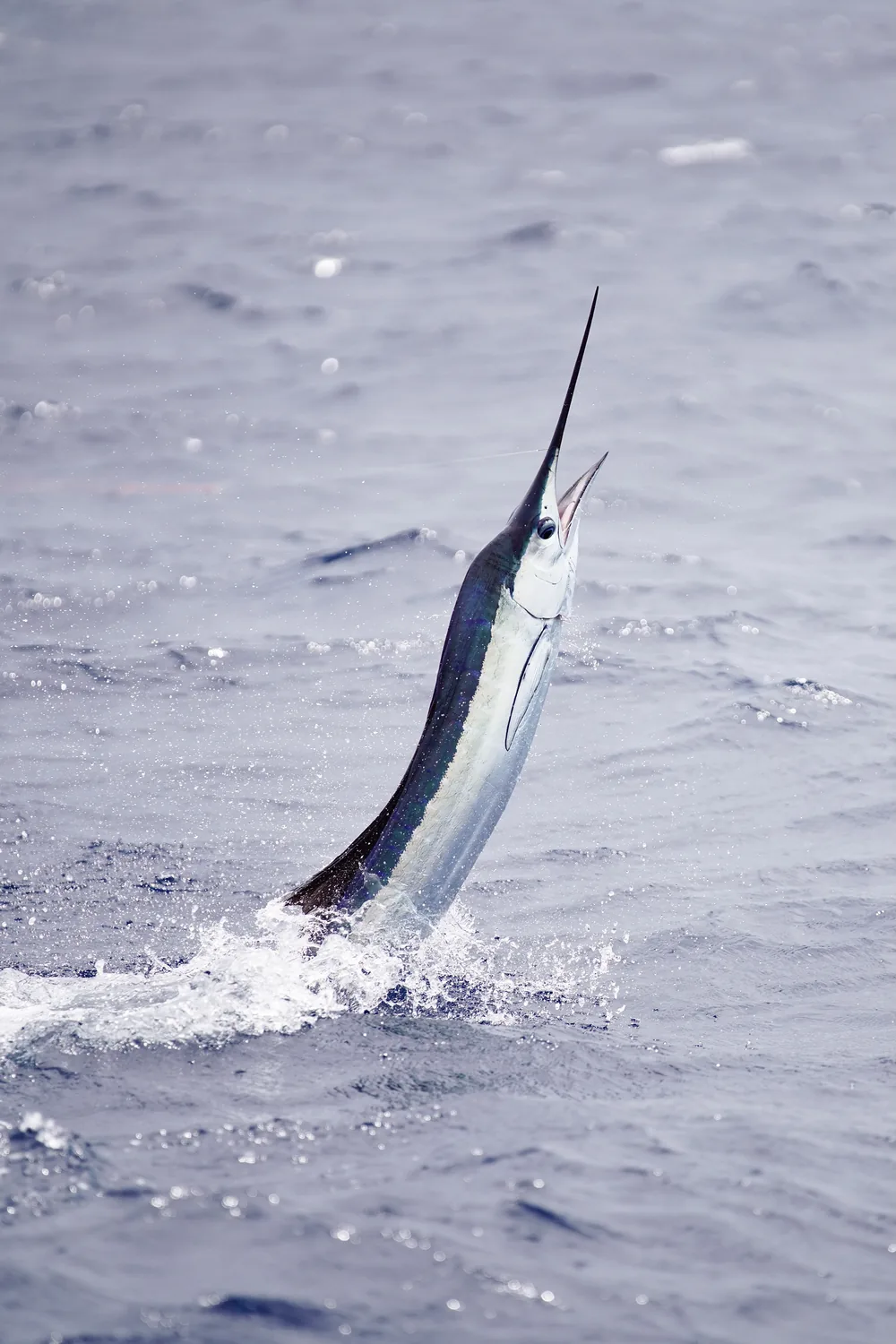
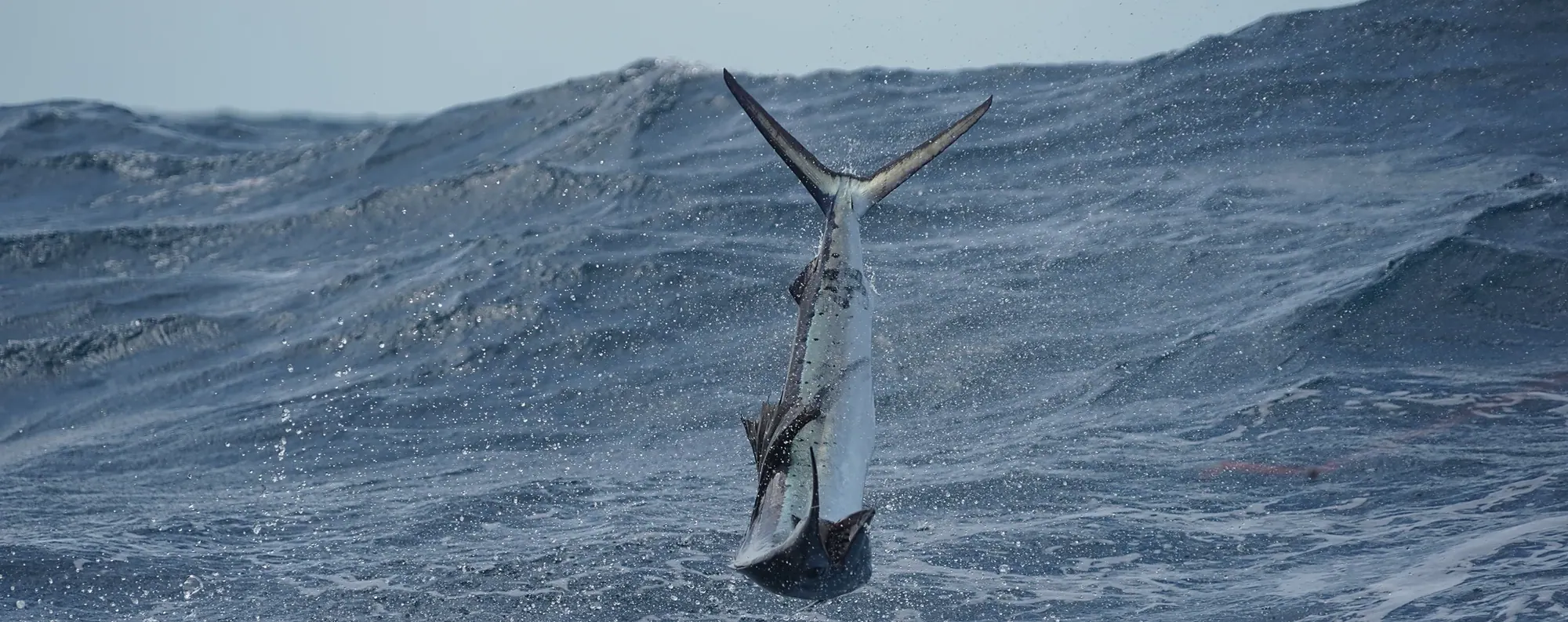
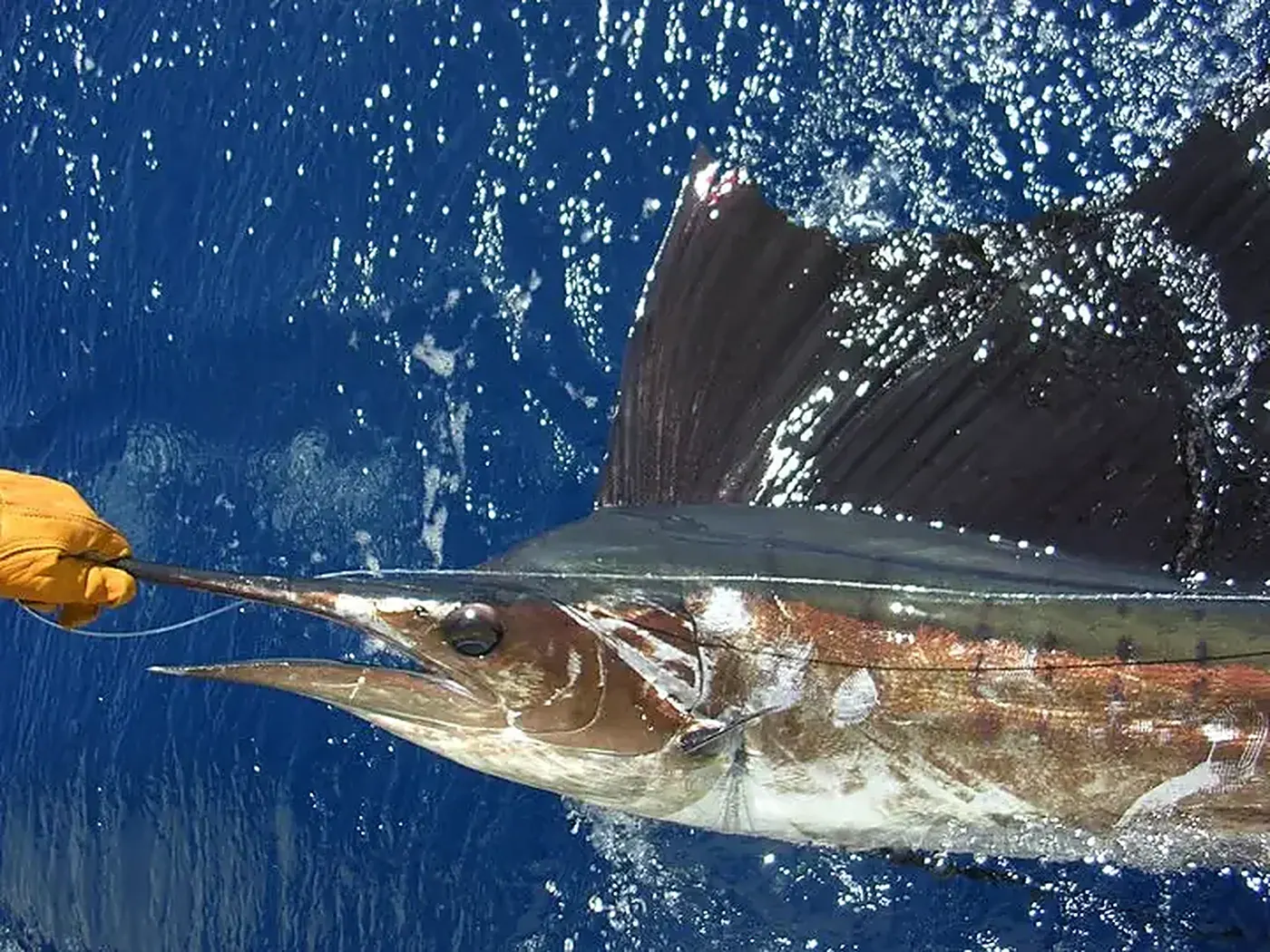
Sailfish are the signature fish of a South Florida winter. The massive first dorsal fin, the sail, stands taller than the body is deep and folds into a groove along the back when the fish runs. When a sailfish gets excited or starts hunting, vertical bars light up along its flanks, which is where “lit up” comes from. They are one of the fastest fish in the ocean; the old claim that they are the fastest comes from 1920s estimates, and modern measurements are more conservative. Most of the sails we catch run 5 to 6 feet, and Atlantic sailfish generally run smaller than their Pacific cousins. They hunt in pairs and packs, using the bill to slash and stun schooling bait and the sail itself to corral it. Sailfish are Florida’s official state saltwater fish.
Why South Florida for Atlantic Sailfish
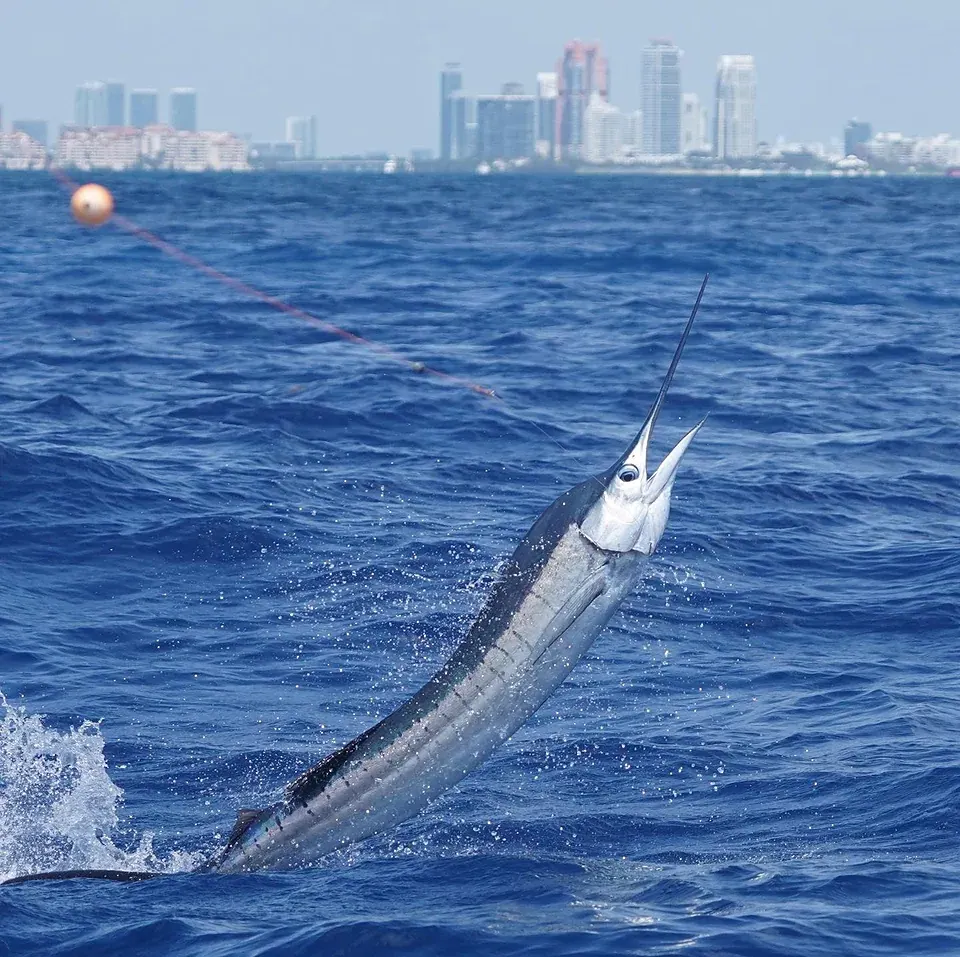
South Florida is one of the best places in the world to catch Atlantic sailfish. It is unlikely you’ll find the same consistent numbers anywhere else, and the reasons are structural. This is a nursery area, so a lot of fish are passing through. We have smaller fish in fall and bigger fish in spring. The Gulf Stream runs close to shore here, and the drop-off concentrates sailfish on the edge in 100 to 300 feet of water. Compare that to the Bahamas, where the bottom falls straight to a couple thousand feet: there are plenty of sails over there, but they are harder to raise from that depth and they are less concentrated. The edge off Miami also holds bait, including ballyhoo, sardines, goggle eyes, and threadfins, so the fish have a reason to stay. And since 2001, the East Florida Coast pelagic longline closure has protected these waters from longline bycatch, which is part of why the fishery stays strong.
There is one more reason to consider South Florida as an angler: accessibility. Sailfish here are a light-tackle fishery, with 20 pound class gear, live bait, and during the season we often have multiple shots in a day. For all these reasons, sails make a great first billfish. Atlantic sails fight pound for pound harder than Pacific sails, and catching them on light gear can be more fun than catching them on the troll.
Kite Fishing for Sailfish
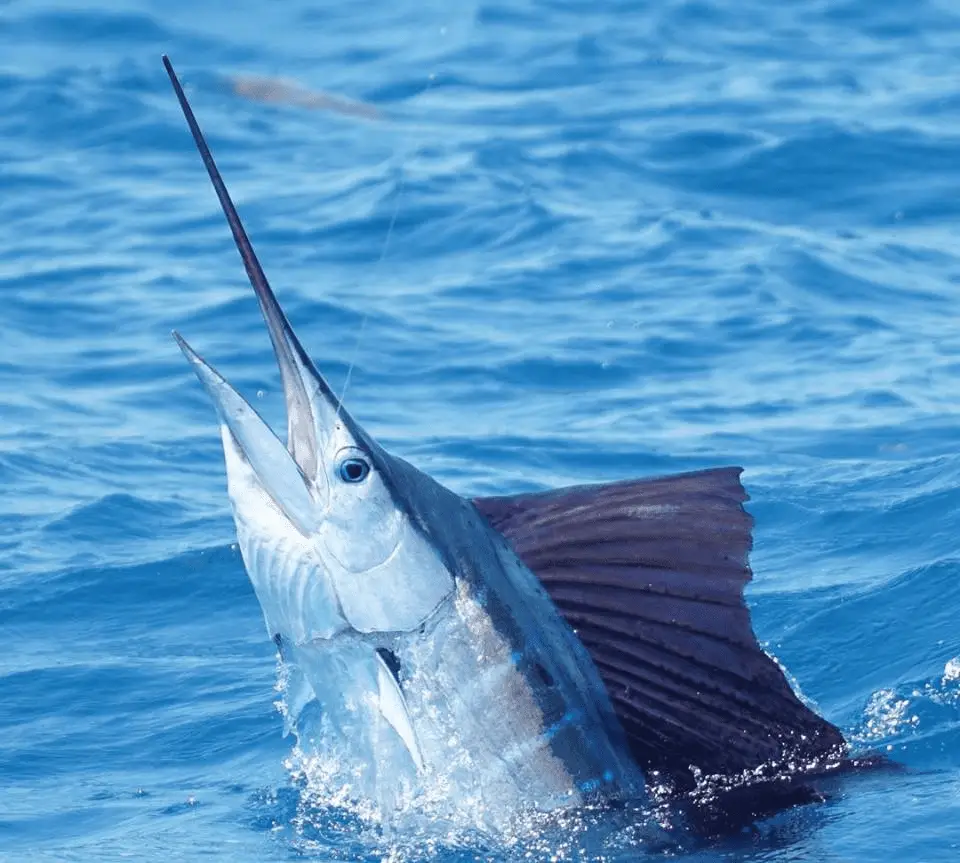
Kite fishing is the most effective way we know to catch sailfish off Miami. We fly two kites with three release clips on each, dangling a live bait from every clip, which puts six struggling baits right on the surface. The distressed vibrations from the hanging baits call predators in from a distance. Sailfish usually raise on the kite baits, and packs of two to six fish sometimes come up at once, which means multiple hookups and a busy cockpit in a hurry. Watching a billfish corral a bait on the surface before engulfing it is one of the best sights in fishing. From the colors to the behavior, it is no surprise the sailfish is one of our favorite targets off Miami.
Raising Sailfish
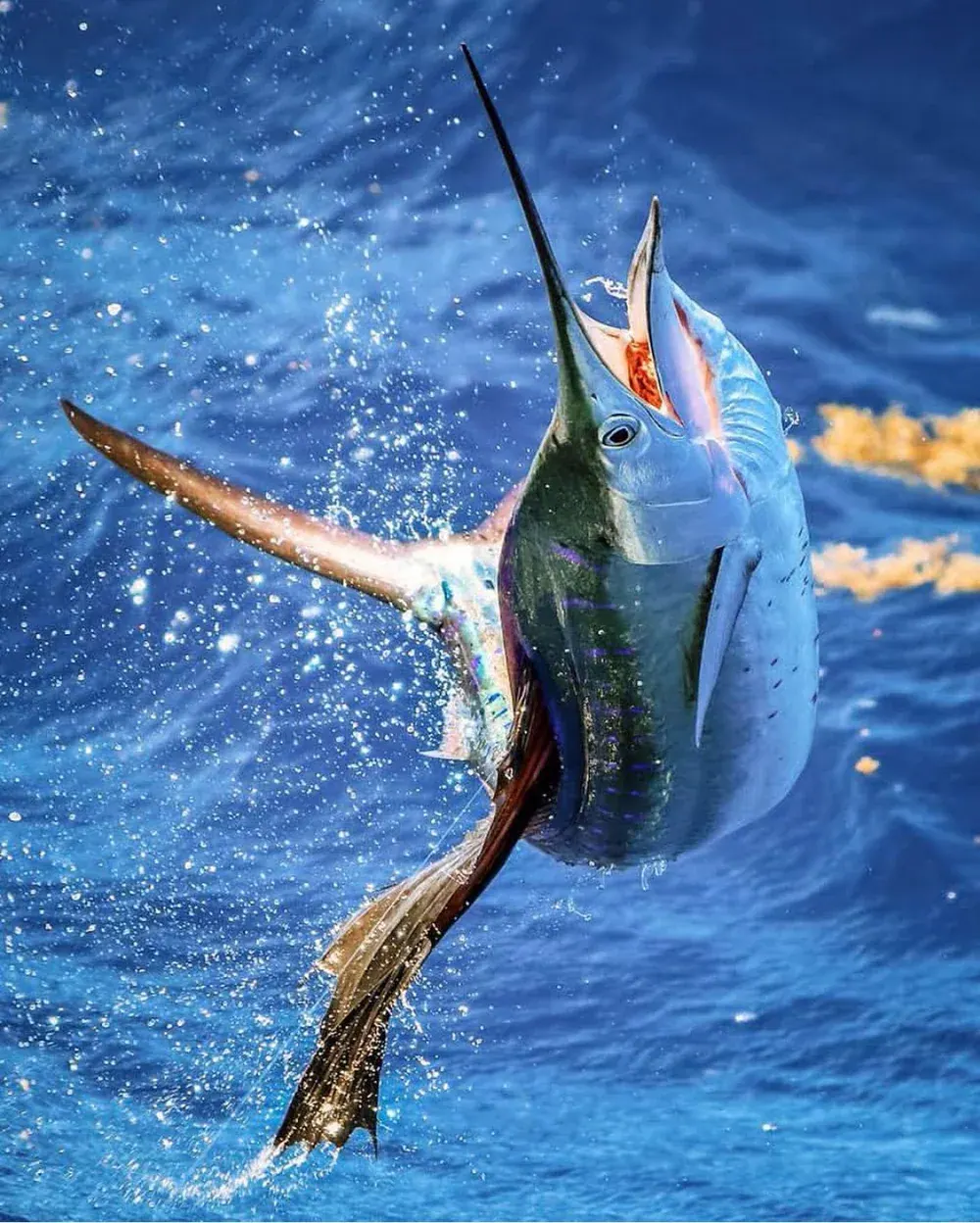
Sailfish do swim near the surface at times when they are tailing or feeding, but most of the time they are not up on the surface. Sailfish typically sit 50 feet or more down, near the thermocline, swimming around and saving energy instead of fighting the current up top. Billfish will hold at depth, see bait or activity above them, rise to eat, and then drift back down. The whole goal of kite fishing is to bring them up to the baits.
There are multiple ways to raise fish depending on the technique and where you are fishing. We typically raise fish while kite fishing with live bait on the surface. The kite tugs it up, the bait tries to swim down, and that struggle puts out strong distress vibrations right at the surface, exactly where a sail breaks water to feed. Sails eat flat lines too, but kite baits raise them more reliably. Live chumming can also be effective for raising fish, and so can wild bait schools the fish find on their own. We are always on the lookout for ballyhoo showers or bait balls with sails close behind. In Central Florida and Isla Mujeres, where trolling is more common for Atlantic sails, the best way to raise fish is a dredge: an artificial bait ball pulled under the spread. All of the techniques have something in common: give the sailfish a reason to swim to the surface and feed.
Hook one sail and other fish often rise from deeper to see what is happening. Sails often travel in pairs and packs, so stay patient and work the spread after a hookup if you want multiple bites. This is also why we try not to leave fish to find fish when we get into a sail bite. If we get a bite in a stretch of water, we will often work multiple drifts through the same area to try and get more bites.
How We Find Sailfish
Kite fishing is the well-known part of the puzzle. The harder part is locating the fish, and two factors drive it: current direction and speed, and wind direction and speed.
Looking for Current
Current is the biggest factor in sailfishing. These fish love blue water and north current, and when those conditions push up onto the reef, the bite is usually wide open for sails and other gamefish with them. Tracking down the current is the tricky part. The Gulf Stream is our main source of current and it can be volatile. It hits certain reefs harder than others, which creates a shadow effect: the current rarely runs the whole edge evenly, and instead pushes in shallow in some areas before bending back offshore, leaving a shadow north of certain reefs and drop-offs. Fowey Light is a good example. On some days the blue water sits in 100 feet a few miles south of Fowey and does not push in until 300 feet north of it. On those days the best sailfishing will likely happen south of the light, where the current runs closer to the reef. Sailfish follow that current and are more likely to raise on your kite baits in shallower water. A few key areas from north to south are the Double Diamonds, Key Biscayne, Fowey Light, Triumph Reef, and Pacific Light.
We prefer fishing the blue side of current rips in 100 to 180 feet of water. We catch sails deeper and shallower, but those are the most consistent depths. In rare cases you catch sailfish inside the edge in powder or greener water, usually when the current is simply too strong, over 3 knots, and the fish slide out of it to save energy. Green water or south current will dramatically slow the sailfish bite, but sometimes it is unavoidable. It helps to have a network of contacts in different areas so you know where the blue water is coming in closest. One area can be dead while a spot 20 miles away is on fire.
The Best Wind for Sailfish
The second biggest factor is wind direction and speed. It has always been said that sailfishing is best after a cold front, but our experience says this is more nuanced. If you have a cold front moving through, the water quality and current conditions pre-front are the most important tell of what the post-front will look like. Cold fronts often bring west or northwest wind, which pushes the blue Gulf Stream water offshore. Plenty of post-front days can be slow, with green water, no current, and cold, windy weather, if you don’t have a healthy body of current. Overall we do prefer north or northeast wind, which you usually get a day or two after a front, and sometimes from lower pressure on its own. That wind direction runs parallel to the reef and against the current if it is present, which encourages sailfish to migrate south and can set up tailing conditions, where sails move to the surface and swim down sea. When it lines up, north wind against north current is the recipe for double-digit days. Cold fronts can bring good fishing, but not usually without the current underneath.
Any wind beats no wind, and kite fishing is much easier with a breeze. North is best, east, southeast, and south can be fine with decent current, and west is the worst, though a little west is sometimes better than none. Interestingly, the Florida Keys prefer an east wind over a north wind because of the bathymetry of their coastline. What sailfish really want is rough water with wind against current.
Sight Fishing for Tailers
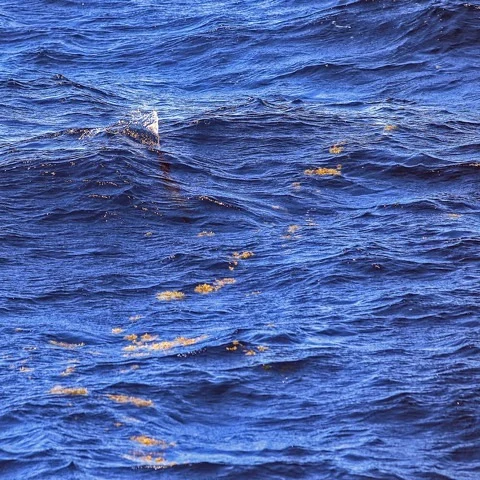
Sight fishing is a different game from kite fishing. For tailers we want that same north wind running against north current, which puts sailfish on or near the surface swimming down sea. Instead of flying kites, we rig six spinners with 30 pound fluorocarbon and circle hooks, put the captain high in the tuna tower, and idle slowly north with a mate ready on the pitch bait. Tailing fish may be alone or in packs of two to five or more. When you spot a pack, the captain has to swing back to the south and present the bait in front of the fish without spooking them, which is genuinely difficult and takes practice. Some days the tailers just do not want to eat. Catching one out of every three is about average, but you may see more than 50 fish in a day. When everything lines up, this is some of the most exciting fishing anywhere.
Baiting Free Jumpers
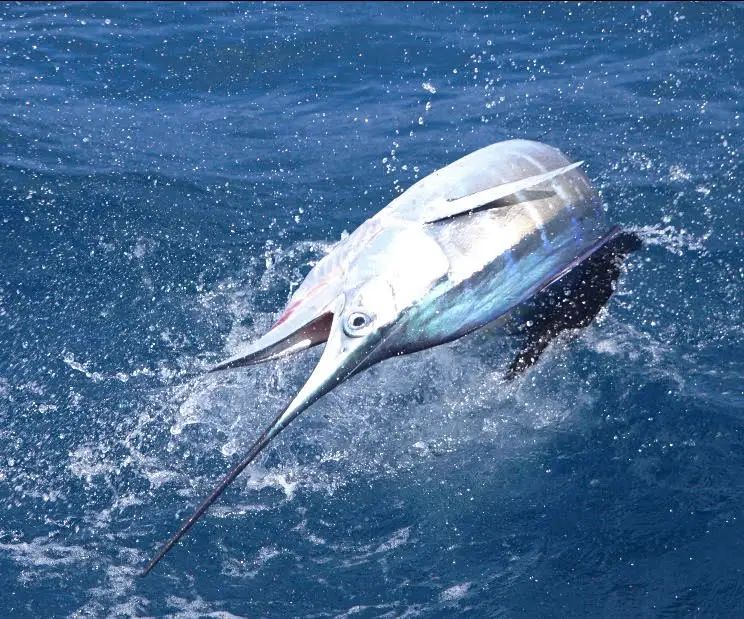
Another way to catch a sailfish is baiting free jumpers. Exactly why sailfish randomly start jumping is up for debate, though the scientific community believes it is to shake parasites. A free jumper may be alone or traveling with a big pack. If we are kite fishing, we line the spread up to the south of the jumper, which can mean lifting baits into the air and repositioning the boat aggressively to get in front of the fish. If we are trolling or running between spots, the play is pitching multiple staggered spinner baits in front of the fish. We look for rips, pieces of weed, or anything on the surface to help line up the intercept. They can be tough to catch, but with practice and a little luck we have caught free jumpers first spotted nearly a mile away. Line up, pitch some baits, get up high if you have a tower, and do not be surprised if more than one fish comes up.
Live Chumming for Sailfish
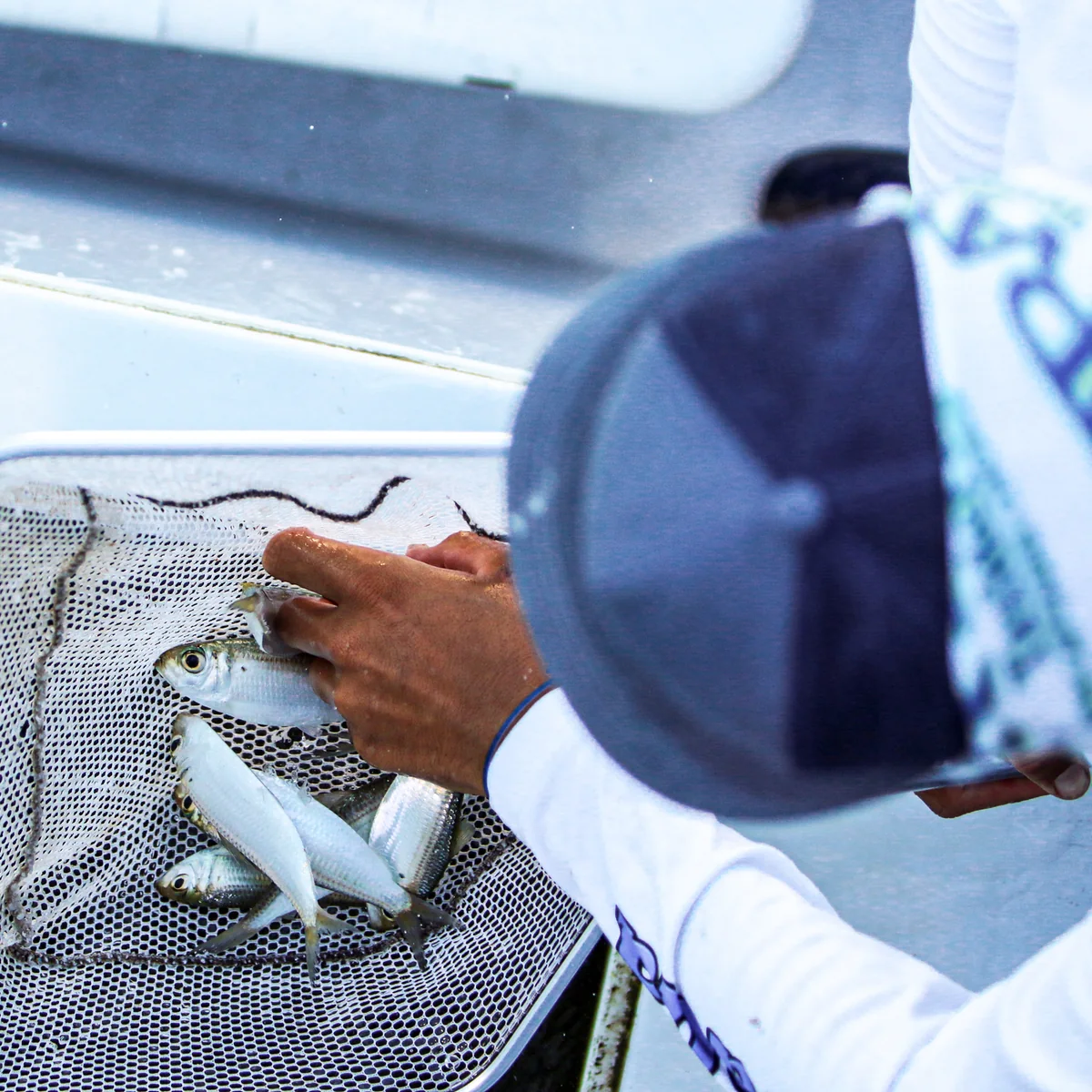
Like a lot of species, sailfish respond very well to live chum. We deploy a full kite spread of six baits first, then start launching scoops of pilchards, big scoops followed by single chummers at a steady pace. From the tower you can sometimes watch packs of sailfish raise on the live chum. We have seen upwards of 20 sailfish at one time chasing bait balls with their sails knifing through the surface. Line up the kite spread or pitch spinners at a group of feeding sails and hang on.
Catching Sailfish on the Troll
Trolling is not the preferred method in South Florida, but sailfish can absolutely be targeted this way. Pacific sailfish will aggressively chase teasers and hunt down artificial lures; Atlantic sailfish are much pickier and are usually caught on the troll while dredge fishing. Serious dredge programs pull double-tier dredges carrying upwards of 30 mullet and ballyhoo, often two dredges at a time plus daisy chains, four teasers, four rigger baits, and a pitch bait at the ready. It is a tedious technique more often reserved for marlin, and many South Florida boats are not rigged for it unless they are headed to the Bahamas. That said, a few swimming ballyhoo mixed with teasers in the spread definitely improves the odds of a South Florida sailfish on the troll. We have caught plenty of sailfish trolling and have even bait-and-switched a few, but the numbers pale in comparison to what we catch live baiting.
Sailfish on Bait Balls and Showers
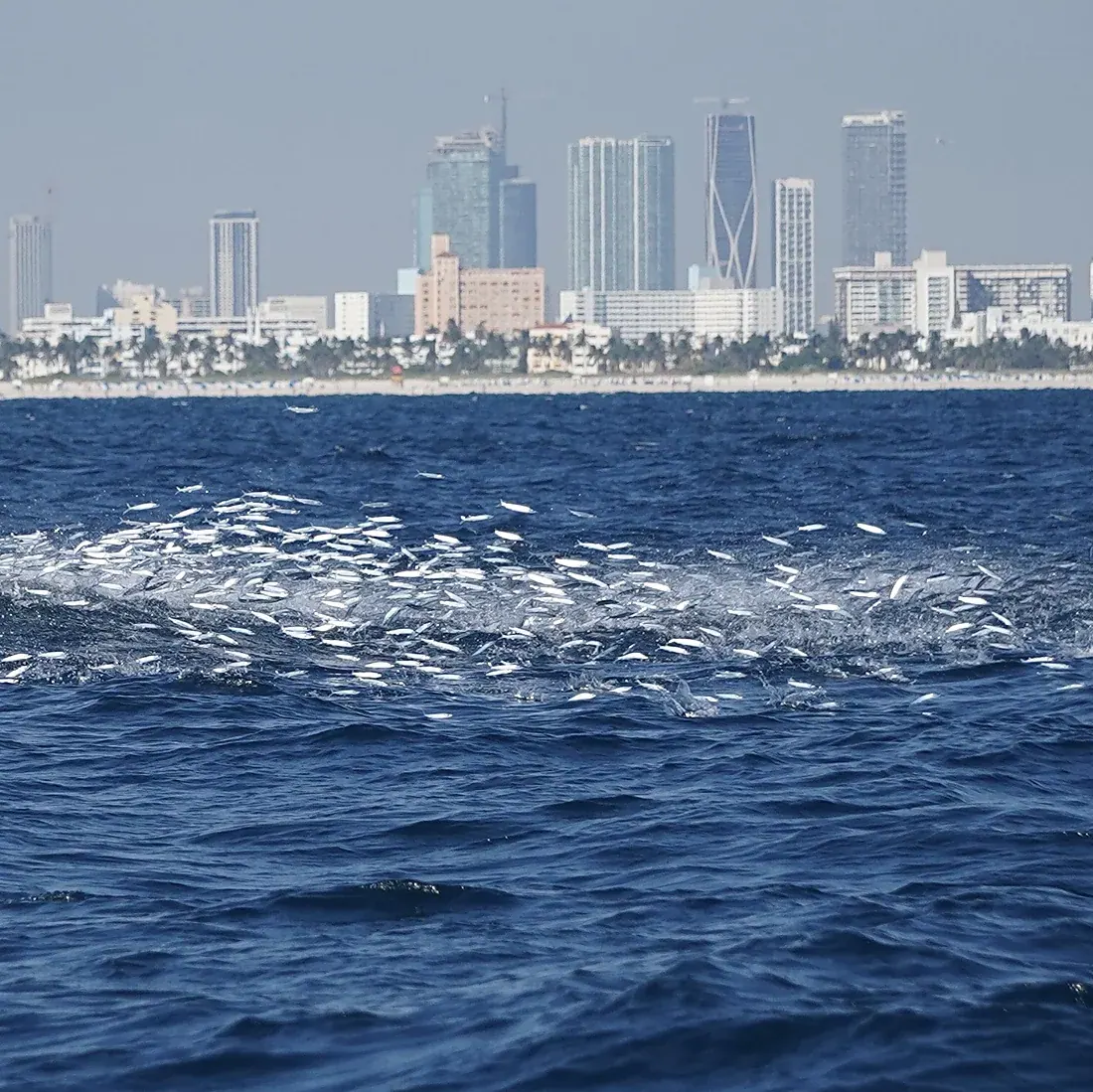
The last technique worth covering is fishing bait balls, or showers. This is more common in the Keys, but we see our share off Miami, especially in fall and early winter. Showers are large schools of ballyhoo getting sprayed on the reef by feeding sailfish. Sails are built to hunt in packs and manipulate bait, and when the ballyhoo are in thick, sailfish will push onto the reef in 70 feet of water and as shallow as 20 feet chasing them. We look for frigate birds or bait shooting out of the water and run toward the ball with spinners ready. These shallow fish can be very finicky, so light fluorocarbon leader, long casts, and a frisky bait, ideally a ballyhoo, are the play. Approach carefully and this is one of the most fun ways there is to catch a sailfish, and even a mahi, in very shallow water.
The Bite, the Drop-Back, and the Fight
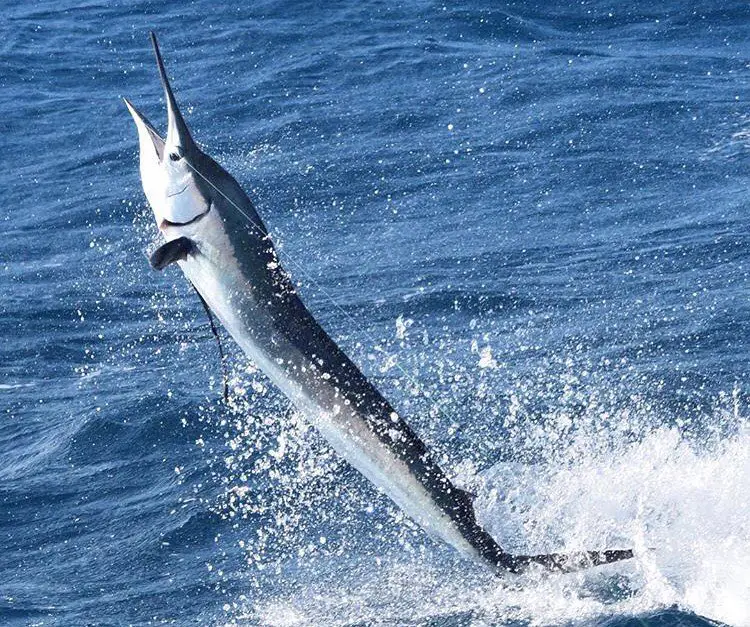
The first sign of an approaching sailfish is usually the bait’s behavior. Goggle eye and cigar minnows swim violently and dig for the bottom when they see a predator, while herring and sardines speed up and sometimes jump clear out of the water. A kite bait jumping means something is about to crush it. When sailfish raise on a bait, the bite itself is usually slower and more methodical than a kingfish or tuna bite. The sail usually comes up casual, sail extended, and eats without much hurry. There are few predators as adept at corralling and eating baitfish.
The drop-back is the most important part of the fight. When a sail eats, you need to free spool with your thumb on the line. It is important to drop when the fish actually takes the bait, not when you first see it coming, which is a common mistake for novice anglers while kite fishing. Dropping back too early dumps the leader in the water and blows the presentation. Sails usually involve one of the more patient drop-backs of anything we catch on the kites.
About 90 percent of the sailfish we hook properly make it to the boat. Circle hooks and mono leaders are forgiving. The average fight runs 5 to 10 minutes on our 20 pound tackle, and a fight over 20 minutes is a long one. A stubborn spring fish can fight for 45 minutes or more, especially in strong current. We usually keep our drag set at just 3 to 4 pounds. The 20 pound mainline is usually the weakest link, but too much pressure can also chafe the leader. Expect sails to jump, tail walk, and greyhound repeatedly during the fight. When fish are lost, it is usually a bad hookup, a bill wrap chafing through the leader, or neglected line. The captain’s job during the fight is to back down and bring the boat to the fish. Sails mostly stay up top, which makes boat maneuvering just as important as the angler’s role. Faster fights mean healthier releases, and they matter when you are fishing tournaments or trying to put up numbers. Sails do sometimes dig deep, but if you play your angles you can usually coax them back to the surface.
Sailfish Fishing Charters in Miami
Sailfish season runs from approximately October through June, with the peak usually around March and April. Fall fish run smaller, with more juveniles around. Spring brings the bigger spawners, when 40 to 60 pound fish are not uncommon. An important nuance if you are considering when to fish: conditions usually matter more than the calendar. A good post-front day in November with good current can produce double-digit bites. You may not see a single fish on a bad day in April.
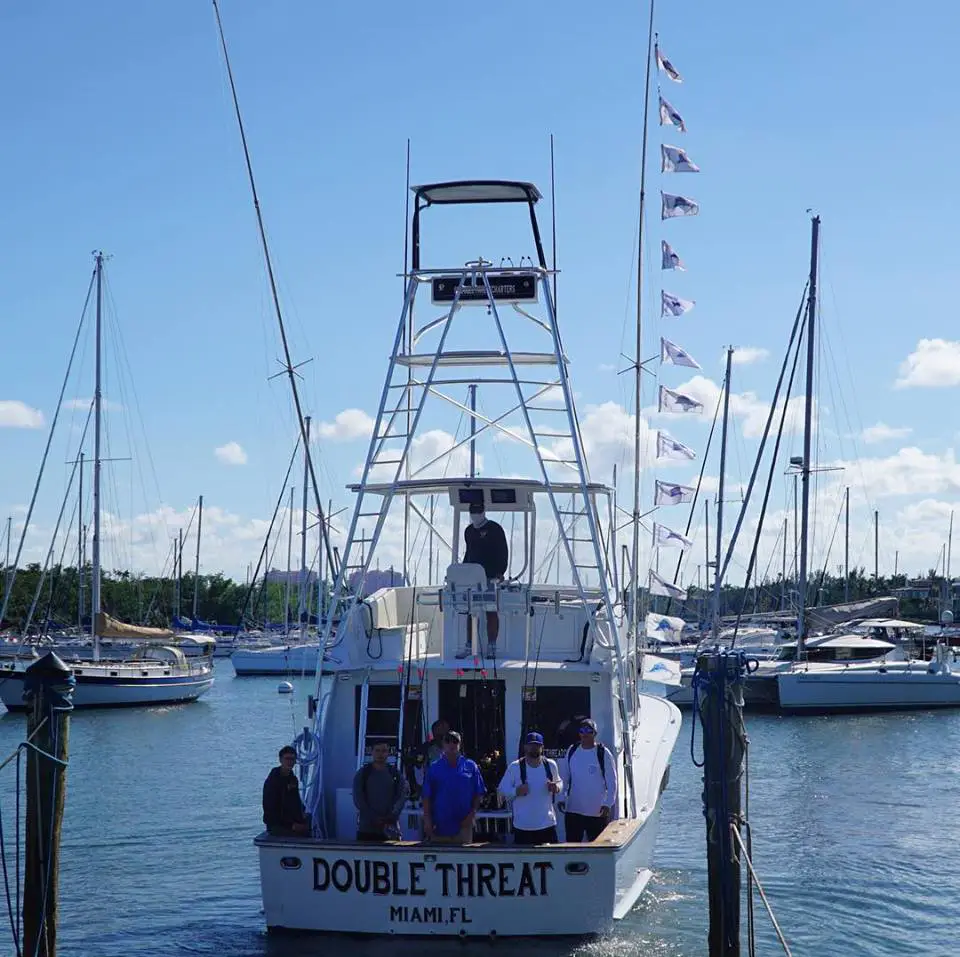
The honest numbers: one to three fish is a typical day if we are kite fishing. Double-digit days happen, and we have had them in every month from September through June, with the most in April. Our best day on the Double Threat was 24 for 30 with one mate while charter fishing. With a tournament crew and tournament bait, we are confident that day would have produced 40 or more releases. A few extra hands for the multiple hookups and more bait would have gone a long way.
Sailfish are decent eating if smoked, but they are one of the most important gamefish South Florida has to offer, so we release almost all of them. The fish stay in the water when possible, which is actually required by law unless you are harvesting them. We always try to get boatside pictures before releasing them. For more on sailfish migration and conservation, check out The Billfish Foundation.