
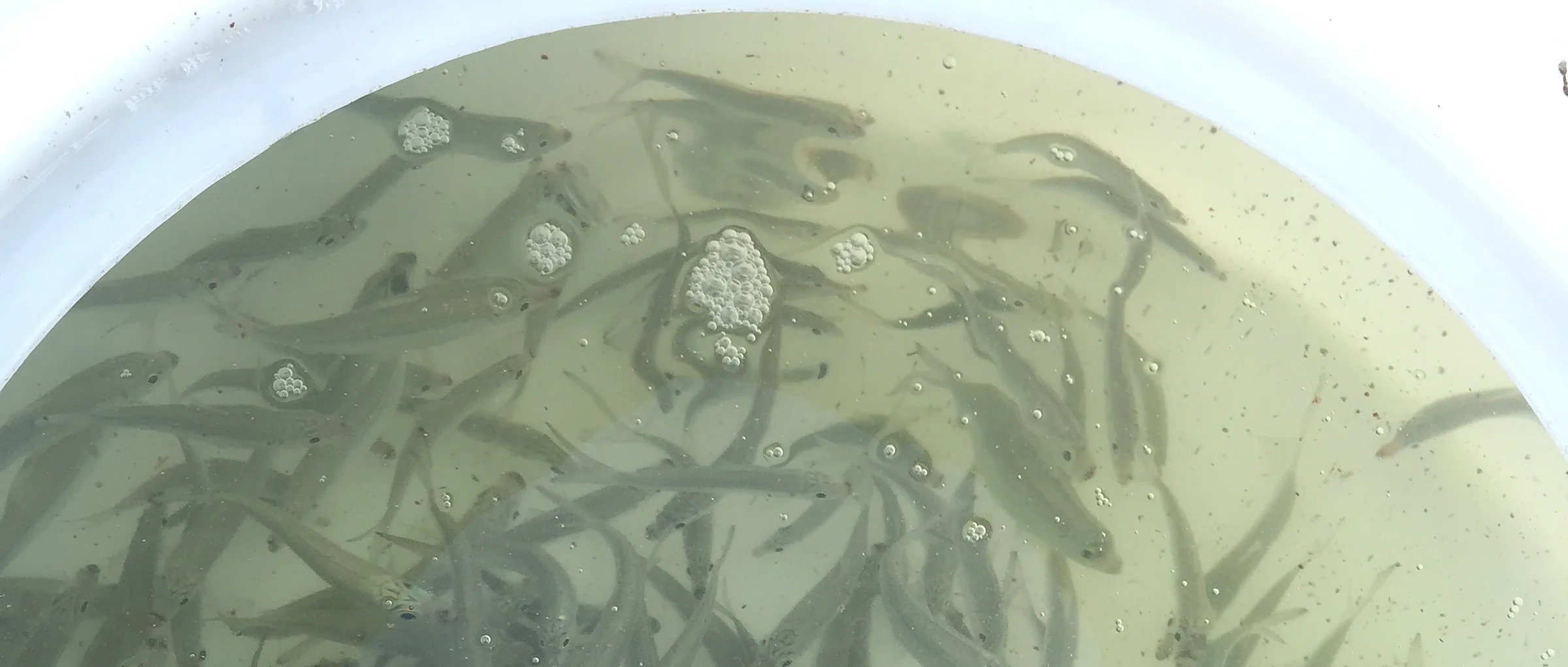
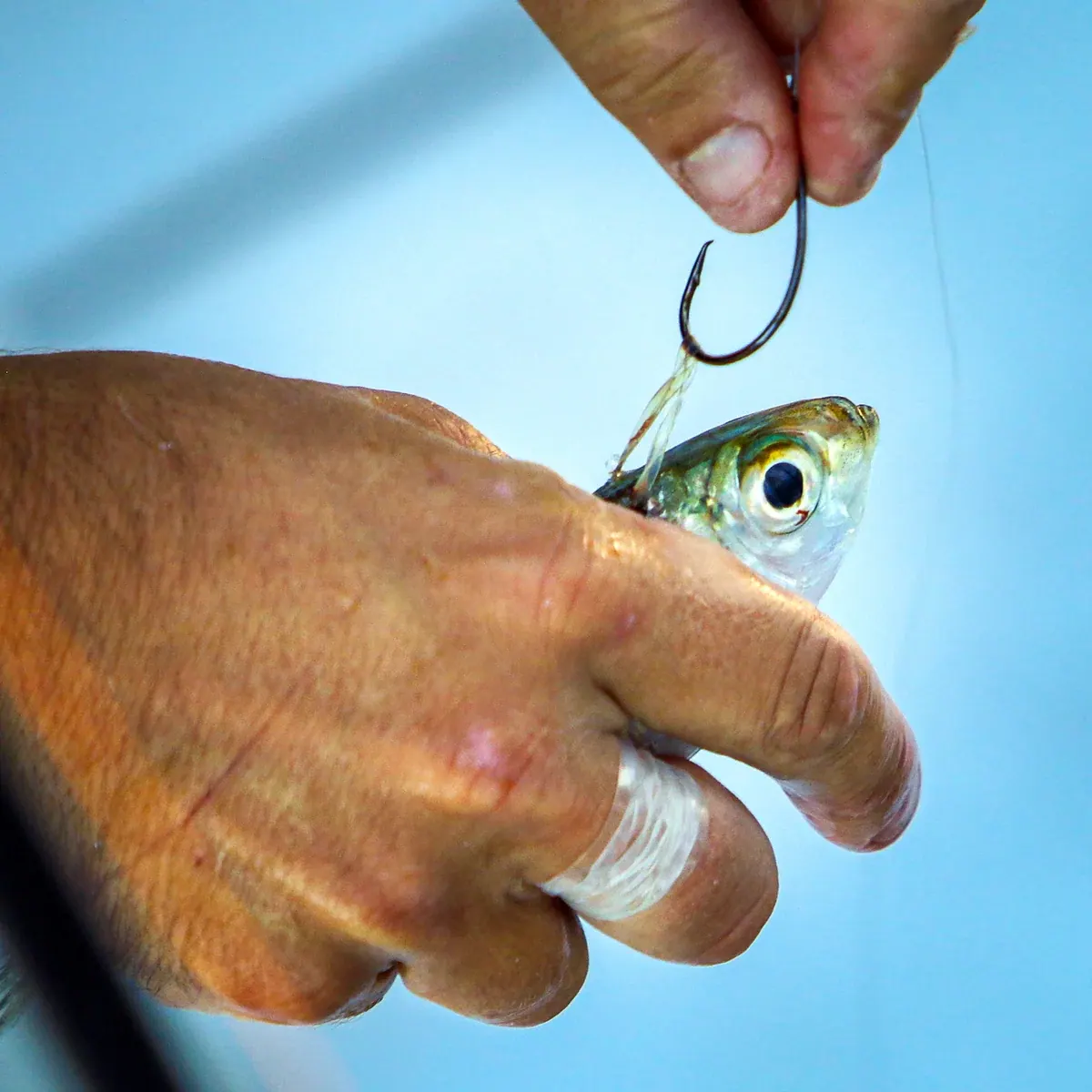
Pilchards are a type of sardine with big eyes and large scales, and they might be the most eaten fish in South Florida. Snapper, barracuda, snook, tarpon, and sea trout all eat them on the flats. Birds dive-bomb them from above. If they make their way offshore, tuna, kingfish, snapper, and more will not hesitate to devour them. Pilchards spend their entire lives trying not to get eaten, which makes them an ideal baitfish. The whole concept of pilchard fishing comes down to volume. If you can find them, load up for the trip and use them for live chum.
Where Pilchards Live and When
Pilchards start their lives on the grass flats and in the bays, where they form large schools and hold an important place in the coastal ecosystem. As they get bigger they school up in slightly deeper water on the flats, and some make their way onto the reef and into the inlets and finger channels. The seasons move them around. Fall is when they are thickest on the flats. In winter, the shallowest water in the bay cools off first, so they slide deeper toward the inlets and finger channels. In spring they roam the reefs, and in summer they can be harder to find.
Spring used to be more reliable than it is now. Bug Light — the old Biscayne Channel Light off Key Biscayne — stood since 1929 and was the most important bait structure in the area. The Coast Guard tore it down in 2014 and did not replace it. We used to live chum almost every day in spring. Since the structure came out, the pilchard fishery has genuinely not been the same. They are still around, just not as concentrated or as reliable to find.
Follow the Pelicans
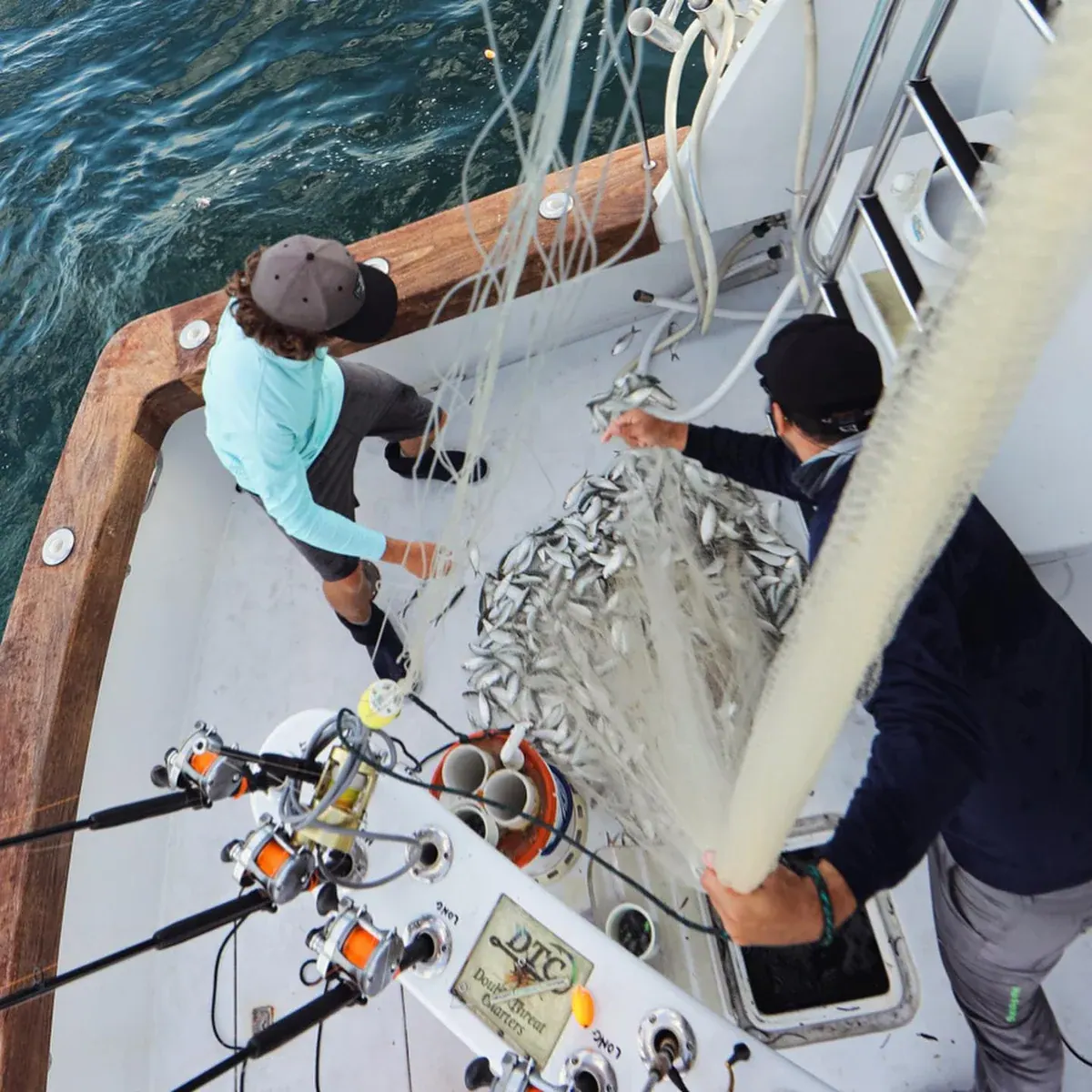
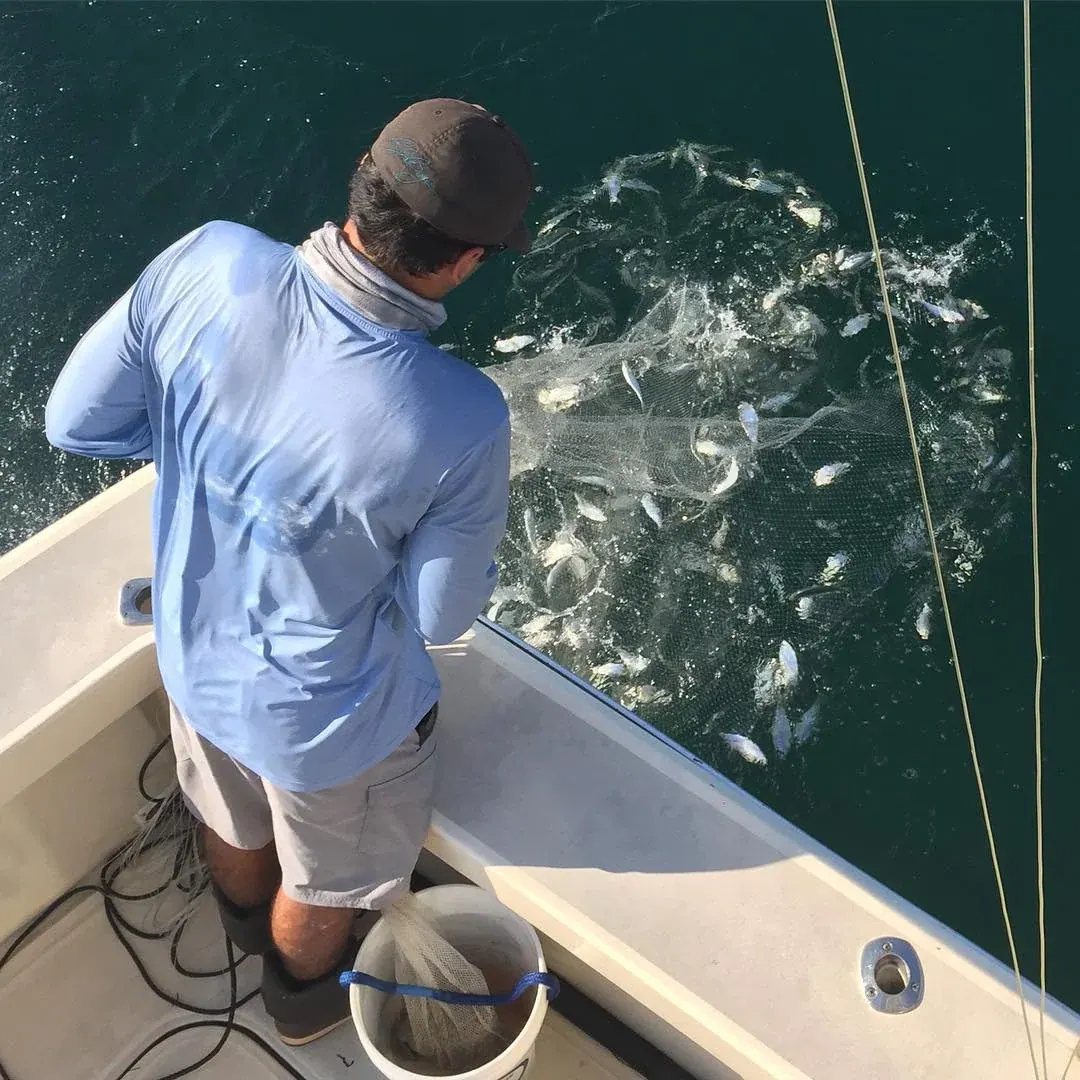
In Biscayne Bay, and over in Flamingo and down in the Keys, a lot of boats start their day looking for pilchards up on the grass flats, and pelicans are your best friend. If you find pelicans dive-bombing a flat, there are typically pilchards there. The best bet is to ride up, put out a chum bag, give the fish a few minutes to rise in the chum, and then throw the net on them. If they will not come up in the chum, riding up and casting directly on the school is worth trying. There is a depth limit to the chum game: once you are deeper than about fifteen feet, it is hard to get pilchards to rise. In deeper water we mark them on the sonar and either throw the net on the school or drop a sabiki down.
Pilchards can also be caught at night, sometimes very reliably, and a lot of the commercial bait guys catch them before sunrise. If you anchor and chum at night in an area that holds pilchards during the day, they will usually come up, and they are pretty easy to net. They come to lights too, so even a spreader light can be enough to bring them in. This approach is tiring and it is not guaranteed, so a lot of boats just prefer to buy a few scoops from the commercial bait boats.
The Right Cast Net
The right net depends on where you are throwing it. If you are inshore and looking for pilchards frequently, an eight or ten-foot net with quarter-inch mesh is the right tool. A decent all-purpose bay net is a ten-footer with three-eighths mesh if you want flexibility into ten to twelve feet of water. On the reef we go bigger: a fourteen-foot net at up to two pounds per foot, twenty-eight pounds total, with half-inch by one-inch stretch mesh is what we prefer. These are big, heavy custom nets that sink fast and flat. The rule is lighter in shallower water and heavier in deep, with a very weird point of diminishing returns past thirty feet where some bait guys prefer a lighter net. If you are throwing in twenty to thirty feet on baits holding near the bottom, you want a custom net. The good ones sink flat instead of closing up on the way down.
Sabikis and Hook and Line
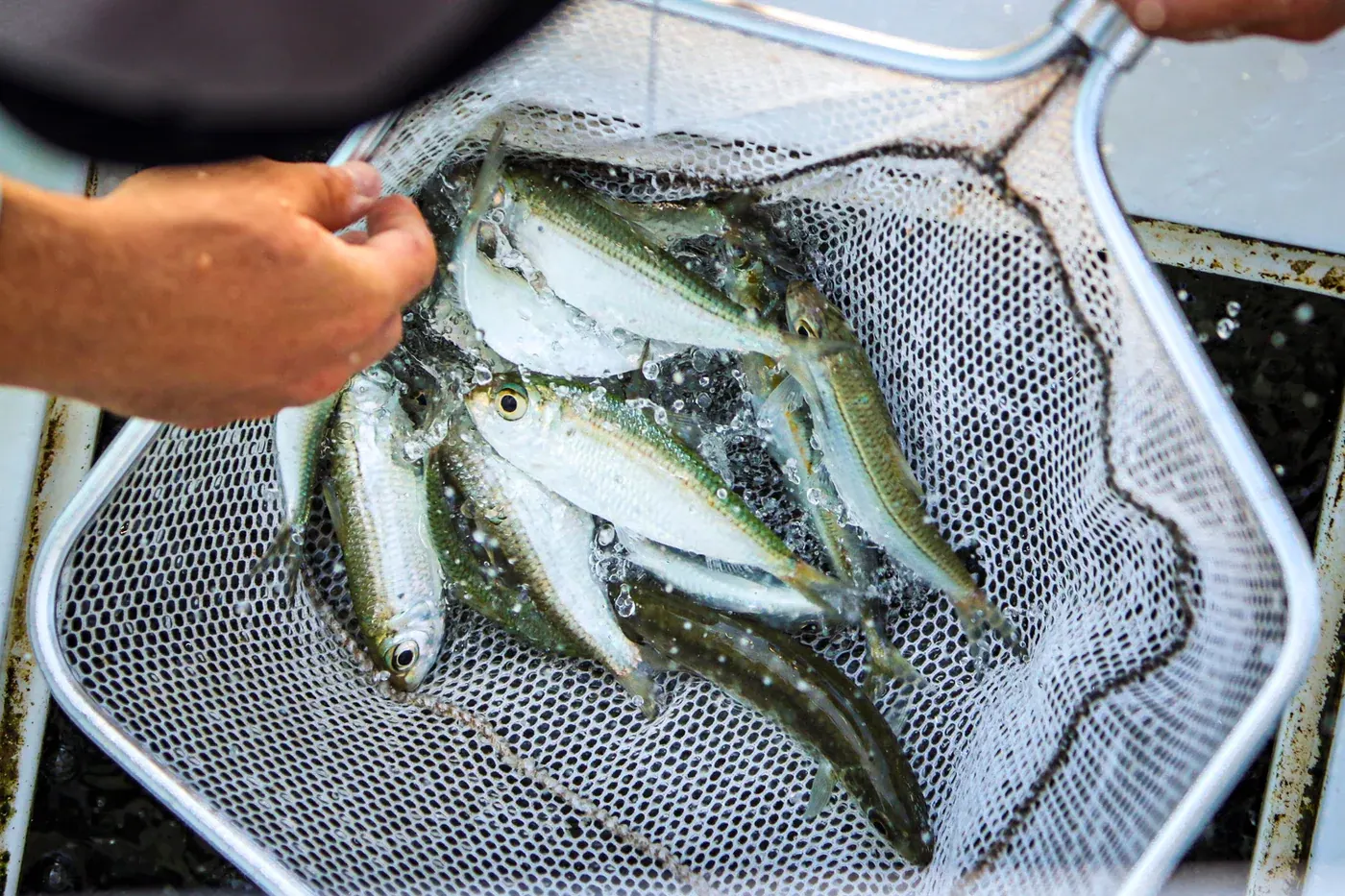
If you do not have a net, or prefer not to throw one, you can catch pilchards pretty well on sabikis. You are just not going to get the same kind of quantity. The hook and line approach earns its place in the winter off Miami. Pilchards hold well in Government Cut in the winter, but the water runs forty to fifty feet deep, so the net is often more trouble than it is worth at that depth, especially when the bait is holding near the bottom. Those inlet pilchards are usually on the larger side too, which makes them worth catching one at a time.
Blacking Out the Well
When the bait is thick, we try to load up. If you are wondering how many pilchards will fit in the well, our rule of thumb is to try and “black it out.” Regardless of the size of the livewell, if you can see the bottom or the sides, there are not enough pilchards in there. As long as you have good flow, you can put a serious number of pilchards in a well. The main concern is overstuffing when other baits share the space, but a designated well for chummers can be packed.
Pilchards are hardy and they do not die off much. Whether we pen them up depends on how they were caught. Hook-and-line pilchards hold in the pens fine, and the big ones are worth penning up and having in the mix on a charter boat. Cast-netted pilchards should be used the same day. The nets take off a lot of slime and scales, so they usually will not live long term after that.
When to Use Pilchards
Pilchards are good flatline baits, pitch baits, bottom baits, and short kite baits. They do not get much bigger than three or four inches, so a lot of smaller fish can eat them and the bigger fish will too. In the Bahamas they are the bait of choice for yellowfin tuna, and that fishery is built on live chum. The overall theme with pilchards is that they really earn their keep when you have live chum. The technique is not just an offshore play, either. Live chumming with pilchards can be very effective in the bay and the backcountry for snook and snapper, and in the finger channels for muttons, yellowjacks, and more. We would not necessarily fish pilchards in a sailfish tournament, because there are better baits for that and live chumming as a technique is actually against the rules in most tournaments. Otherwise, everything eats pilchards, and the more you can catch before your trip, the better.