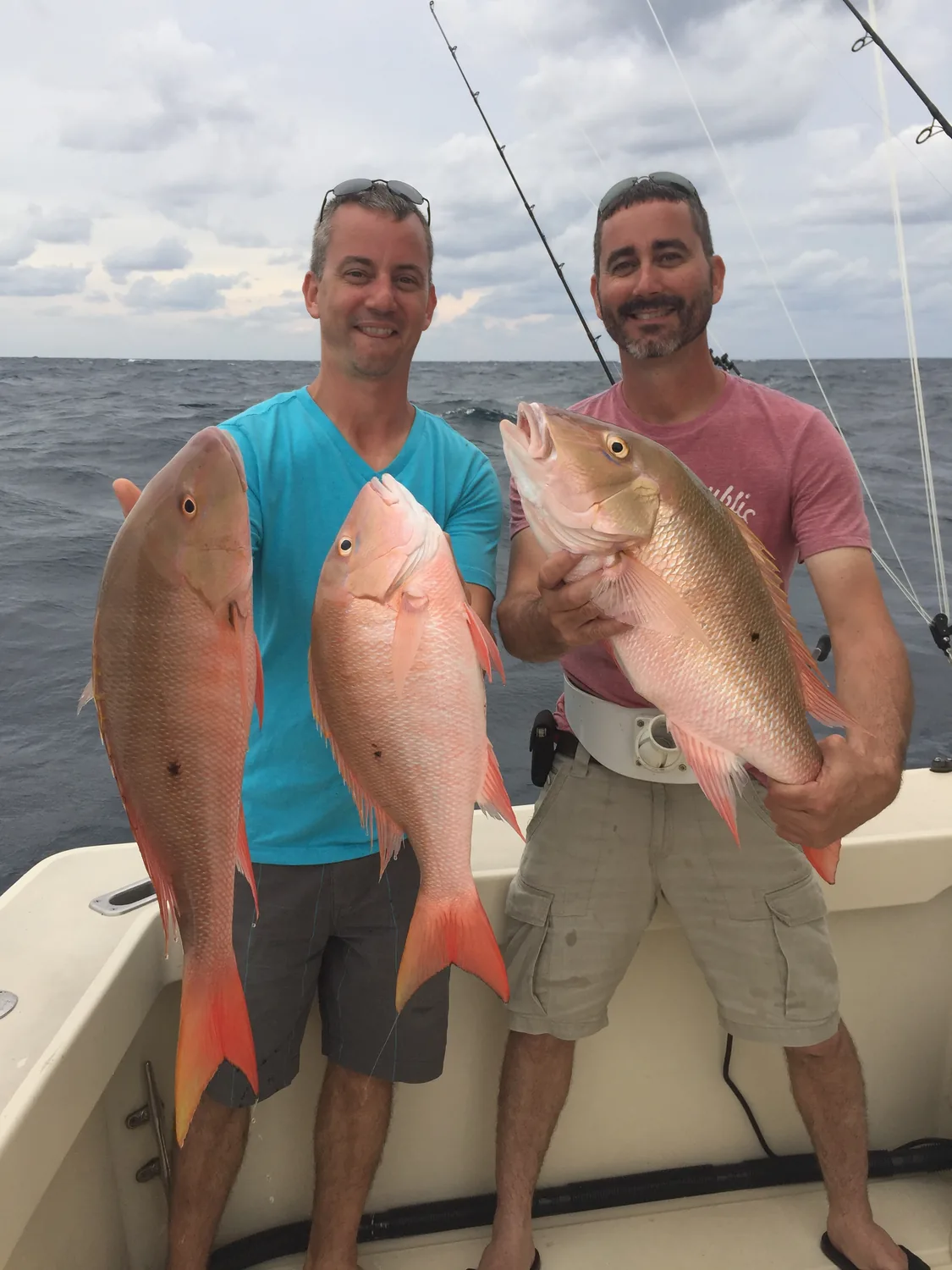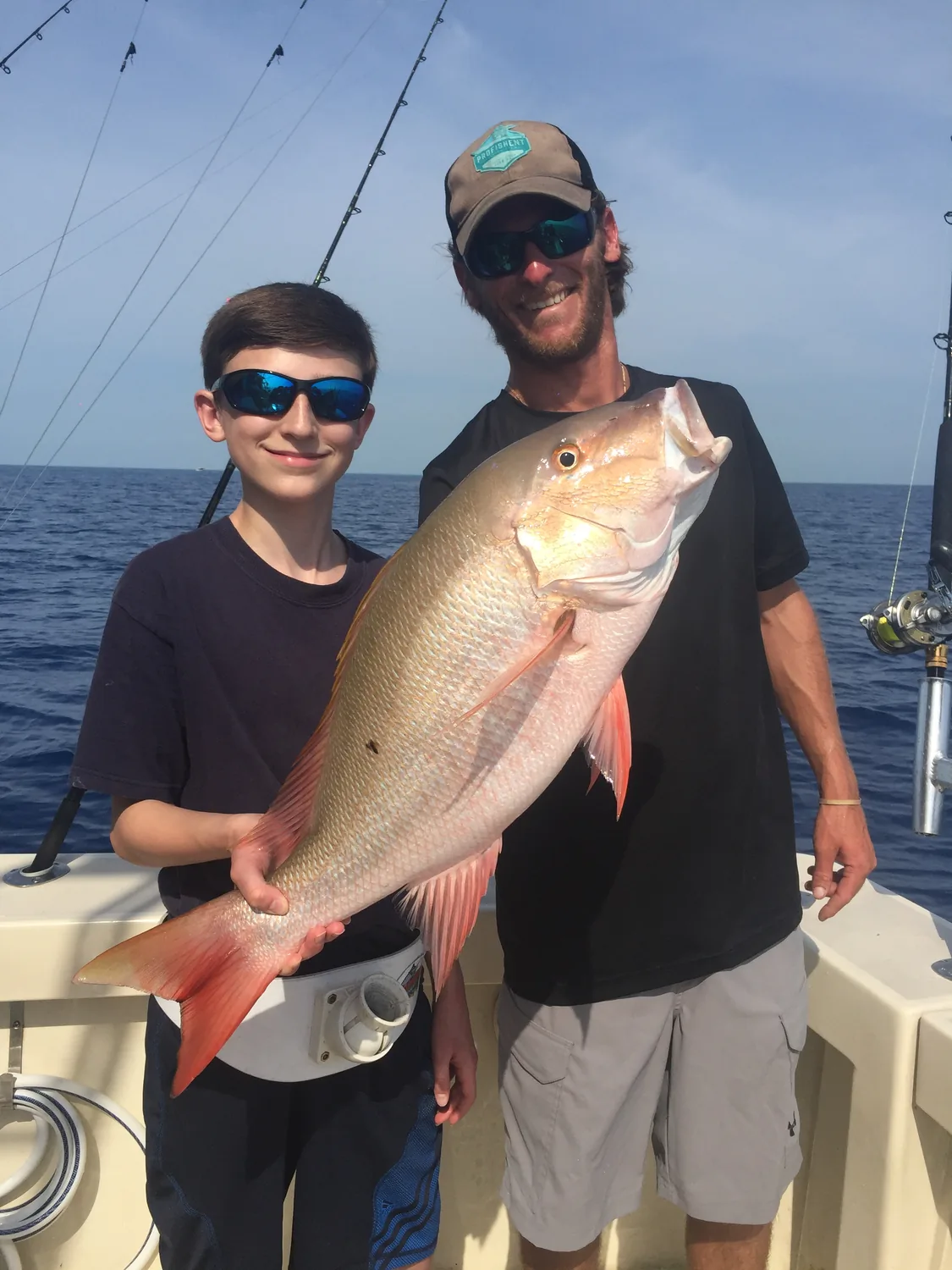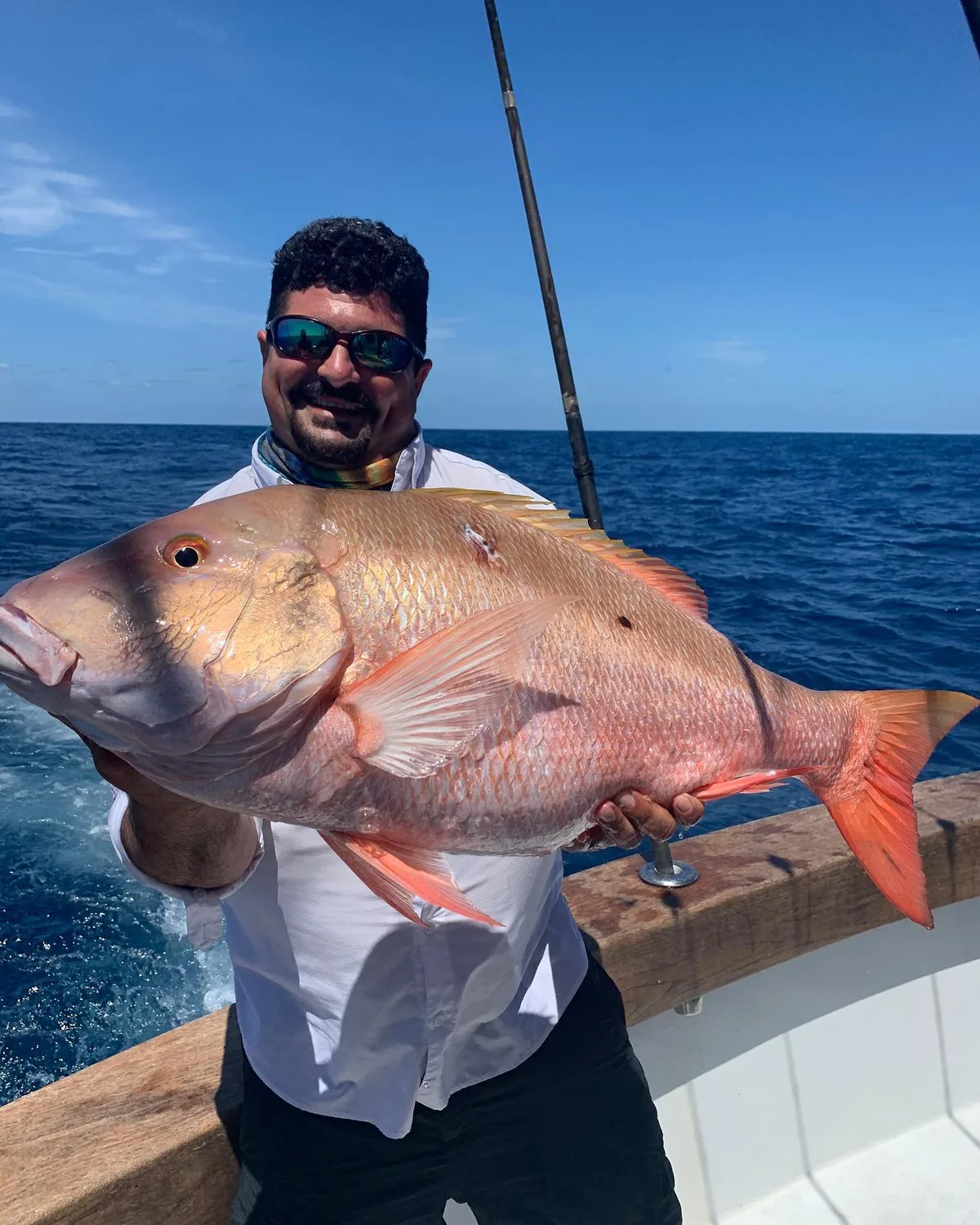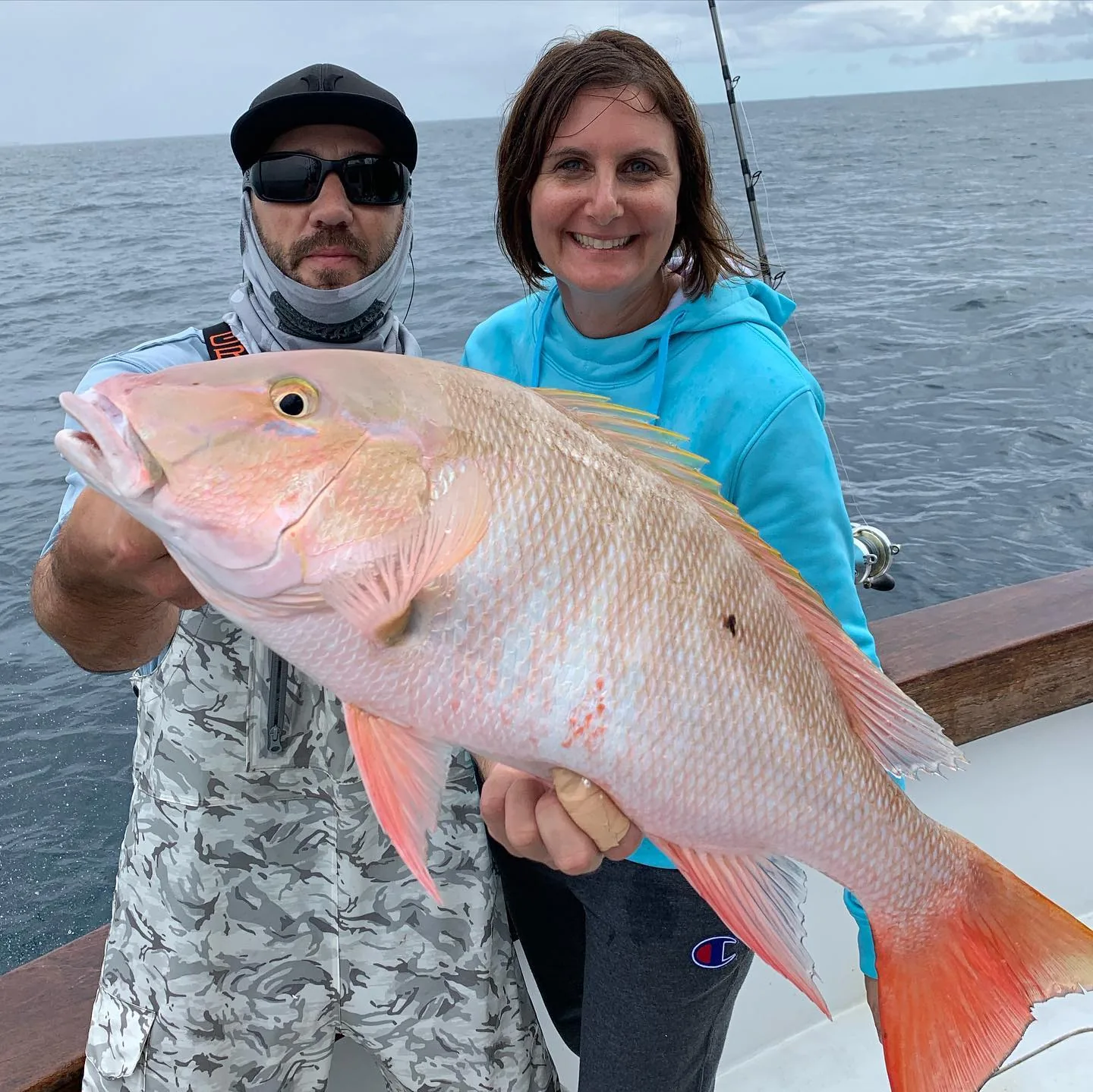
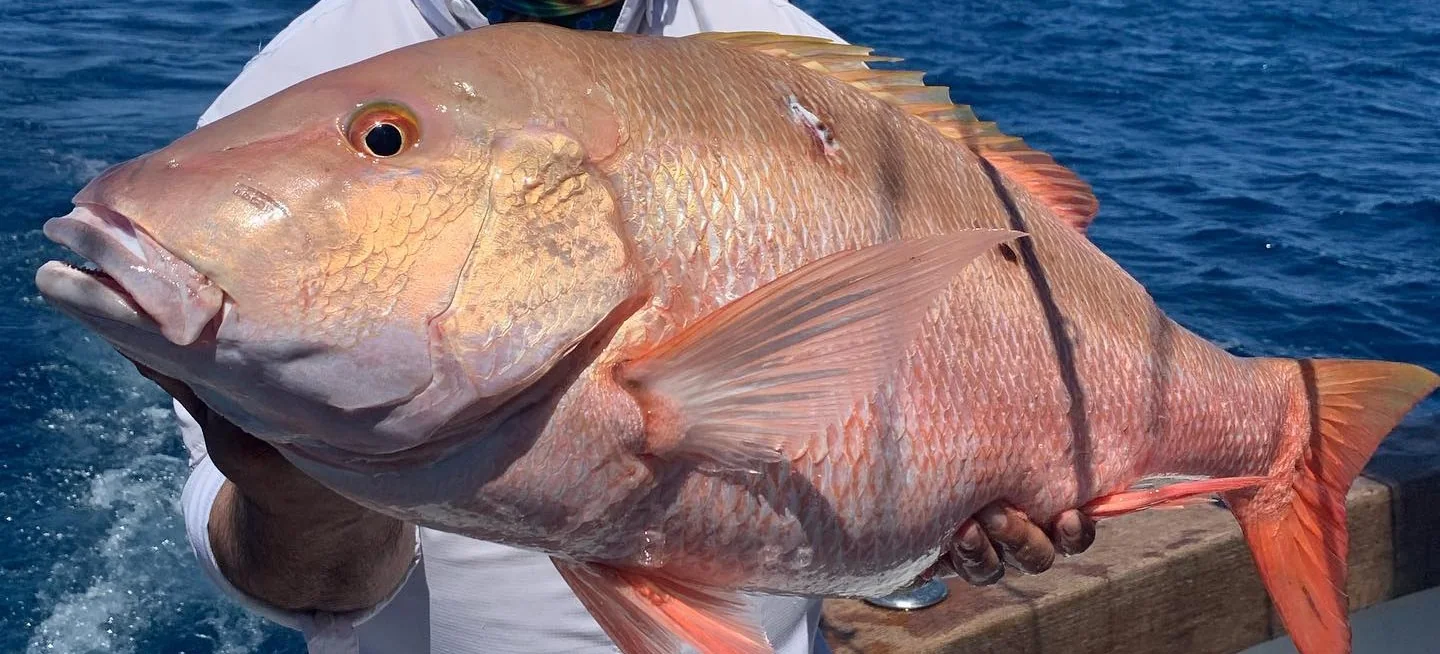
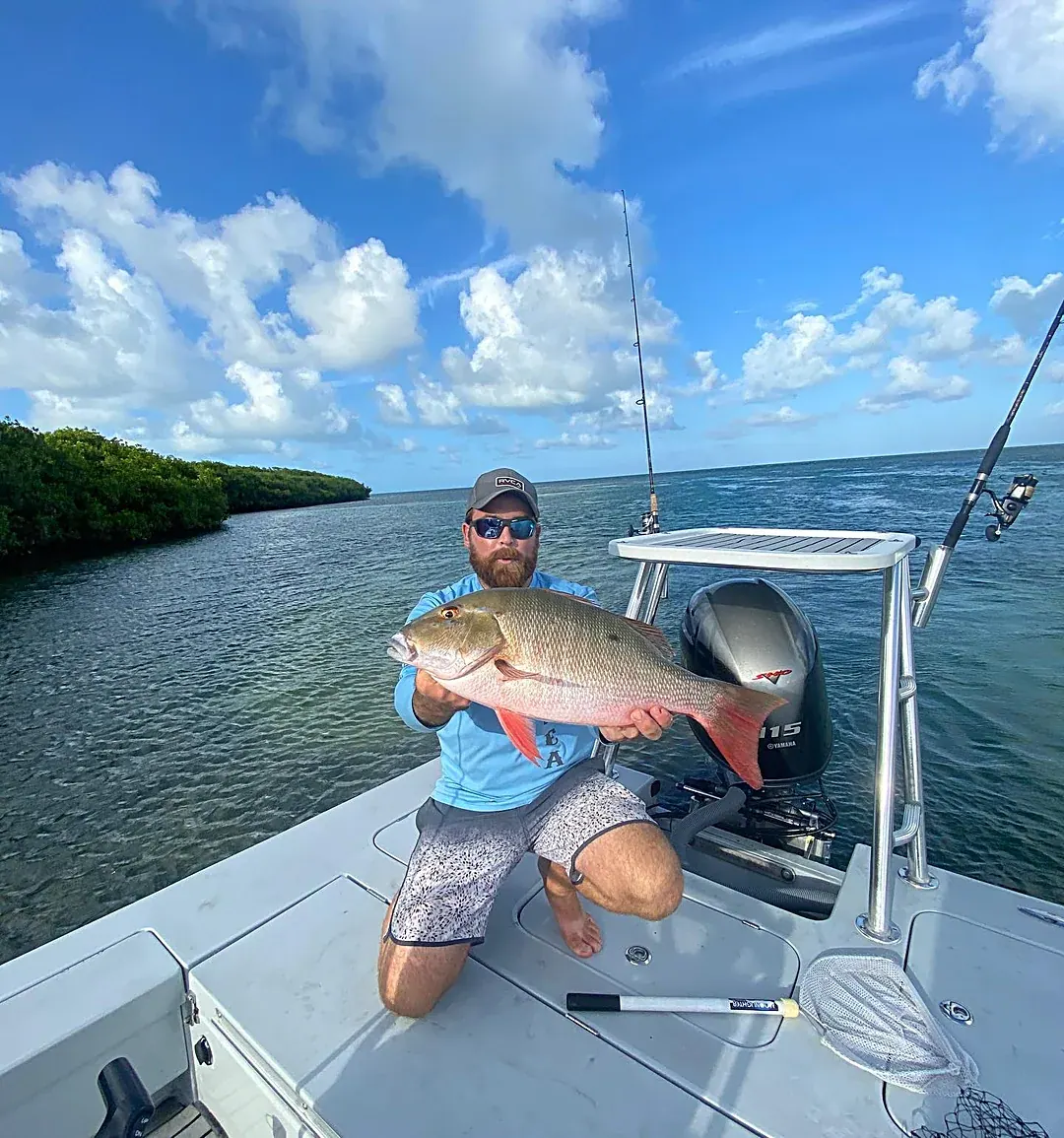
Mutton snapper is one of the most prized reef fish in South Florida, and for us it is a mixed-bag fish rather than a headline. We do not sell a dedicated mutton trip and we rarely anchor up to grind for them on the Double Threat, because anchoring to target snapper means giving up the offshore bite the big boat is built around. Most of our mutton come one of two ways: inshore in the fall on the finger channels, usually on Capt. John’s boat or a deep-sea trip, or as a welcome bonus while we are drifting and kite fishing offshore. We also catch some on the patch reefs with the big boat during winter. When a customer wants muttons specifically, the inshore fall program is a great option to target these fish on light tackle.
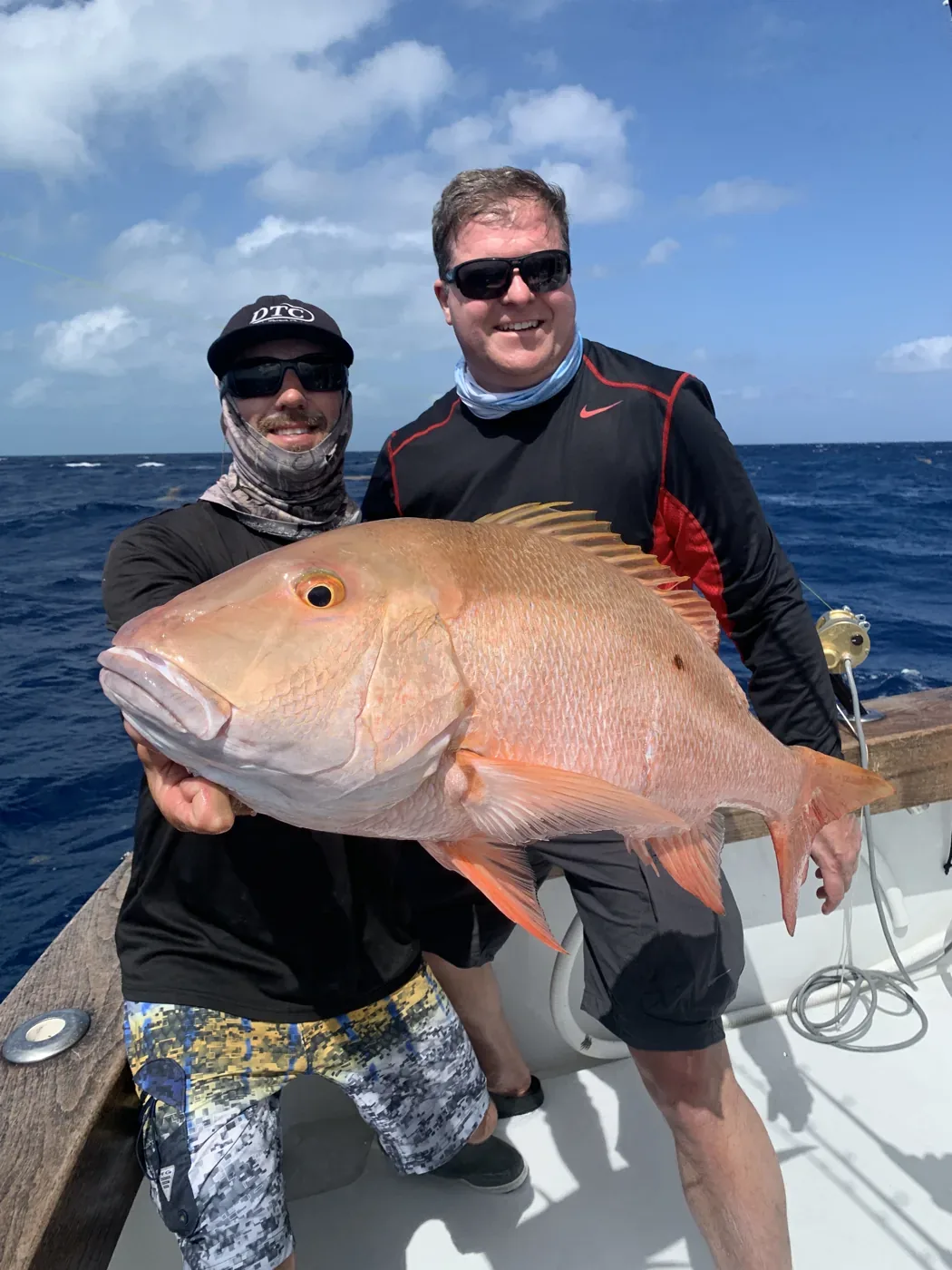
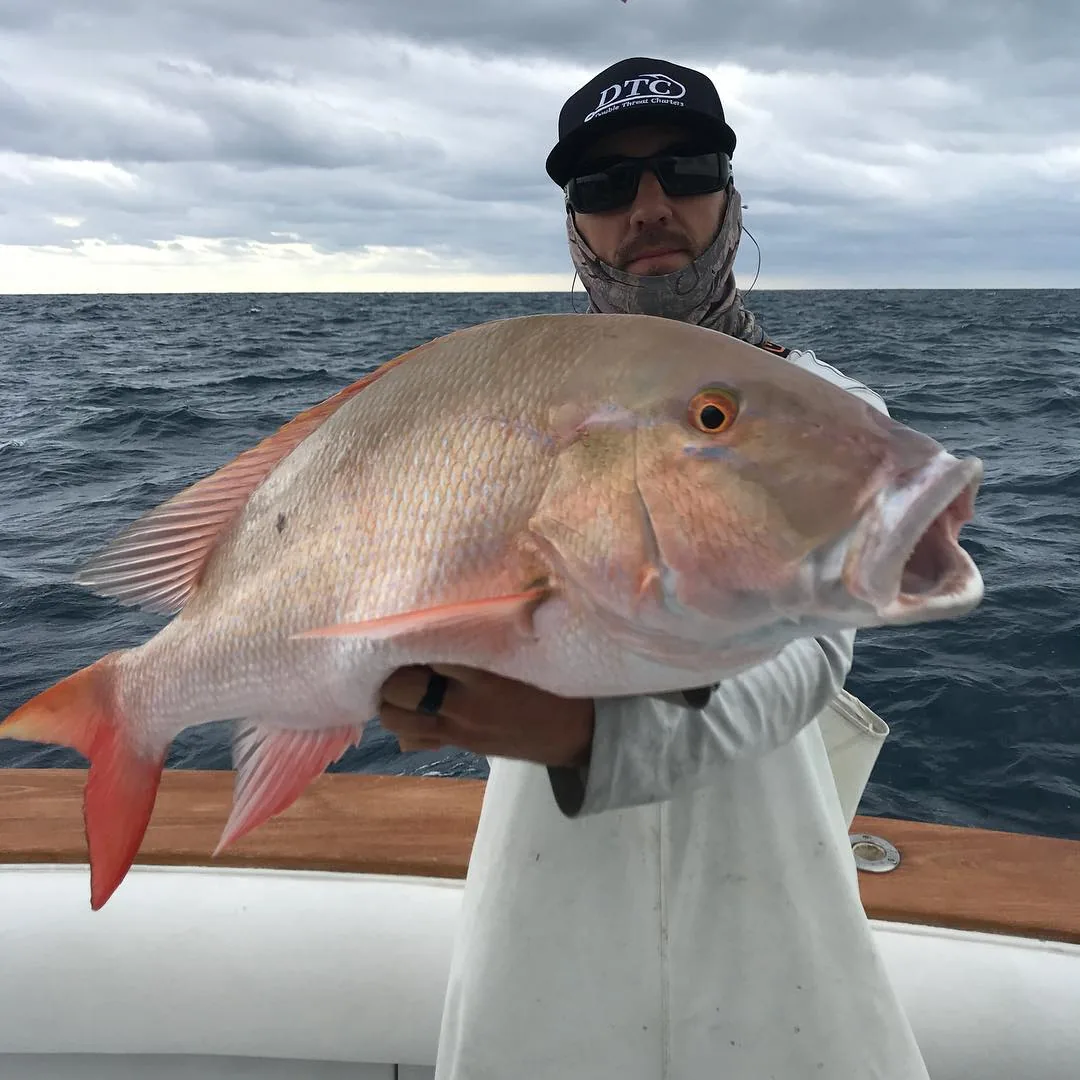
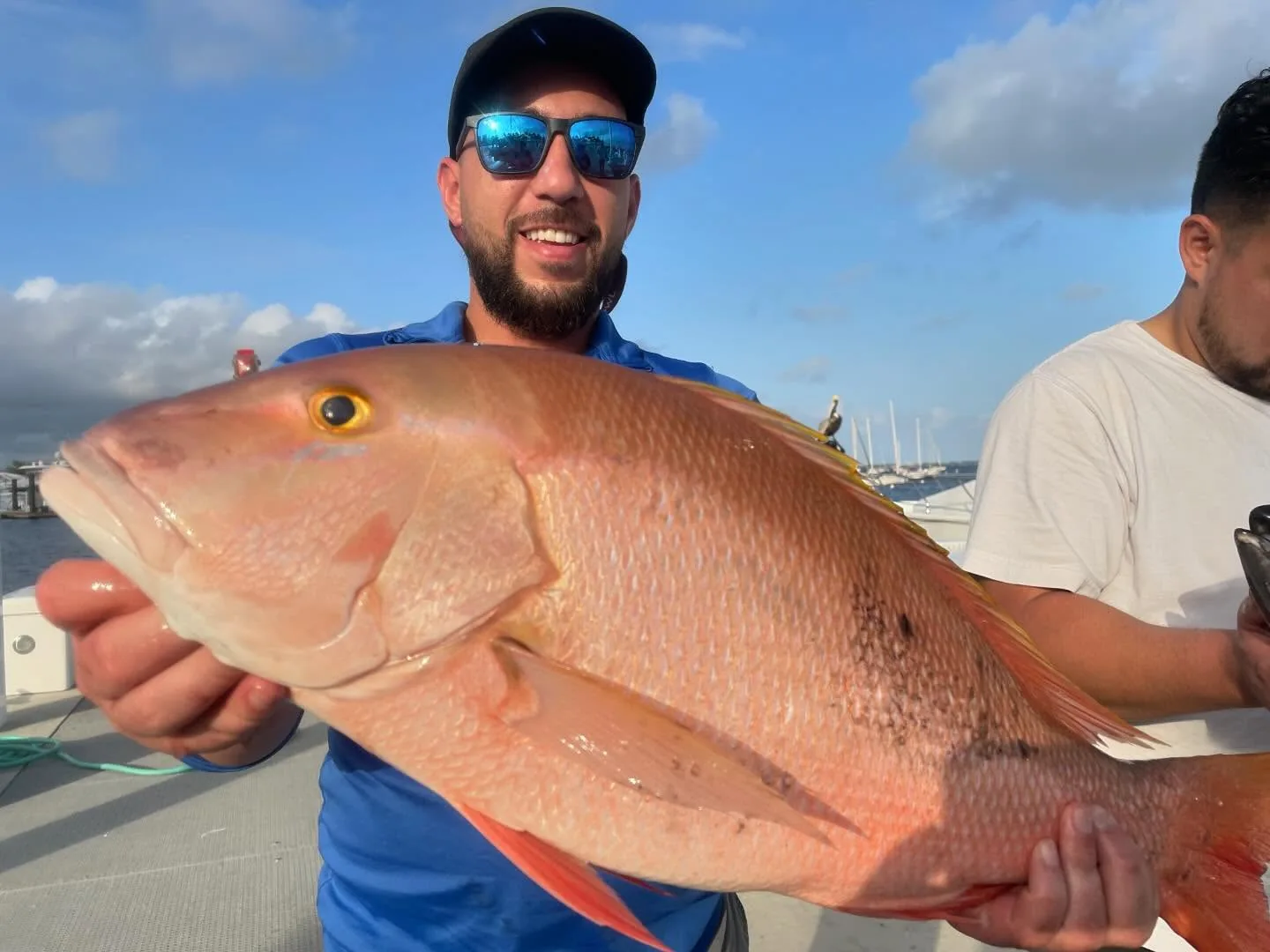
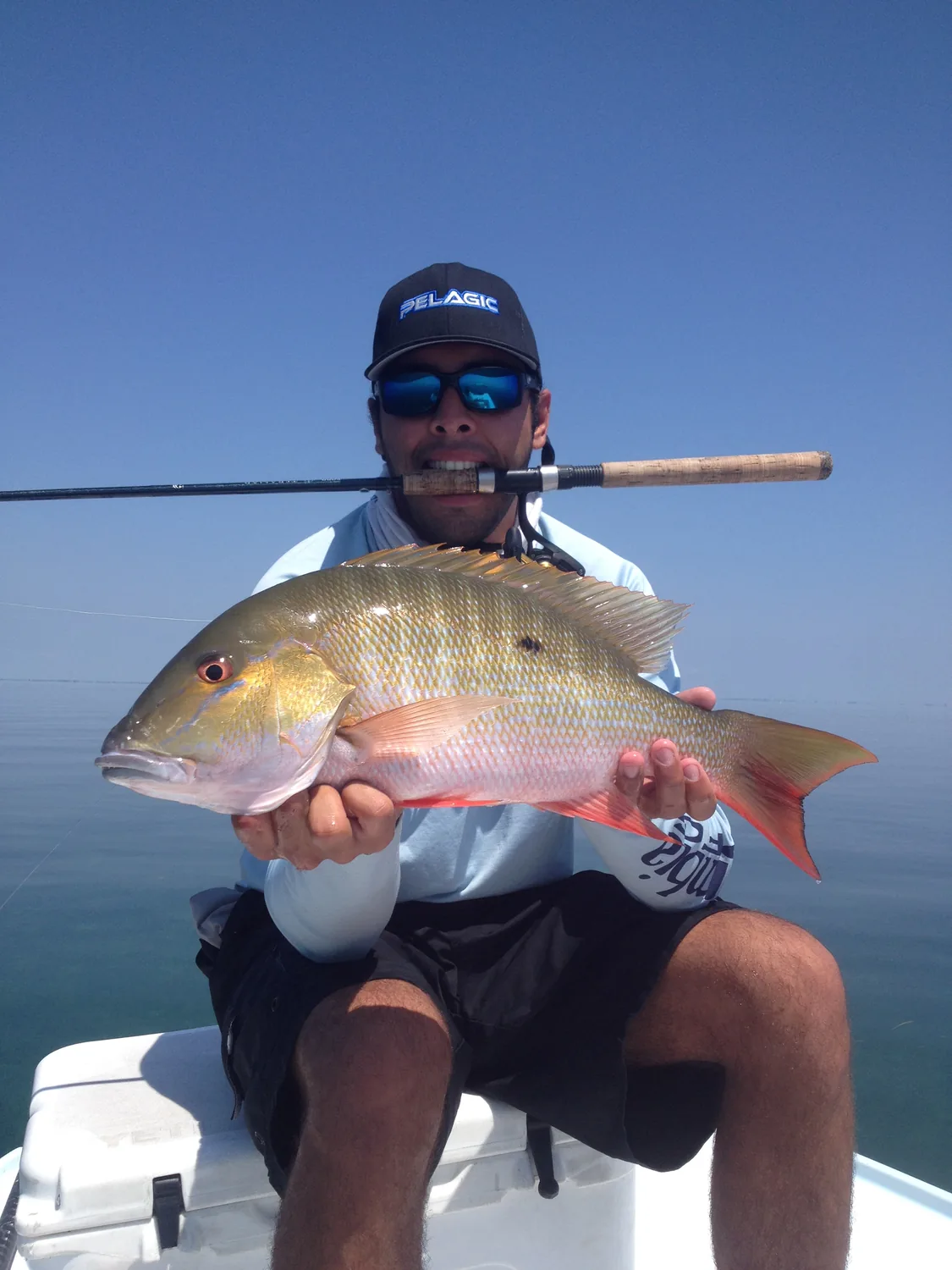
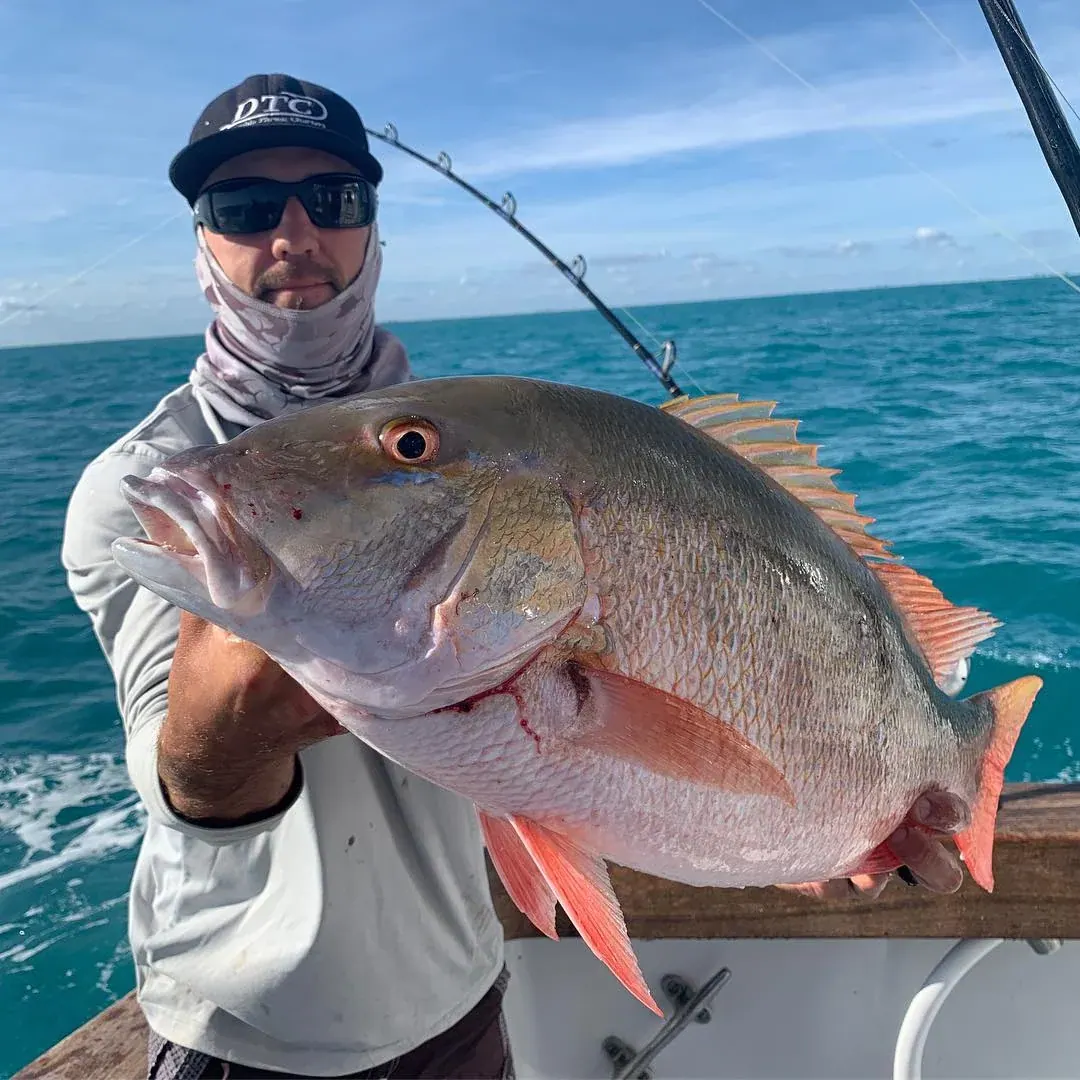
This fish earns the attention it gets. Muttons have excellent eyesight and a cautious nature, and that wariness drives how we fish for them. Their body color runs olive-green on the back to reddish on the sides, with a distinct dark spot on the mid-body line and blue lines on the snout and cheek. If you look at their coloration, it makes sense as to why they blend in so well in nearshore water which often has a slight emerald tint. Larger fish take on an overall reddish cast (the first color to disappear with depth) that gets them confused with red snapper, and they adopt a dark barred pattern when feeding near the bottom. They feed both day and night on fish, shrimp, crabs, snails, and squid, picking at prey through the day. On the table they are excellent, with stark white meat that many anglers rank as the best of any snapper.
The Fish: Size, Range, and Why South Florida
Mutton snapper average around 20 inches and reach a maximum of close to 35 inches in total length, with most weighing in the 10-to-15-pound class at the top end. The species has a long life span, with studies along Florida’s east coast aging mutton snapper to over 30 years old, which is typical of reef bottom-dwellers and a world apart from fast-living pelagics like mahi. Their age may partially explain the intelligence of the bigger ones; you don’t live that long with pure luck. These snapper are a versatile, bottom-associated fish with a very wide range, from the oceanside grass flats and finger channels through the patch reefs to the deeper reefs and wrecks, and they lean oceanside toward cleaner water.
What you catch tracks the life stage as much as the spot. Juveniles and subadults hold in shallow nearshore habitat, the seagrass and the sand and bottom, and move into deeper water as they mature. That shallow-to-deep split is exactly why we catch mutton on completely different trips: smaller average fish in the estuaries and finger channels and larger fish out on the structure, though you can catch any size anywhere. The range runs the western Atlantic from Massachusetts to Brazil, but the fish is most abundant around South Florida, the Bahamas, and the Antilles, which is why this is core mutton country and why there is no single mutton trip for us. They can show up just about anywhere.
What We Actually Land
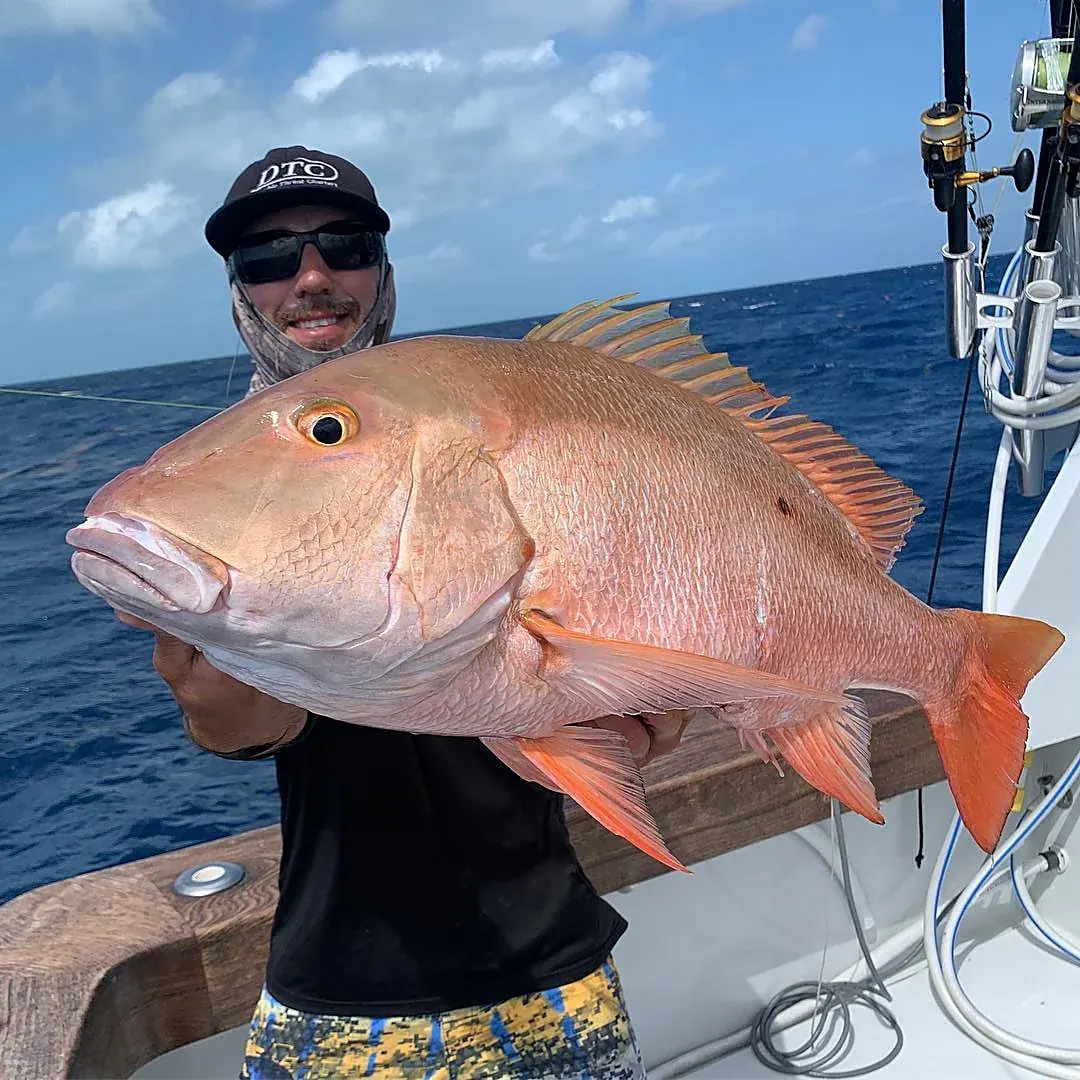
On our trips, the everyday mutton is a 3-to-6-pound fish, and inshore or on the patches you also sort through juveniles under 16 inches. A keeper is a decent fish. A mutton in the 8-to-10-pound range is a really nice one, and you can find fish over 10 pounds just about anywhere. Our boat record is a 19 pounder we caught off the bottom while kite fishing, a true trophy for the species. The bigger fish and the smaller fish turn up anywhere across the range, though the smaller ones favor the estuaries, so part of the inshore game is sorting through them for the better fish.
Mutton snapper fight well above their size. The first run is usually a screaming, hard pull, and then they dog you and try to break you off on the coral heads if you are not careful. That bottom-seeking habit is the whole reason leader and drag discipline matter on this fish: a mutton hooked over structure is trying to get back into it from the first second. We use lighter tackle where we can but you sometimes have to lean heavier on the reef.
Where and When We Catch Them
Mutton snapper have a versatile range depending on the time of year and water temperatures as well as bait locations, which is why there is no single mutton season for us. In the coldest months they hold mostly on the patch reefs feeding on ballyhoo, while sometimes sliding into the finger channels on warmer days. As the water warms in spring they move off the patches into deeper water and stage to spawn, and you can take them both on the reefs and on the spawning aggregations. That aggregation fishing is strongest off Key Largo, Key West, and the Bahamas, with some of it off Miami as well, and the spawn peaks from April through June on the full moon. Summer slows down in general, and July and August are the leanest stretch of the year, but you can still get a few on the deeper part of the reefs. Inshore you will mostly see juveniles if any this time of year.
The fall is our most reliable window. From the middle of September through the middle of December the finger channels hold mutton in real numbers, usually on Capt. John’s boat or on a deep-sea trip if we switch it up and troll the reef. None of this is a perfect science, because there are no fences out there and the fish move with the water, but these patterns generally hold across the years we have caught these things.
The Keys are a bit better and more consistent than Miami for muttons, and we do run as far south as Key Largo at times, where it can be very good. There are still plenty of large mutton off Miami, so this is a matter of degree rather than a different fishery. The Keys edge comes down to slightly cleaner water, more structure, and a bit less pressure. The gap between our southern Miami reefs like Triumph and Pacific and the nearer grounds is not extreme; the real spread is something like Miami against Key West, which holds some of the best bottom fishing in the world.
How We Catch Them
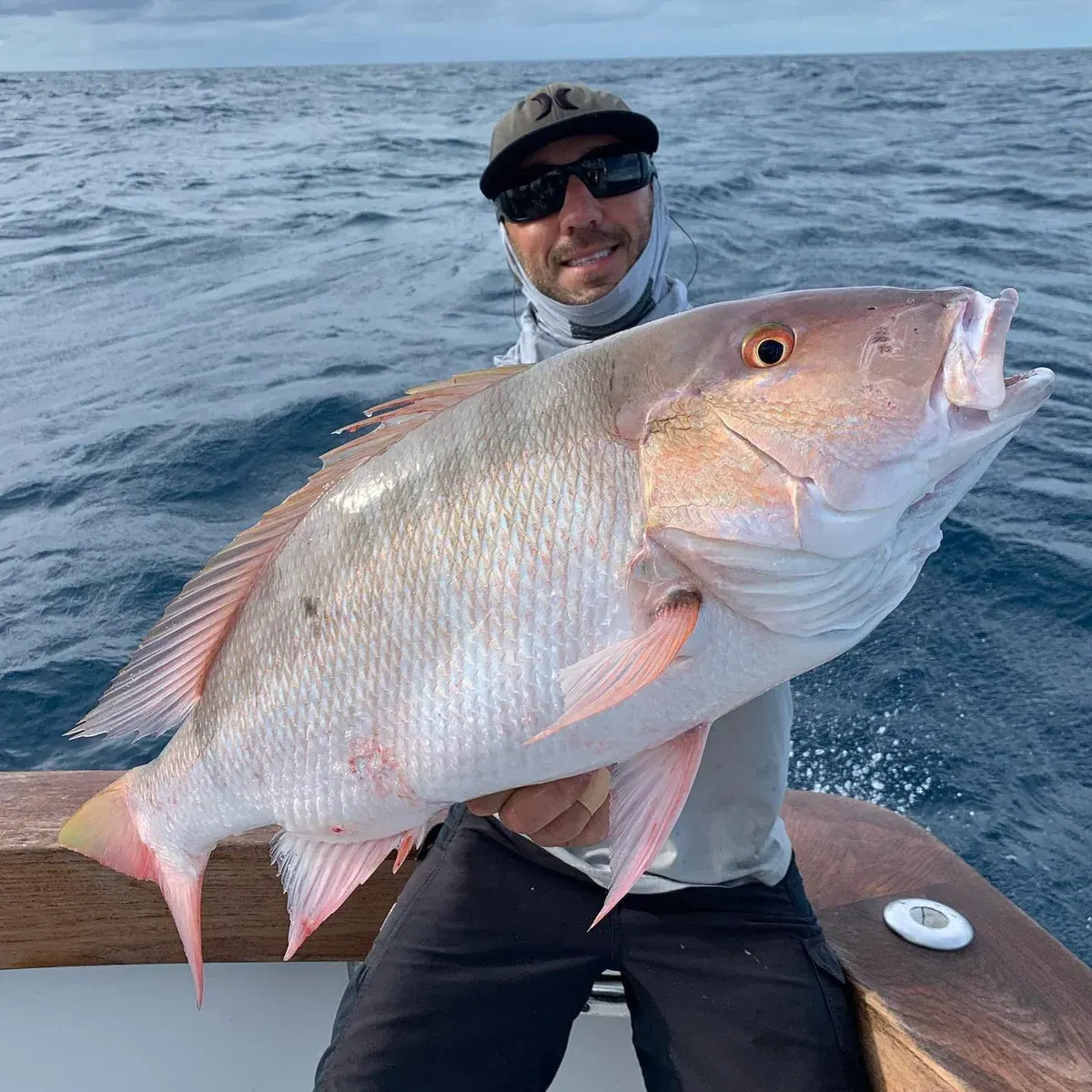
The whole game with a wary fish is getting it fired up and feeding. A mutton will eat a live bait, a dead bait, or an artificial, but if you want numbers you chum, with live chum or dead chum. Inshore the best version is live-chumming live pilchards along the finger channels, which also produces on the patch reefs. Because mutton hold to the bottom third of the water column, live chum is a shallow-water tool: once you are past roughly 30 feet it loses its punch, and out deeper a standard chum bag and chunk combination works better to bring them up off the bottom and into range.
Moving water always helps the mutton bite (this is true for most species). On the patches and in the finger channels we want a strong incoming tide; out on the edge and the reef we want north current with the Gulf Stream pushed in close to keep the water moving. The current keeps the fish active and spreads the chum over the structure. Presentation is mostly about bait size and patience. A mutton will usually grab the bait, swim with it briefly, then spit it before swallowing it back up completely, so you let them eat, especially on larger baits and ballyhoo. With smaller pilchards or chunks you can often get them in a single bite, but dropping back a little to let them eat is always the safer play when they are picky.
You should rig your equipment to the depth you are fishing. Inshore in water under about 10 feet, fish light braid with a 20-pound fluorocarbon leader and no weight at all so the bait swims naturally. On the patches in 15 to 30 feet, a 1-ounce egg sinker and a heavier 30-to-40-pound fluorocarbon leader works better. Out on the deeper reefs and wrecks, run a proper bottom rig: a live bait or a ballyhoo plug dropped to the bottom on a heavy lead with 15 to 30 feet of 50-pound fluorocarbon, hiding a 4/0 Owner Mutu-Light circle hook in the bait so you do not spook the fish. Fish finder rigs can work well and allow you to let the fish eat. The leader discipline is all about those eyes, so we fish light fluoro shallow and step up only as depth and structure demand it.
One method that gets overlooked: trolling the patch reefs in winter. Mutton snapper will take a swimming ballyhoo or a strip bait on the troll, and it is a good way to cover ground when the fish are scattered. You pick up grouper doing it too, which is part of why it earns a place in the rotation. Trolling can work well from Miami through Key West and in the Bahamas too.
Miami Snapper Fishing Charters
For us mutton fishing lives on two tracks. Inshore, the fall finger-channel program with Capt. John is the deliberate way to put a customer on numbers of them. Offshore on the Double Threat, they come as a bonus while we drift, kite fish, and work the reefs and wrecks for the main event, and we occasionally pick them up at anchor or on the troll. We rarely set up to grind for mutton specifically on the big boat, because the opportunity cost against the offshore bite is real, but when the bottom-third bite lines up they are a welcome part of the day and some of the best eating we bring to the dock.