
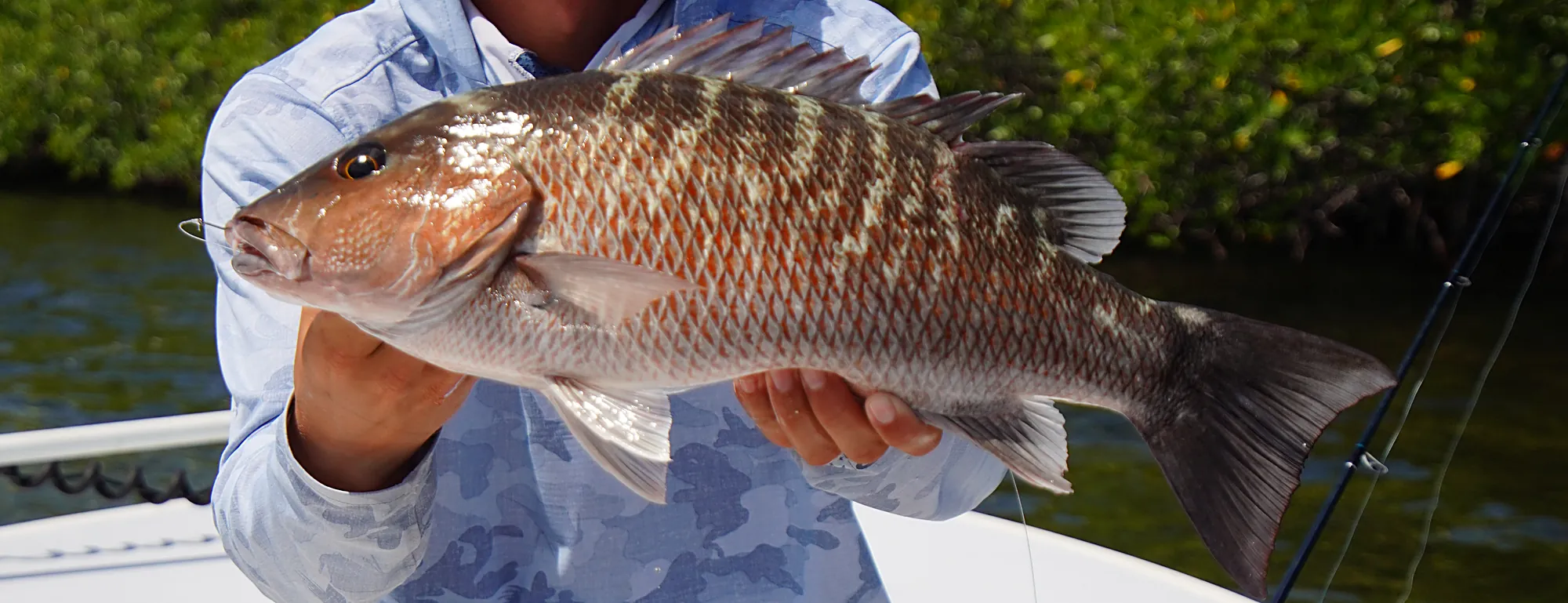
The mangrove snapper is one of the most common and versatile fish we catch off Miami. It earns its name from where it starts: juveniles spend their early lives in and around the mangroves, in the bays, estuaries, and backcountry. You will find them along the docks throughout Biscayne Bay, in the finger channels, on the grass flats, and in good numbers through Government Cut. As they grow, they push out onto the reefs and bay wrecks, though plenty of smaller ones make it out to the reef too. A mangrove is rarely a fish you book a trip to chase by itself. It is an abundant, reliable catch that turns up across most of our water, fights hard for its size on light tackle, and happens to be excellent on the table.
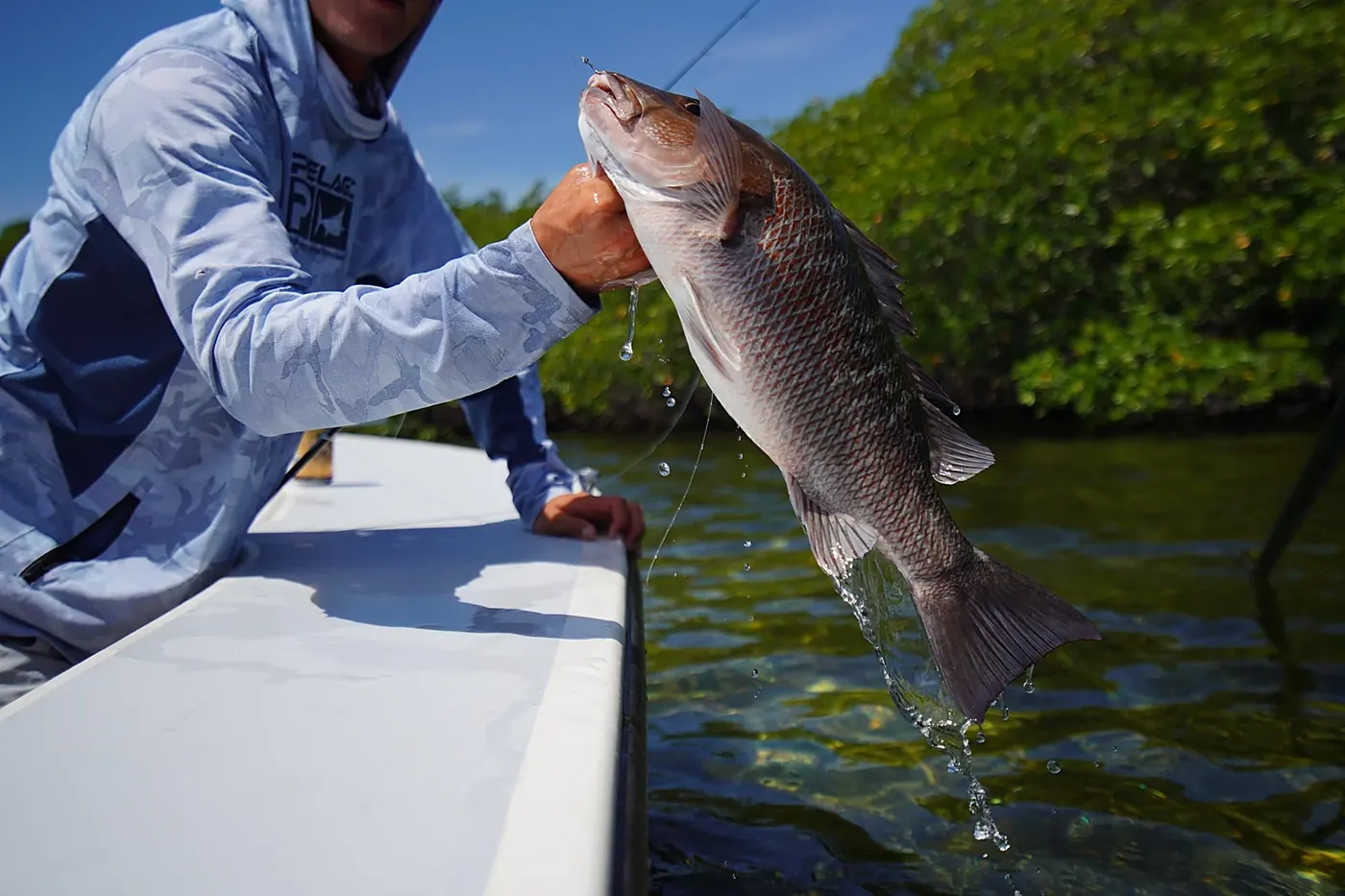
Habitat and Range
Mangroves hold to structure. Docks, wrecks, reefs, channel edges, anywhere they can hide, linger, and ambush a meal. That habit runs from the dock pilings of the bay out to the reef line offshore. They have a wide coastal range, found in the western Atlantic from Massachusetts south through the Gulf of Mexico and the Caribbean. Off Miami we catch them from the shallow bays and channels out to around 100 feet on the reef. They are long-lived for their size, aged to roughly 21 years, which puts them in the same patient, structure-holding company as the mutton snapper.
Everyday fish run small, and the real challenge inshore is sorting through the little ones. A genuinely good mangrove falls in the 5 to 8 pound range, and even that is a fish to be proud of. True giants are rare. The all-tackle world record, a Florida fish, stands at 17 pounds. The bigger ones tend to turn up on the bay wrecks, especially through the winter, and on the reef during the summer spawn.
Dock Fishing — The South Florida Kid Special
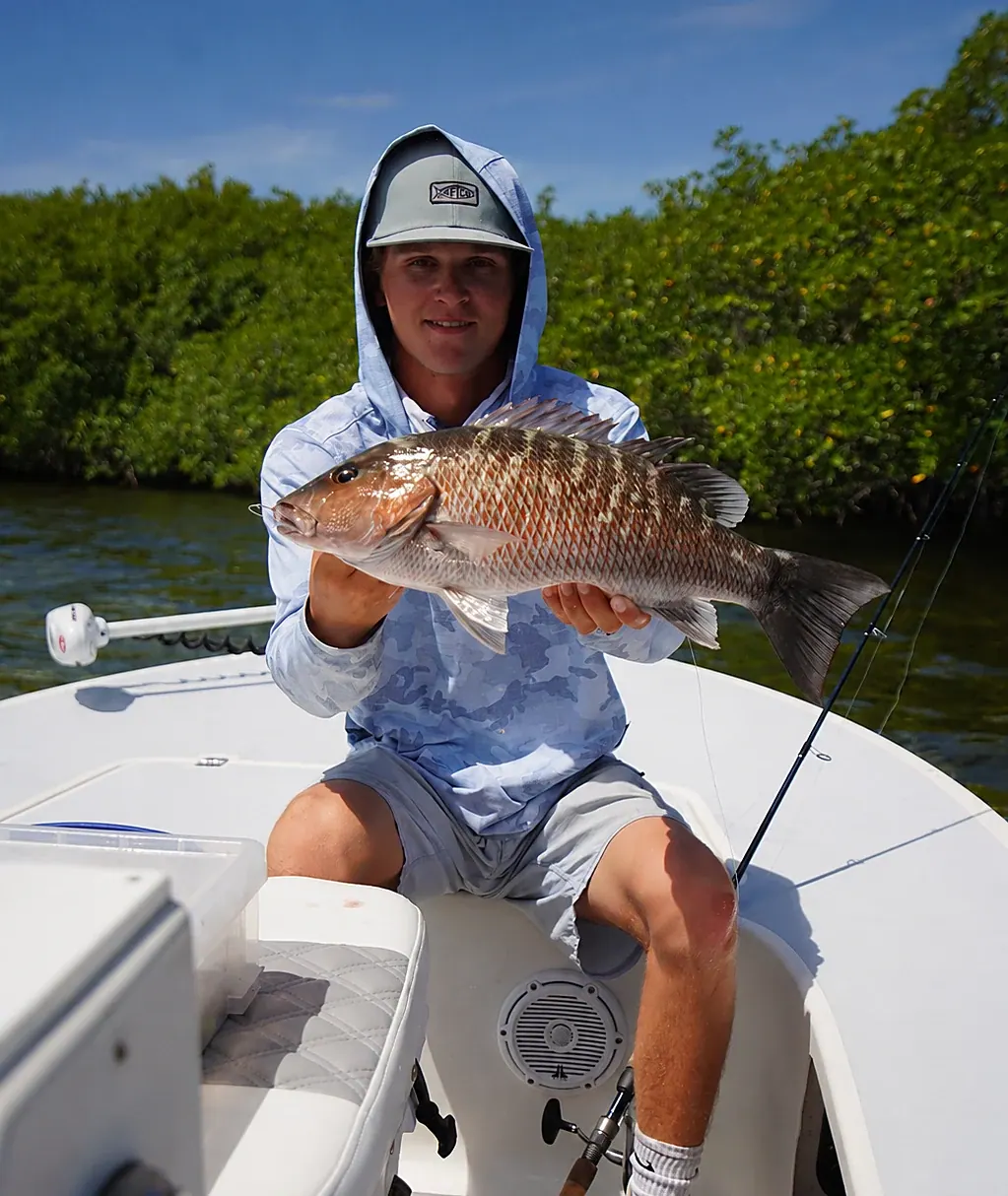
Dock fishing for mangroves is how most South Floridians grow up fishing. You can catch them on chunks, dead shrimp, and squid, but the best action is with live bait. It helps to cover ground when fishing for mangroves from the docks. As a kid I liked to hit spot after spot, dropping a bait and moving along. This helps for two reasons. The first is that I was often fishing where I wasn’t allowed to fish, so movement was crucial for avoiding security guards. Second, the biggest fish usually come in the first few drops at a fresh spot, so once you are picking through small fish or the competition gets too thick, that spot is finished and you move on to the next. If you are spending extended time at a “no fishing” marina, it helps to have a change of clothes and a spare hat so you can gaslight the security guard and say “I didn’t know” each time you are reprimanded. Against-the-rules dock fishing should be reserved for ages 13 and under, otherwise you’ll be dealing with cops rather than running from security. Jokes aside, it is always better to fish at marinas, bridges, and piers where fishing is allowed so you stay out of trouble, but I would be lying if I didn’t have some bad dockside fishing habits as a kid.
Bait choice does real work here. Bigger mangroves favor live pilchards, so fishing pilchards lets you skip much of the small-fish sorting that comes with live shrimp. Live shrimp still works, and dead shrimp works too, but pilchards are how you weight the odds toward the better fish. The rig stays simple and light: a split shot if any weight at all, small J or circle hooks, and a 20 pound fluorocarbon leader to get past their eyesight in the clear, calm water. They pull hard for their size around the pilings, so the light tackle keeps it fun while the leader keeps you connected.
Inshore and Bay Fishing
Beyond the docks, the same fish hold throughout Biscayne Bay, in the finger channels, on the grass flats, and around the bay wrecks. Early spring is usually the prime window inshore, when the biggest fish are still in the bay before the summer push to the reef. The bay wrecks are worth a special note: they hold mangroves through the winter, and that is where some of the better inshore fish come from, often alongside a gag grouper.
Chum is the lesson that runs against what a lot of people assume. You do not need to chum heavily inshore. Grinding out a heavy dead-chum slick near docks and bay wrecks mostly just draws bycatch, the small grunts, pinfish, and puffers that crowd in ahead of the fish you want. Live chumming is the opposite. A handful of small live pilchards tossed around the structure fires up the bigger fish and makes them noticeably less wary, getting the good ones competing and off their guard in a way a cloud of dead chum will not.
Fishing live pilchards on the structure mangroves love is also one of the better ways to pull a varied catch, and what comes with them depends on where you are. Oceanside, near the reef and the bay wrecks and finger channels, big mangroves come alongside yellow jacks and muttons. On the bay side, the same approach turns up snook, redfish, and seatrout. That mix is what makes inshore mangrove fishing a natural part of a broader day on the water rather than a single-species grind.
Mangrove Snapper Spawn
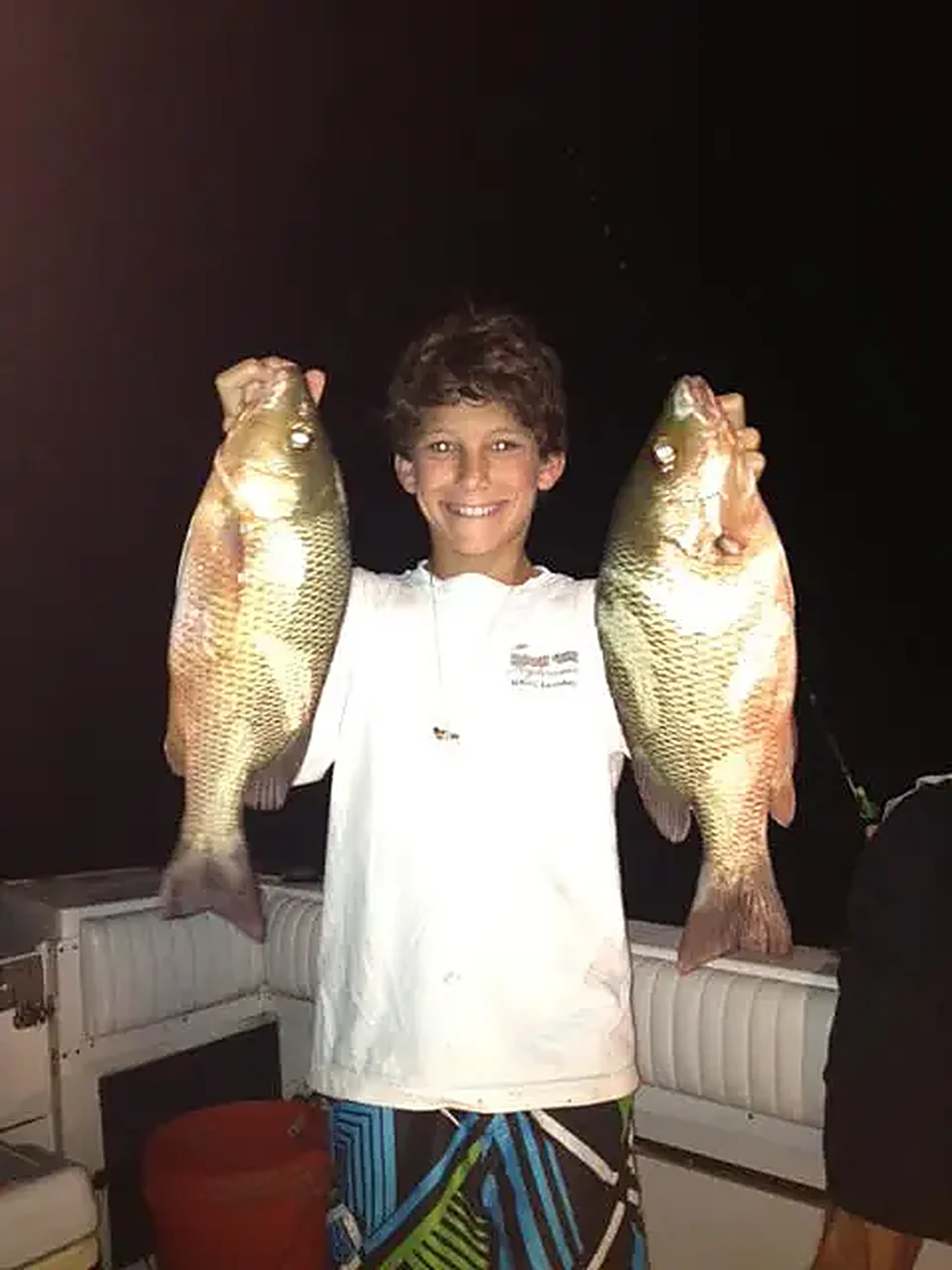
The summer spawn is one of the windows where mangroves become a fish you can target directly in abundance, and it converges with the way we fish yellowtail. From July through September the spawning aggregations stack up on the reef, with the sharpest full-moon bite landing in the August and September part of that window. The approach is to anchor on the reef in 40 to 50 feet, build the same chum slick we use for yellowtail, and fish it through the evening and into the night. In the right window you can put a limit together fairly quickly, and the spawners on the reef that time of year are reliably nice fish, often with yellowtail mixed into the catch.
The caveat is the moon. Hit the right one, ideally around August, and the reef produces. Fish it off the window and you risk a long, slow night of mostly yellowtail and other reef fish. That is the honest trade with targeted mangrove fishing, and it is why we treat it as a narrow seasonal play rather than a trip on the regular menu.
Tackle and Technique
Light spinning tackle works everywhere for these fish and is a good part of why they are fun. The standard setup is a 10 to 15 pound class spinner with 12 pound monofilament or 10 to 20 pound braid, a light rod, and a 20 pound fluorocarbon leader. Inshore around the docks and bays, that means a split shot at most and small hooks so the bait looks natural. On the reef, we switch to jig heads, the same rig as the yellowtail program, scaled to get baits down through the slick. The leader discipline holds across every setting because of their eyesight. Twenty pound fluorocarbon is the working number, light enough to draw a bite and heavy enough to turn a good fish before it buries you in the structure. Do not be surprised if you pick up random mangrove snapper on heavier tackle when fishing for muttons as well.
Table Fare
Mangrove snapper are excellent eating, with firmer meat than yellowtail and white, flaky fillets that hold up well. Smaller fish are good fried whole, and the better ones fillet beautifully for ceviche or the pan. Between the abundance, the fight on light tackle, and the quality on the table, they are a fish worth keeping when the size is right, and a reliable bright spot on a mixed-bag day.