
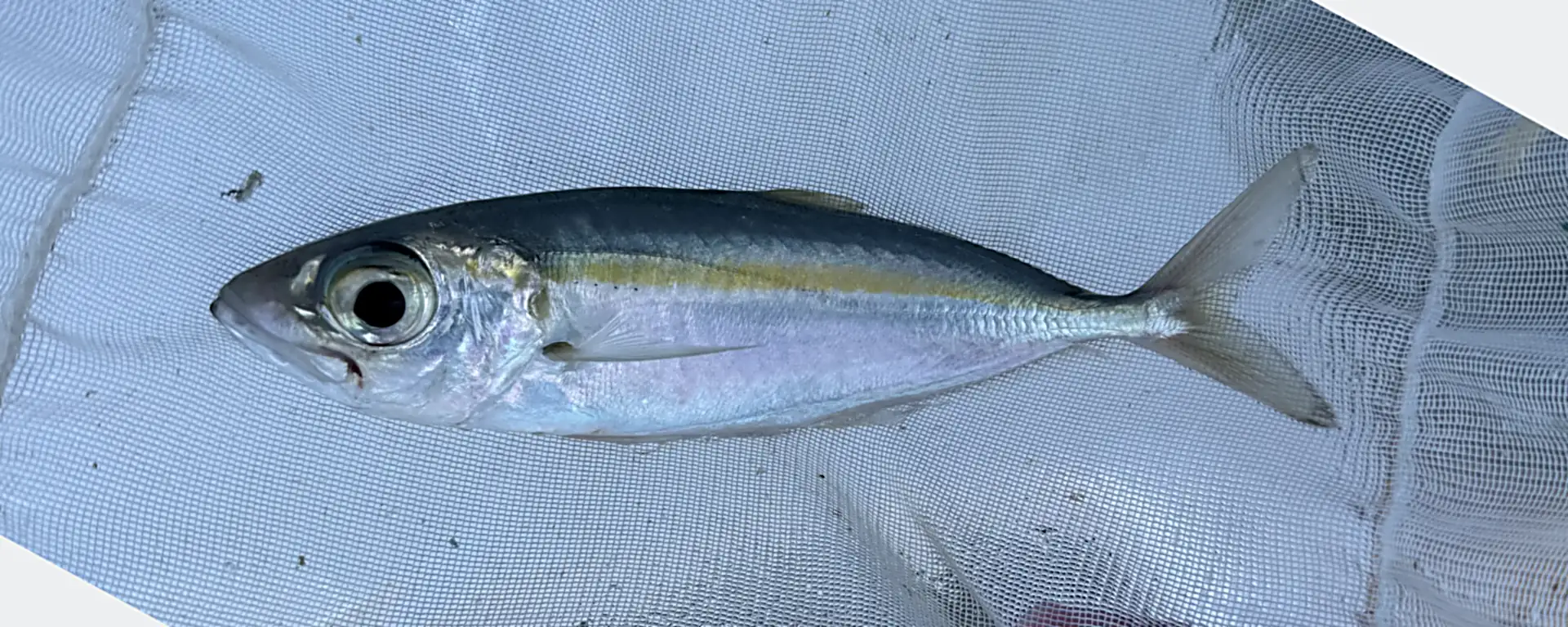
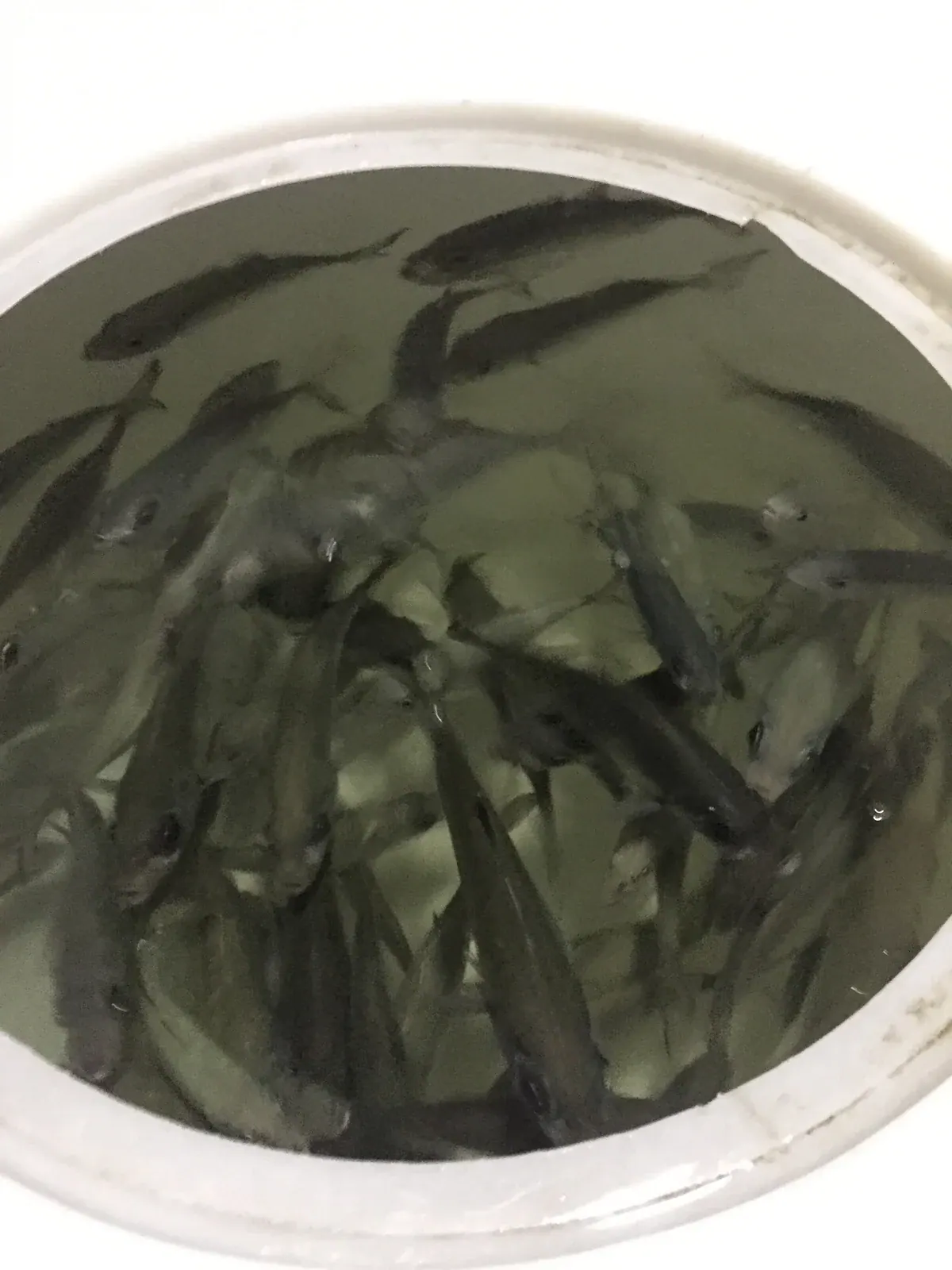
Goggle eyes are the most valuable live bait in South Florida. They range from sixty to a hundred dollars per dozen depending on where you buy them, and the price reflects real labor, because catching them is hard work that mostly happens in the middle of the night. Keeping adequate supply for charter fishing takes a combination of catching our own and ordering from the wholesale bait guys, and the bait we catch goes into our pens at Dinner Key.
Where Goggle Eyes Live
Goggle eyes hold on the reef line. You can find them as shallow as twenty feet up on the reef, and they will swim as deep as three hundred feet. They prefer healthier water, and they are most consistently caught from Palm Beach through Miami and down through the Keys. You can pick up a few early in the morning or late in the evening on the patch reefs while you are catching cigar minnows, but those are incidental fish. To load up on goggle eyes specifically, you have to go offshore at night, usually in eighty to two hundred feet of water, and drift for them.
Why the Bite Happens After Dark
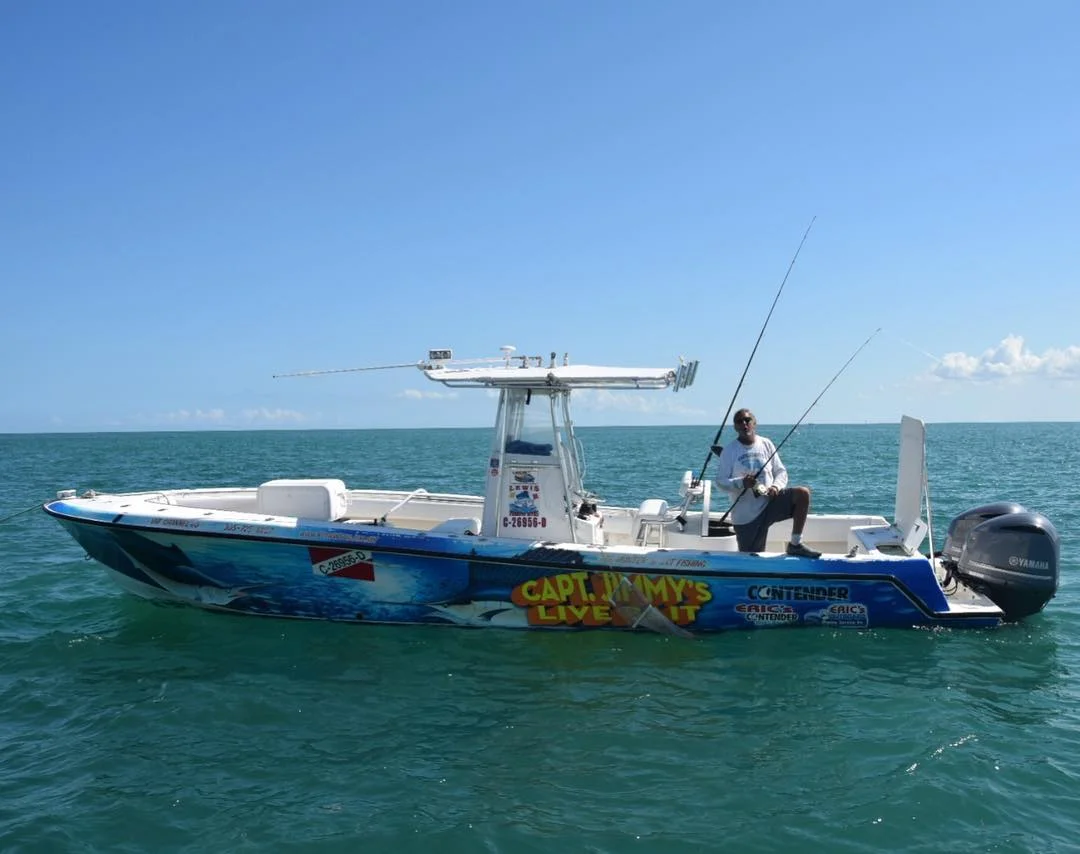
The fish is built for low light. Goggle eyes have enormous eyes relative to their bodies, they are nocturnal, and they do not really start biting until the sun is completely down. They are also finicky around a big moon, so the best nights to catch them are dark-moon nights. Current matters just as much. If the water is dead with no current, or if the water is green, they usually do not bite well. If you are drifting off Miami and not getting bit, run further south and look for moving water. It also helps to choose calm nights, because you will be drifting open water in the dark, and a sloppy night will beat you up. When you consider the amount of work that goes into goggle eye fishing, in addition to the finicky conditions of calmer weather and the lack of a moon, you really need a good combination of time, work, and conditions. All of these factors drive up the price of these baits.
Lights are counterintuitive. The commercial bait guys run a normal spreader light so they can see what they are doing, but the goal is to blend into the darkness. If you are drifting in the right areas, you will mark the schools on the sonar, and they will find your rig.
The Rig: Goggle Eye Quills
The tool is a goggle eye quill, which is essentially a giant sabiki rig. We fish quills on conventional reels and long rods, and even a ten-foot rod helps, because the extra length gives you room to grab the weight and keep the quill from tangling. The rig carries at least six ounces of lead and sometimes up to a full pound, because you need to get down to the school quickly and stay vertical on the drift. We usually deploy a sea anchor to slow and steady the boat, and you do not need chum. The quill does the work once it is in the school.
Counting Down to the School
It helps to have two people, and this is where they matter most. You mark the schools on the sonar and adjust your drop to match the depth they are showing. I like to count as the rig falls. Once you get the hang of it, the communication is simple: I have them three or four seconds down, or ten seconds down if they are deeper. With two quills in the water and both anglers counting to the same depth, you put both rigs into the school at the same time. When the bite happens, they are really chewing. You catch a few at a time, and you can hang half a dozen on a single drop.
On a good night you can catch a few hundred goggle eyes within a few hours after dark. That volume is real, but it does not make them a convenient bait. Some nights they simply do not bite, and you come home tired with a fuel bill and an empty well. That risk is built into the price.
Handling: Never Touch the Bait
The handling rule applies to every baitfish we catch, and it is absolute with goggle eyes: never touch the bait. We use dehookers, and goggle eye dehookers are a little larger and heavier gauge than the standard ones. The fish comes over the rail, the dehooker drops it straight into the livewell, and your hands never make contact. If a goggle eye hits the deck, throw it overboard, because it will not live. If it is bleeding, it does not go in the well either. For stocking, we hold to roughly one goggle eye per gallon — a fifty-gallon well carries up to fifty fish, and a hundred-gallon well carries up to a hundred. If the fish are on the small side, you can push that number by about twenty percent.
From the Livewell to the Pens
You are usually not catching goggle eyes and going straight fishing, so the real job is getting them home in good shape and into the bait pens. When they first go in the pens, leave them alone for a week. Do not feed them, do not touch them, and try not to scoop them. Let them get hungry. After a week to ten days they start to eat. Krill works very well, sinking pellets work, and dolphin roe is amazing. Once they are eating, we consider them seasoned. A seasoned goggle eye carries very thick slime and is far more durable than a fresh-caught fish. You can take one out for a trip, return it to the pen unused, and it almost will not die unless you put a hook in it. With decent water quality, goggle eyes will hold in a pen for six months.
Holding that much live bait in the slip is an asset and a liability at the same time. A severe cold front can drop the water temperature enough to kill the pens, heavy rain can drop the salinity enough to do the same, and summer heat is just as dangerous. We find the best window for holding bait is November through May, when the weather is drier, and then you hope you do not catch a severe front. We caught one this past year, and it cost us bait.
Where Goggle Eyes Earn Their Price
Off the kite, every pelagic loves to eat a goggle eye. They are strong and active, they kick and dig constantly, and that commotion is very good at raising fish. They are amazing for sailfish and amazing for meat fish, and they are one of the best overall kite baits when the goal is raising fish and getting bites. On our kite spread, a goggle eye is the first choice on the long positions, where the biggest and hardiest bait belongs.
They can be the wrong bait, and it is usually a size problem. They are too big for schooling mahi and for smaller fish in general. They are also a poor casting bait, because they swim straight down very fast — the same trait that makes them work under a kite makes them wrong for pitching at a tailing sailfish. We do not love them on the bottom either, and a blue runner is a better wreck bait. A goggle eye does its best work under a kite, and that is where ours end up.