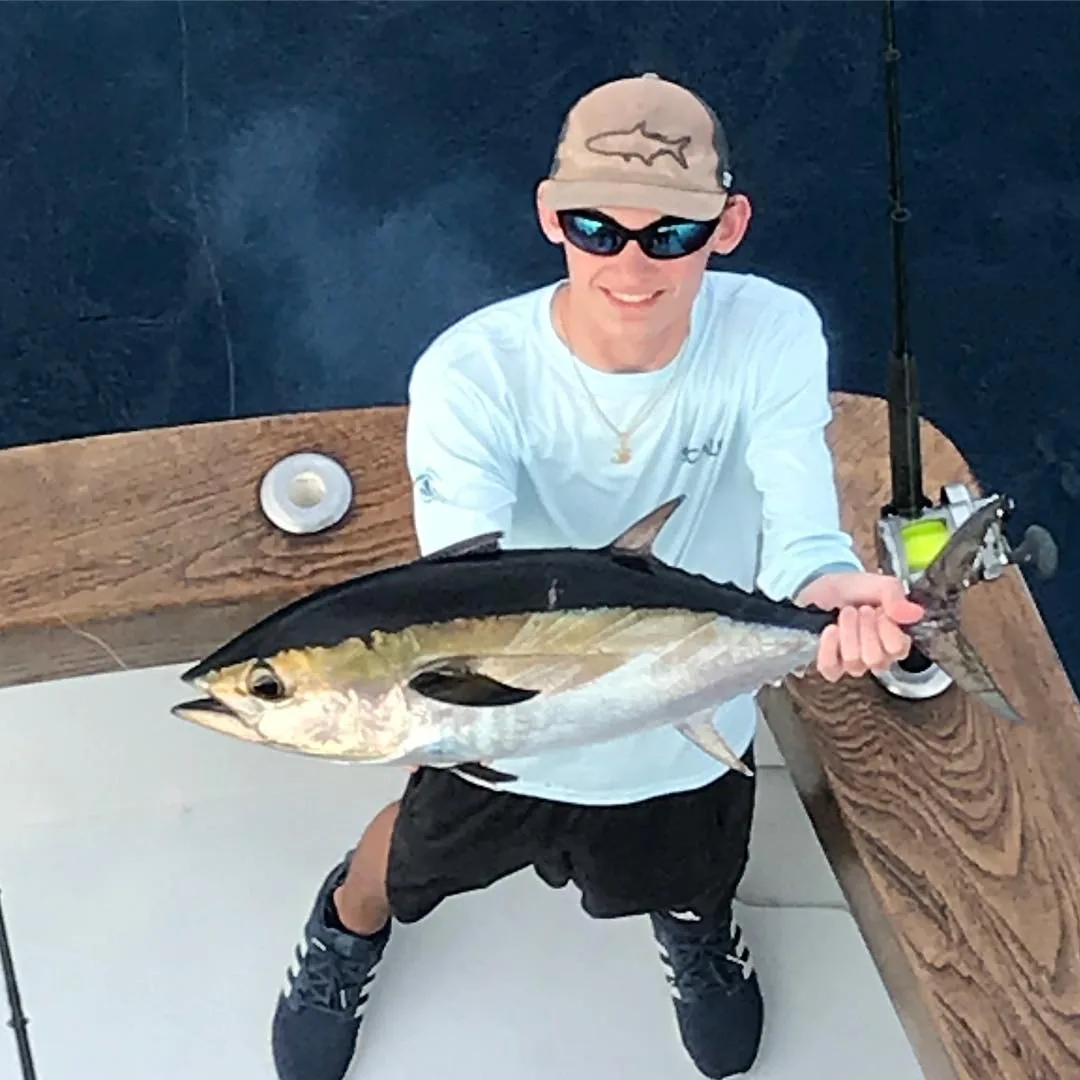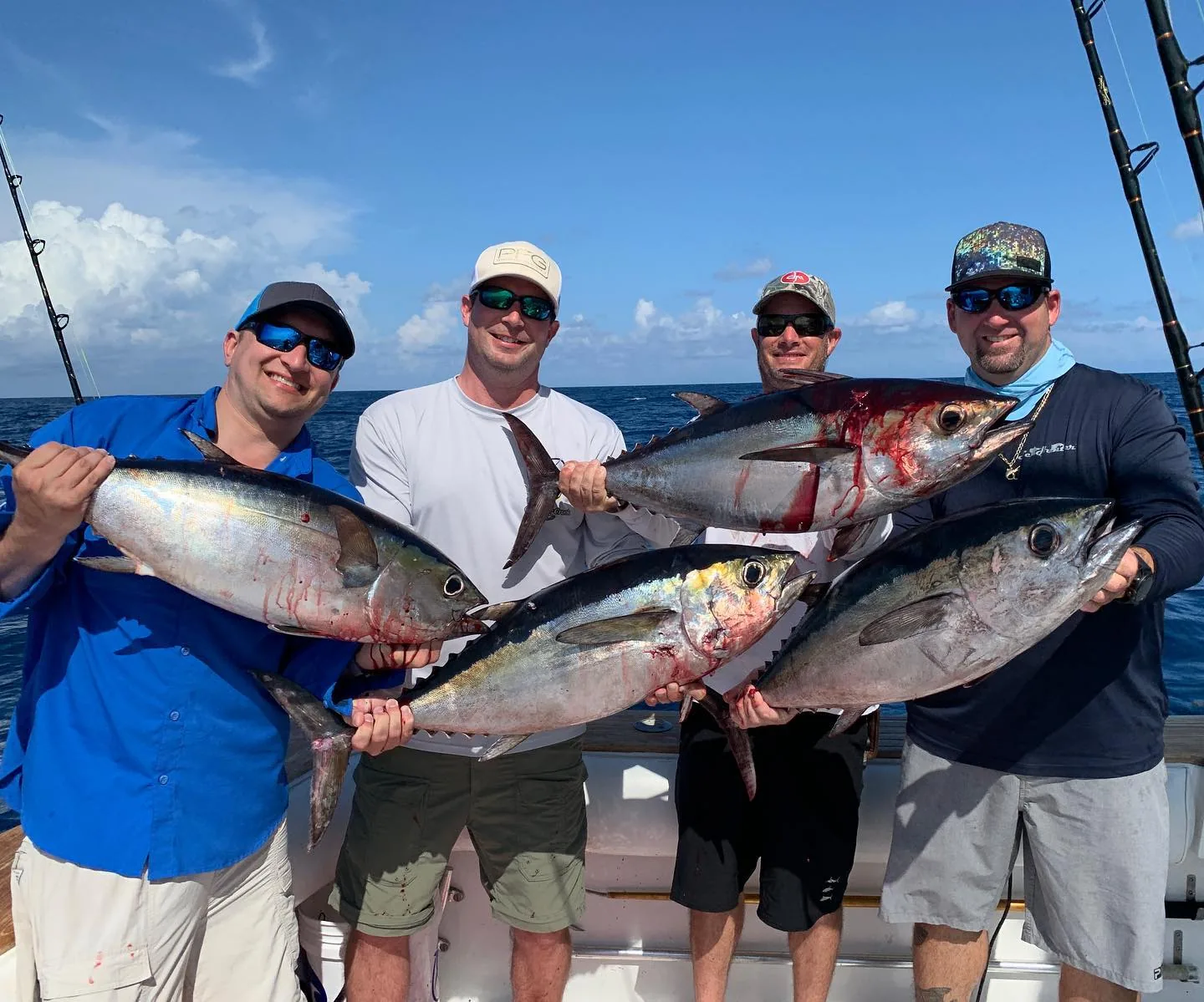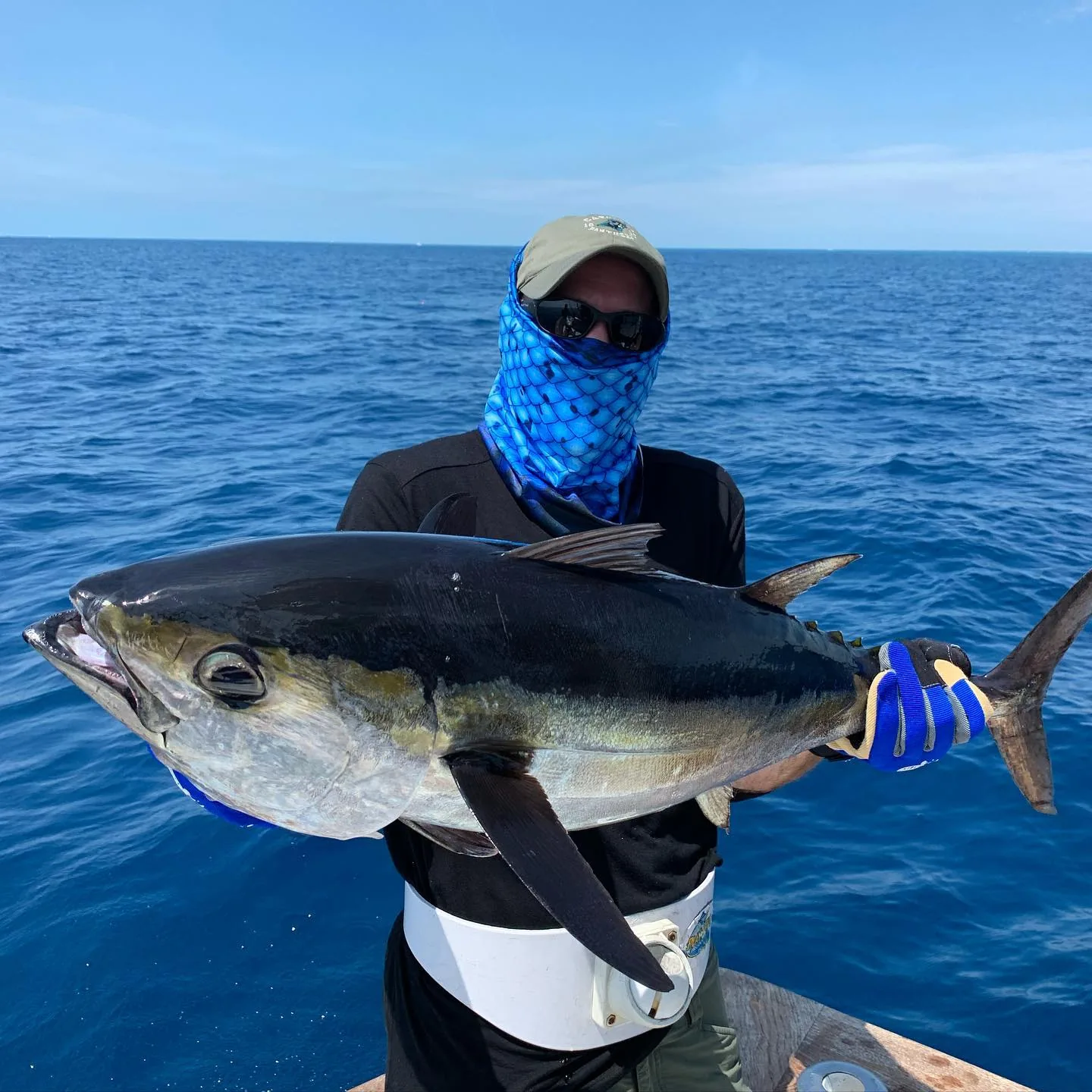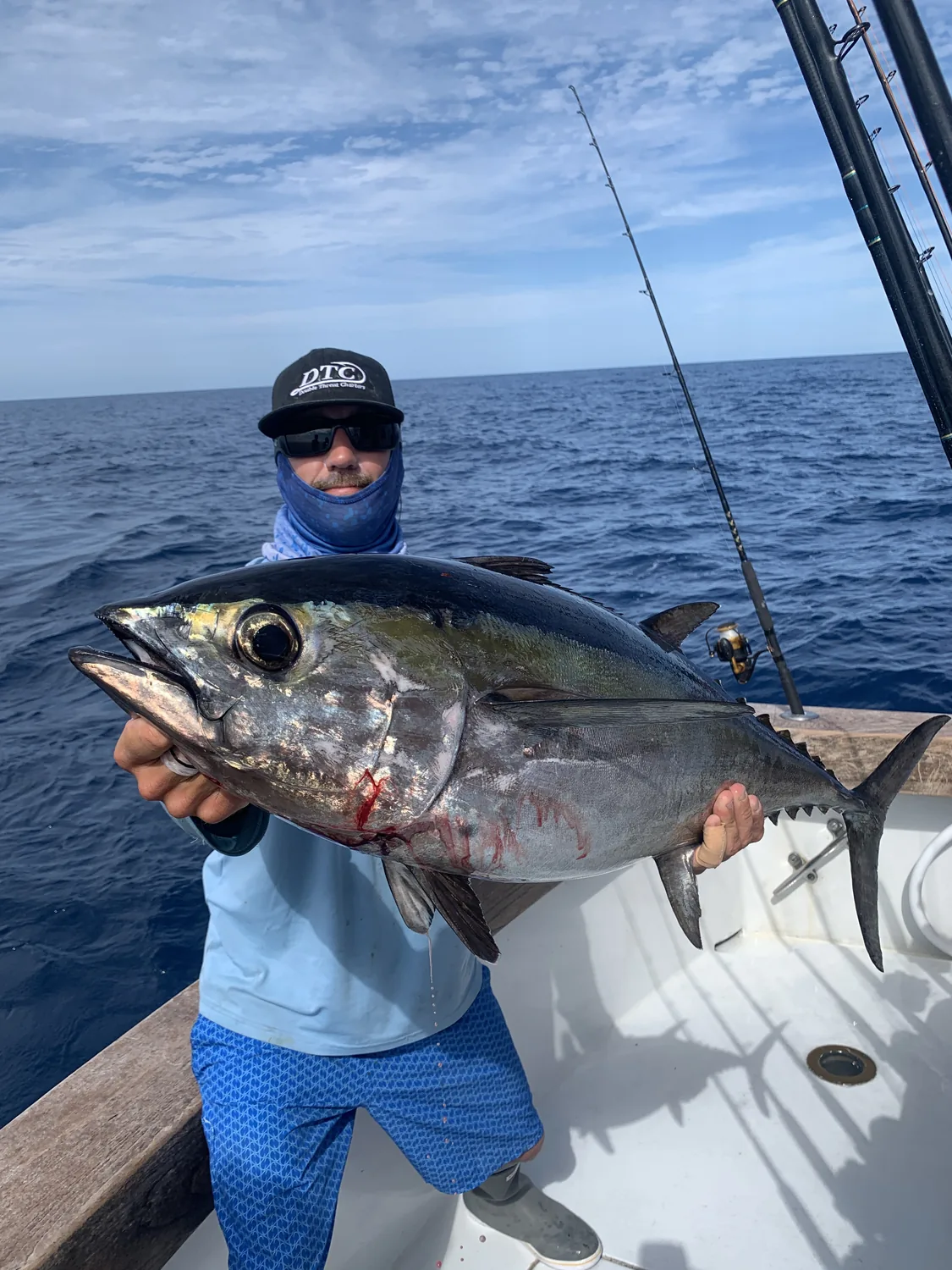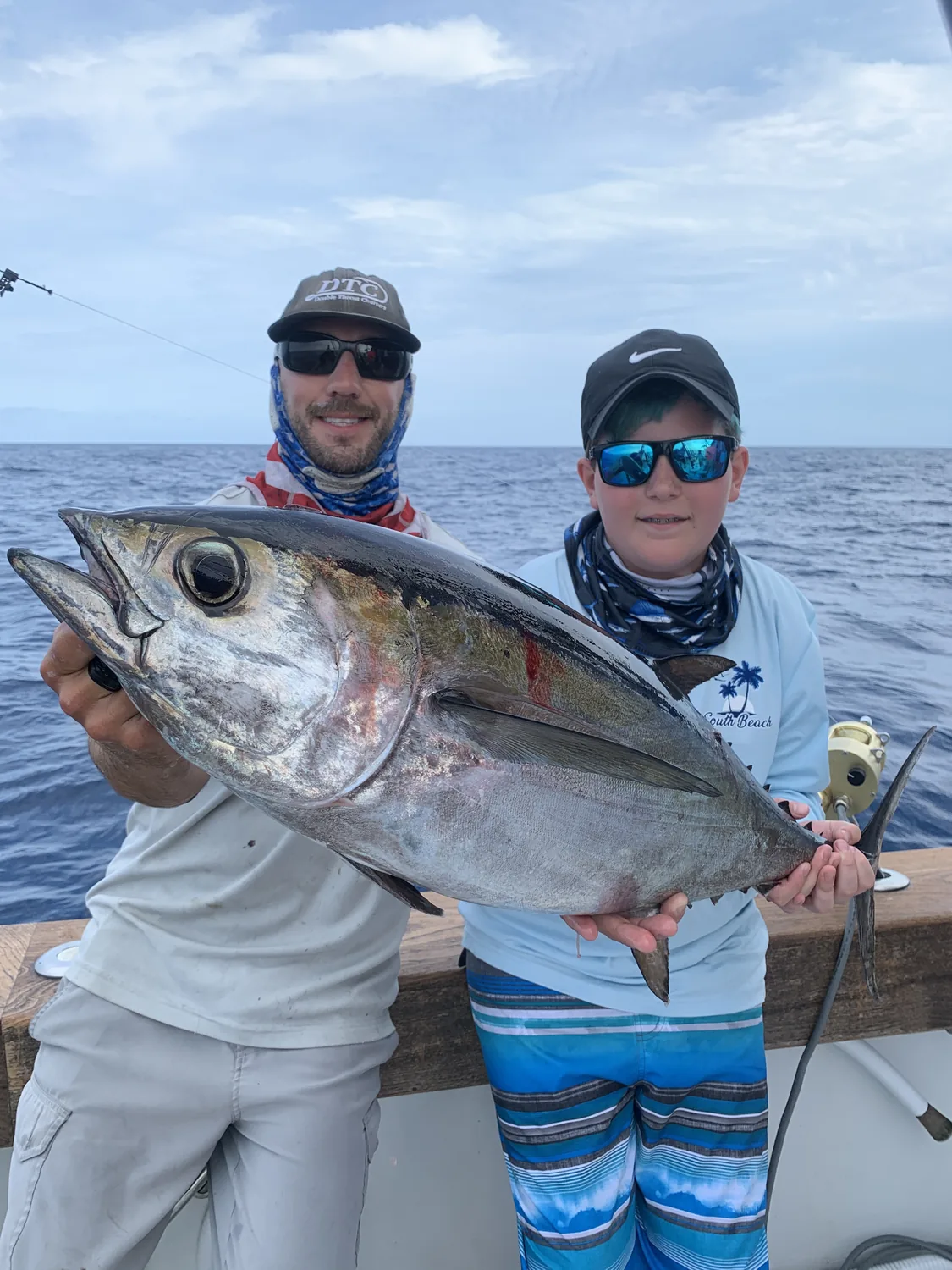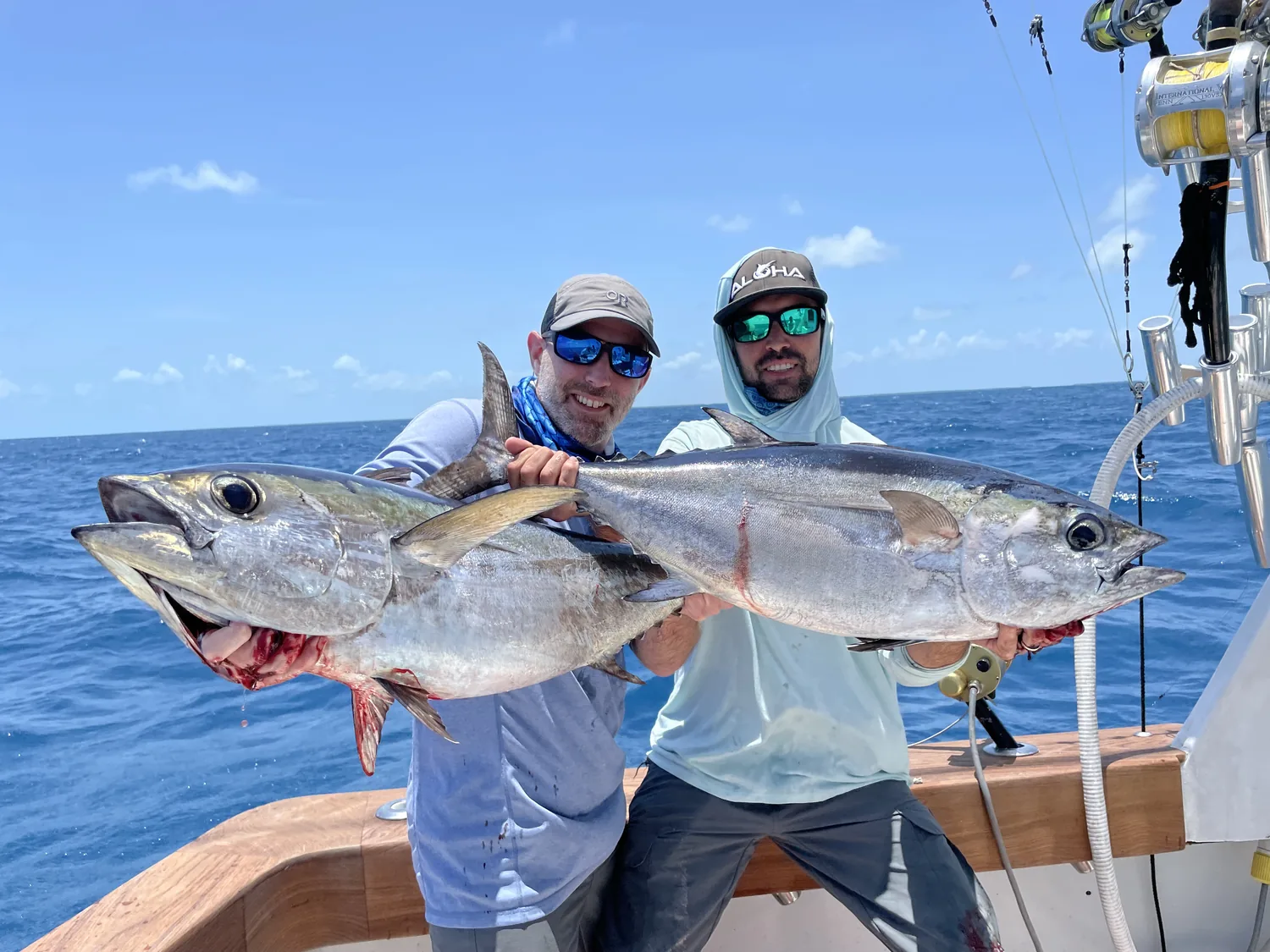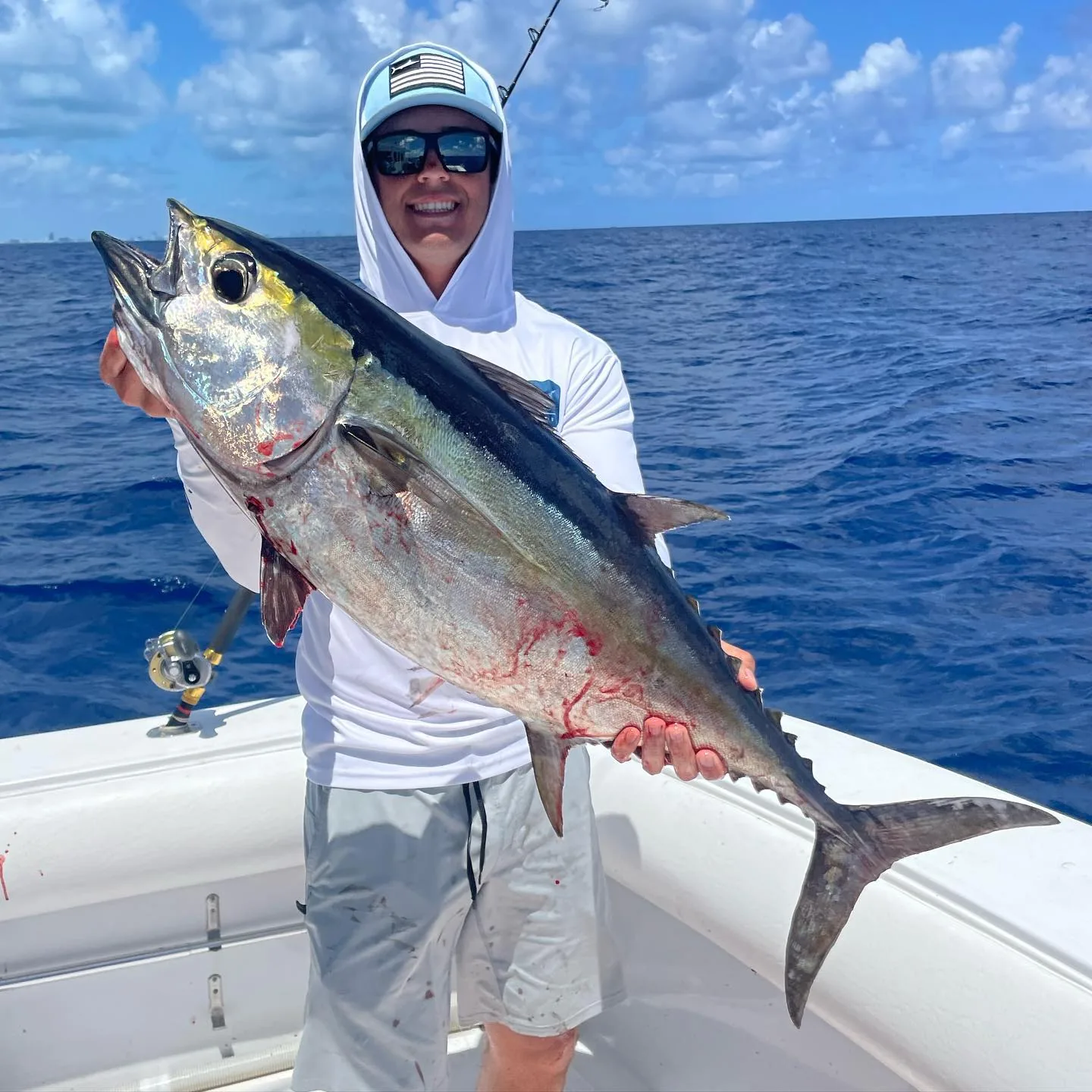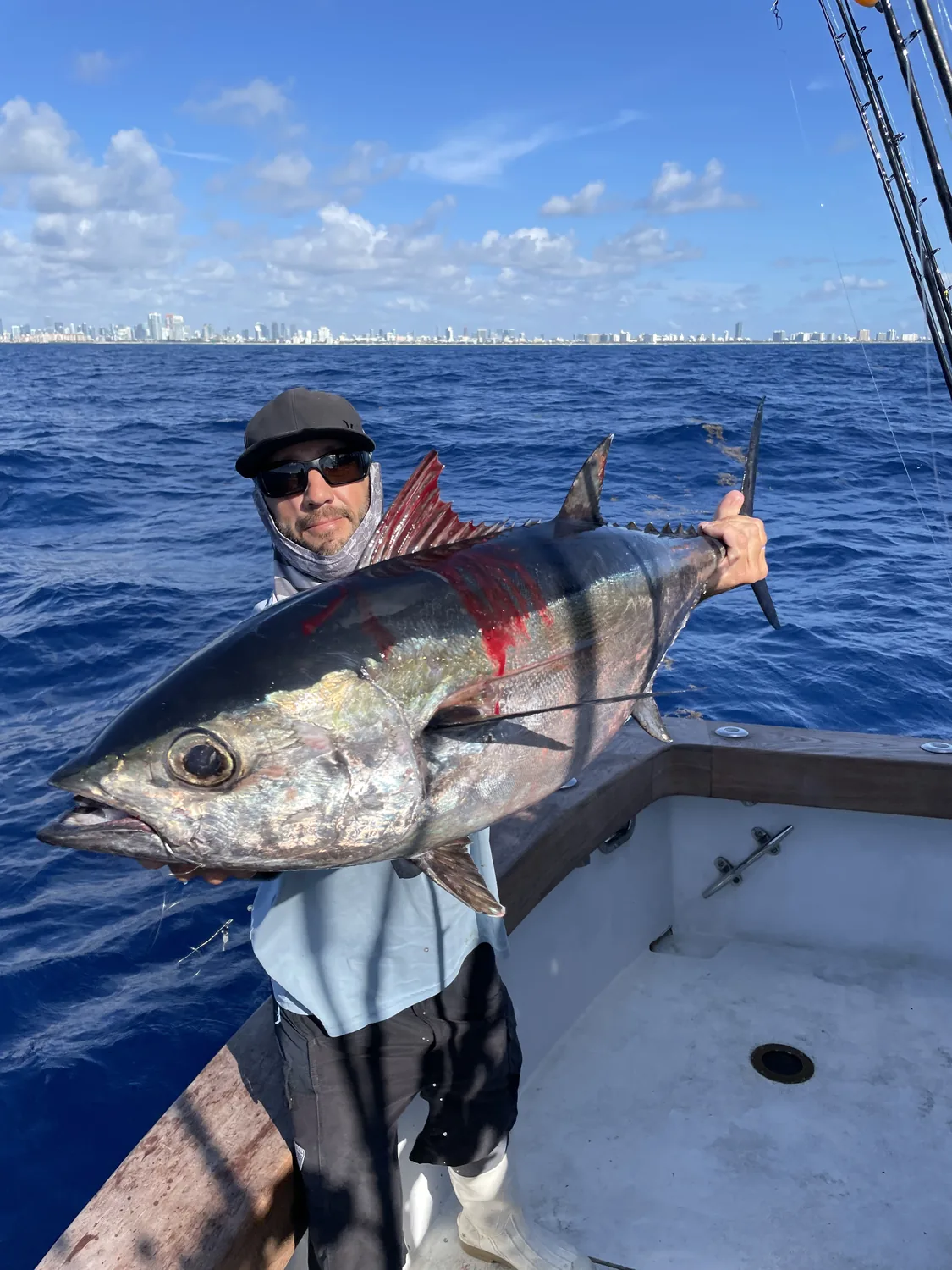
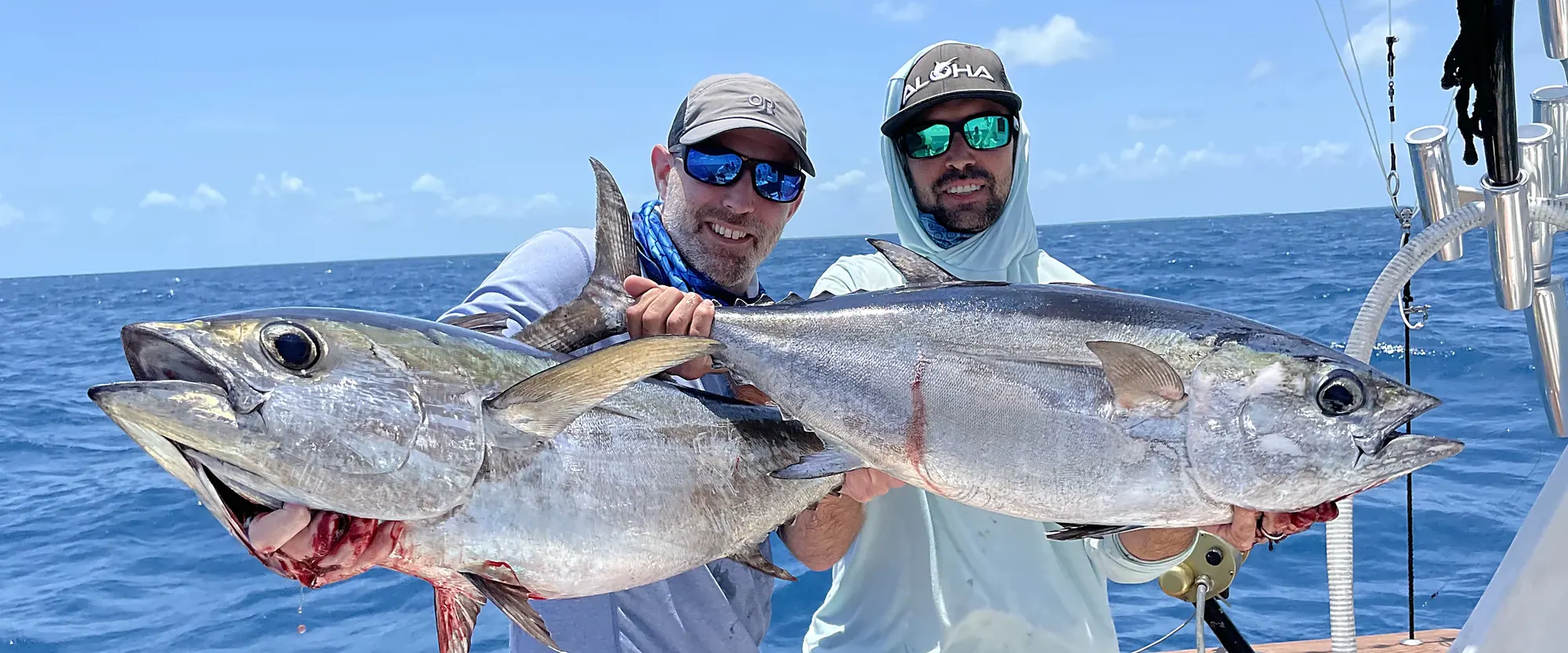
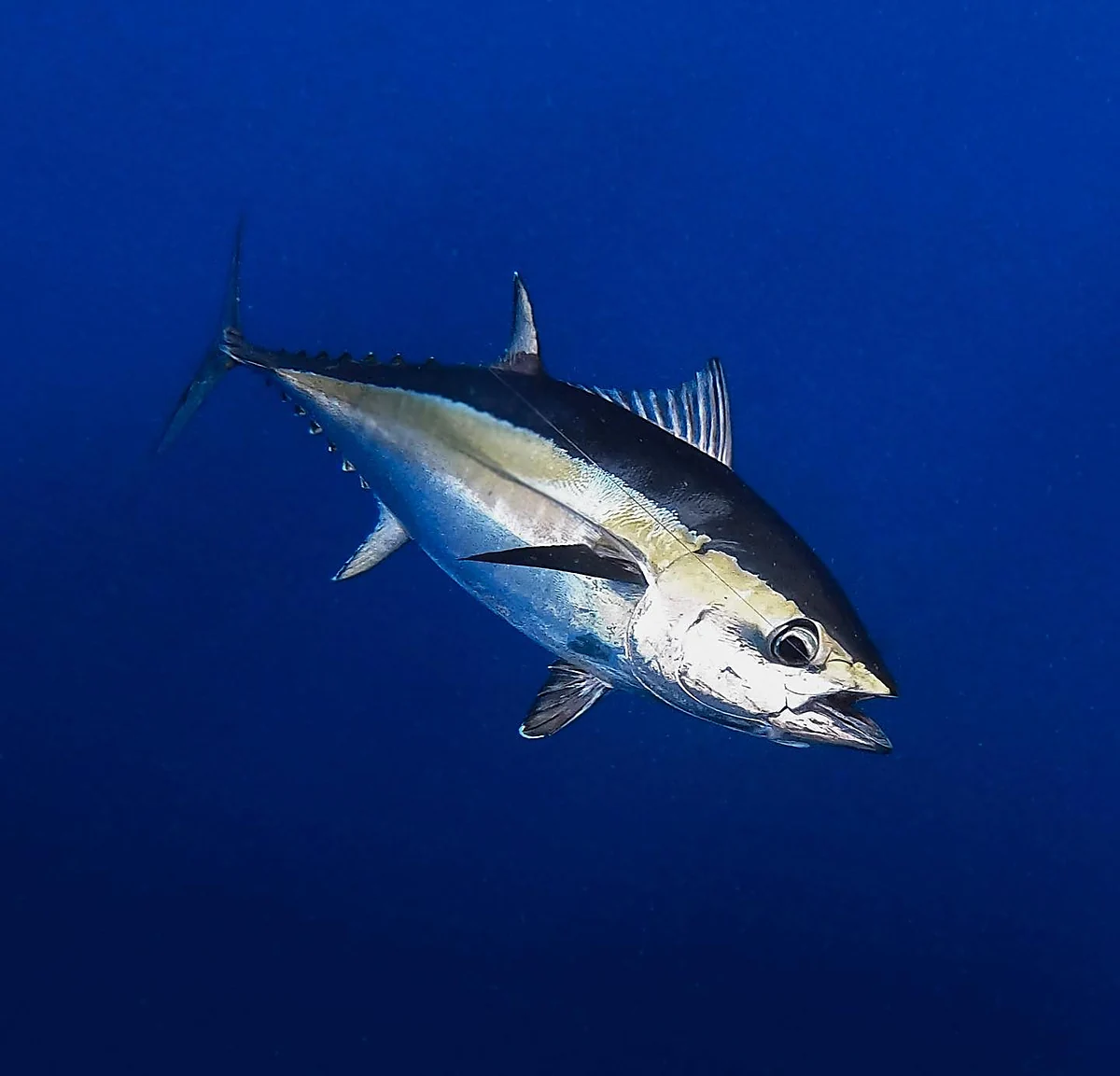
The blackfin tuna is one of the smaller species in the tuna family and the one we catch most off Miami. Pound for pound these are very hard fighting fish, and once you catch enough of them you can usually guess the species before it ever reaches the boat. Blackfin dig deep and make you work, pinwheeling straight up and down like their larger cousins. They often feel heavier than they should and will dog you all the way to the surface. Bonito are the most common false alarm, but their fighting style is different. They are more erratic and swim in figure-eights rather than working straight up and down through the water column. A bonito will occasionally dig deep as well, but they never quite settle into a clean pinwheel. As a blackfin comes up, the first thing you will see is a golden hue flashing in the deeper water. They do not carry much gold, but it is the first tell. By the time the fish is boatside there is no mistaking it for a bonito.
Blackfin have a dark back and look much like bigeye tuna, which run far larger as they age. At the same size the two are nearly identical, and the cleanest way to tell them apart is the fins. A bigeye carries bright, saturated yellow fins and finlets. A blackfin is more muted, with silvery finlets edged and tipped in dark, and often a faint gold hue washing through them rather than the bigeye’s vivid yellow. Both share the large pectoral fins, the big eyes, and a faint bronze stripe down the side. Those big eyes say a lot about how the fish lives. Blackfin feed in low light, preferring early morning and late evening, and they also feed down deep and at night. Their color scheme says a lot about the water they inhabit. Coastal fish tend toward silver with greenish tints. Blackfin wear deeper blacks because they favor the darker, bluer water offshore.
Off Miami they come two ways: footballs most of the year and bigger fish in spring. The size and the season are tied to the method, and the rest of this page breaks down both.
Tuna Fishing in Miami
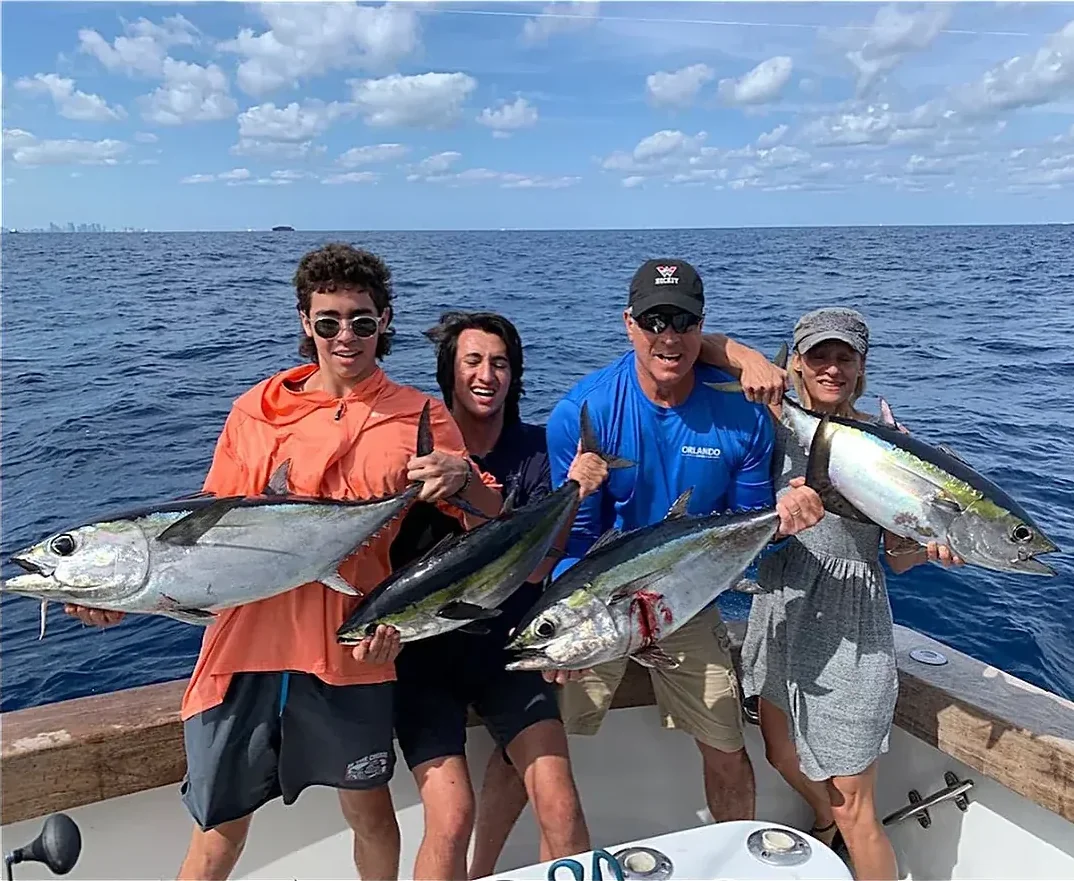
Most of the year, the blackfin off Miami are footballs, and the bigger fish are the spring story. The spring fish can show as early as March and linger into early July, but May and June are the two best months by a clear margin. That is when larger schools push through on their migration and stack up along the edge. We kite fish for blackfin while targeting other springtime species anywhere from 80 to 300 feet deep, depending on how far the current pushes the clean water in. Depth matters less than water quality. The location of the west wall of the Gulf Stream, and the north current and blue water that come with it, is the most important factor and a common denominator among many of our kite fishing targets. When the Stream is in tight we have caught blackfin over 30 pounds in as little as 70 feet. If we had to pick one number, 150 feet with a good north current, some wind, and an outgoing tide creating a clean edge is hard to beat. Overcast days help more than anything, because the low light can stretch an early or late bite into an all-day affair.
The footballs are around all year, and they run a little better in fall, when they seem to favor the slightly cooler water. Even through winter we pick up the odd 15-pound fish off the kites or on the troll. So there is almost always a blackfin in the cards off Miami, but the season you fish decides whether you are after a meat-haul of footballs or a shot at the spring heavyweights.
What We Actually Catch
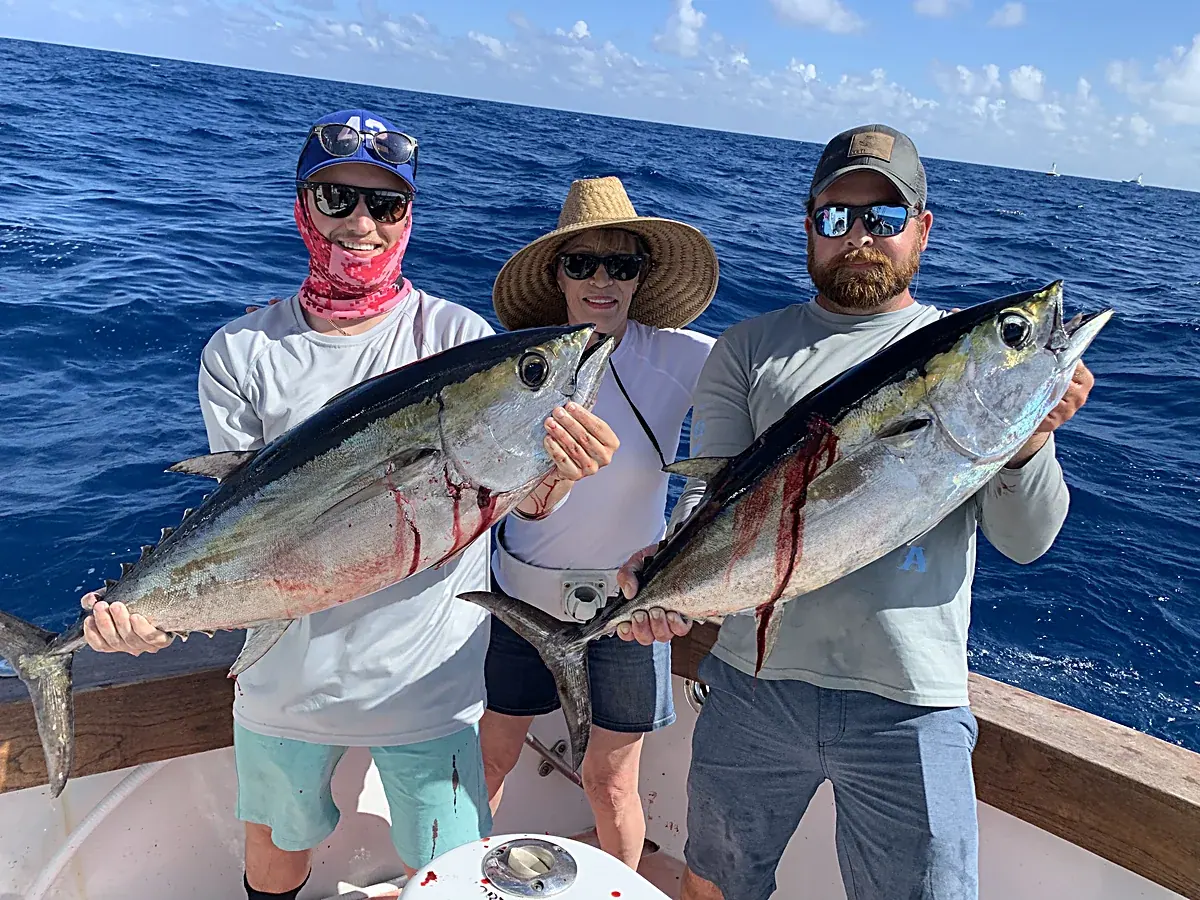
Size tracks the season and the method, and the two are tied together. Most of the year we catch footballs, the smaller schooling fish that run 5 to 10 pounds and come mostly on the troll. They hold on the deeper parts of the drop-off and stack up over the seamounts and humps where the upwelling concentrates bait. The Keys humps are classic for them, and off Miami there is a man-made seamount in about 400 feet off Government Cut, left over from the dredging, that holds a lot of the smaller fish. They migrate as well, and you can find them working under the birds. They fight well above their size and the meat is just as good as the big ones.
The spring fish are a different animal. On the kites in spring they average around 25 pounds, with most fish in the twenties and a realistic range of 15 to 35. Our boat record is 36 pounds. The best way to understand the spread is this: a 15-pound blackfin is a nice fish on the troll but a small one on the kites. Same species, two different fisheries, and the gear and the season tell you which one you are playing.
Where Blackfin Tuna Are Found
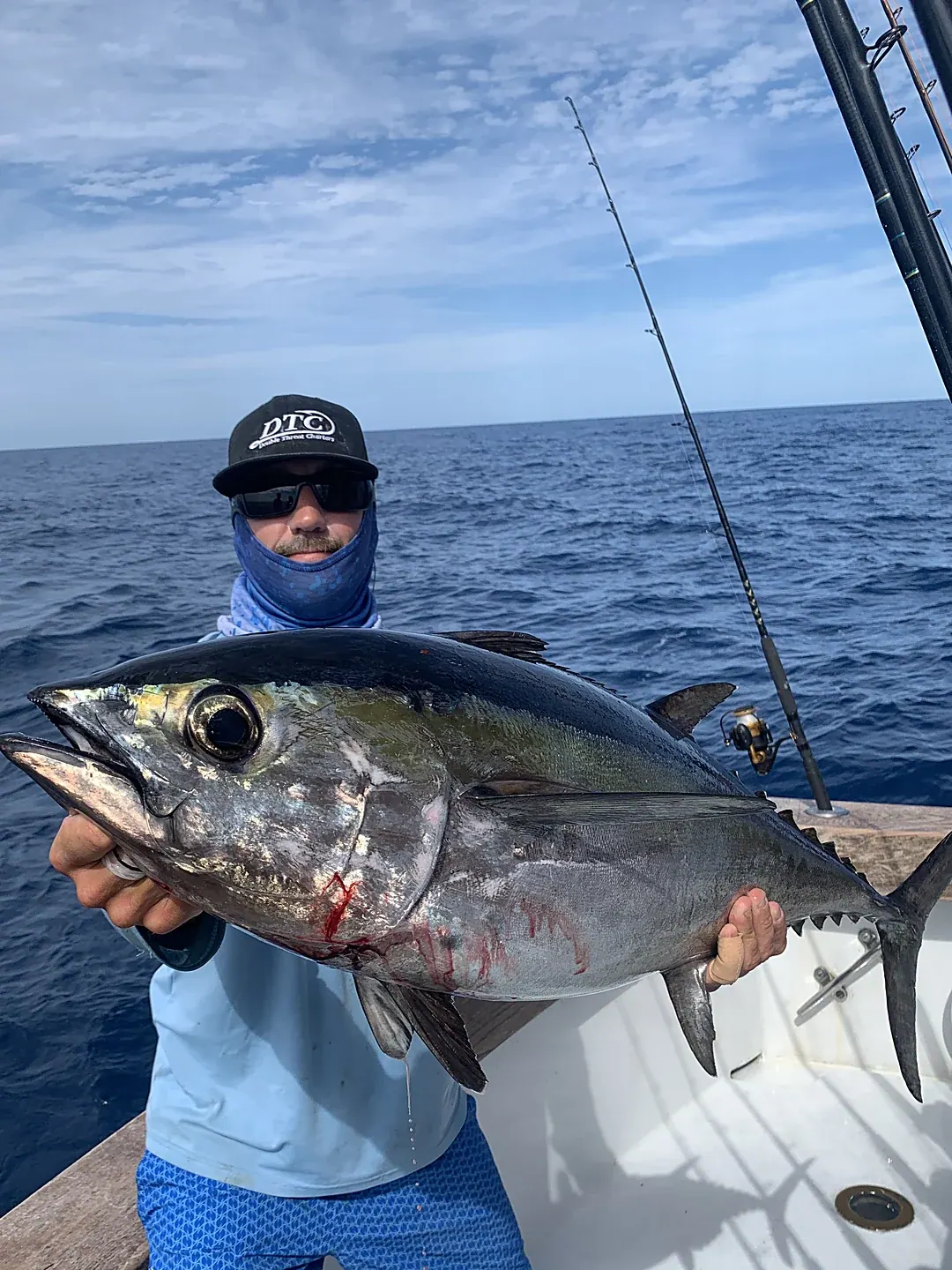
Blackfin have a range well beyond Miami. They are a western Atlantic fish, running from Massachusetts down to Brazil and through the Gulf of Mexico and the Caribbean, and they are caught all over South Florida and the Bahamas. One thing that sets them apart from their bigger cousins is that they do not make the long ocean-crossing migrations a bluefin or yellowfin does. They are more regional, shifting with water temperature and bait rather than ranging across oceans, which is part of why a place like South Florida holds a dependable fishery for them year after year.
Each area has its own version of the fishery. In Key West they have a great one, and a lot of boats target them as they follow the shrimp boats. Off the middle Keys, the humps are classic tuna grounds. In the Bahamas, blackfin are often found under birds and mixed in with yellowfin, and boats run and gun on the schools with live chummers. Over in the Gulf, they are caught around the oil rigs. They are a versatile, wide-ranging fish, but they are appreciated most here in South Florida, where we favor the lighter tackle that makes the most of them.
How to Catch Blackfin Tuna
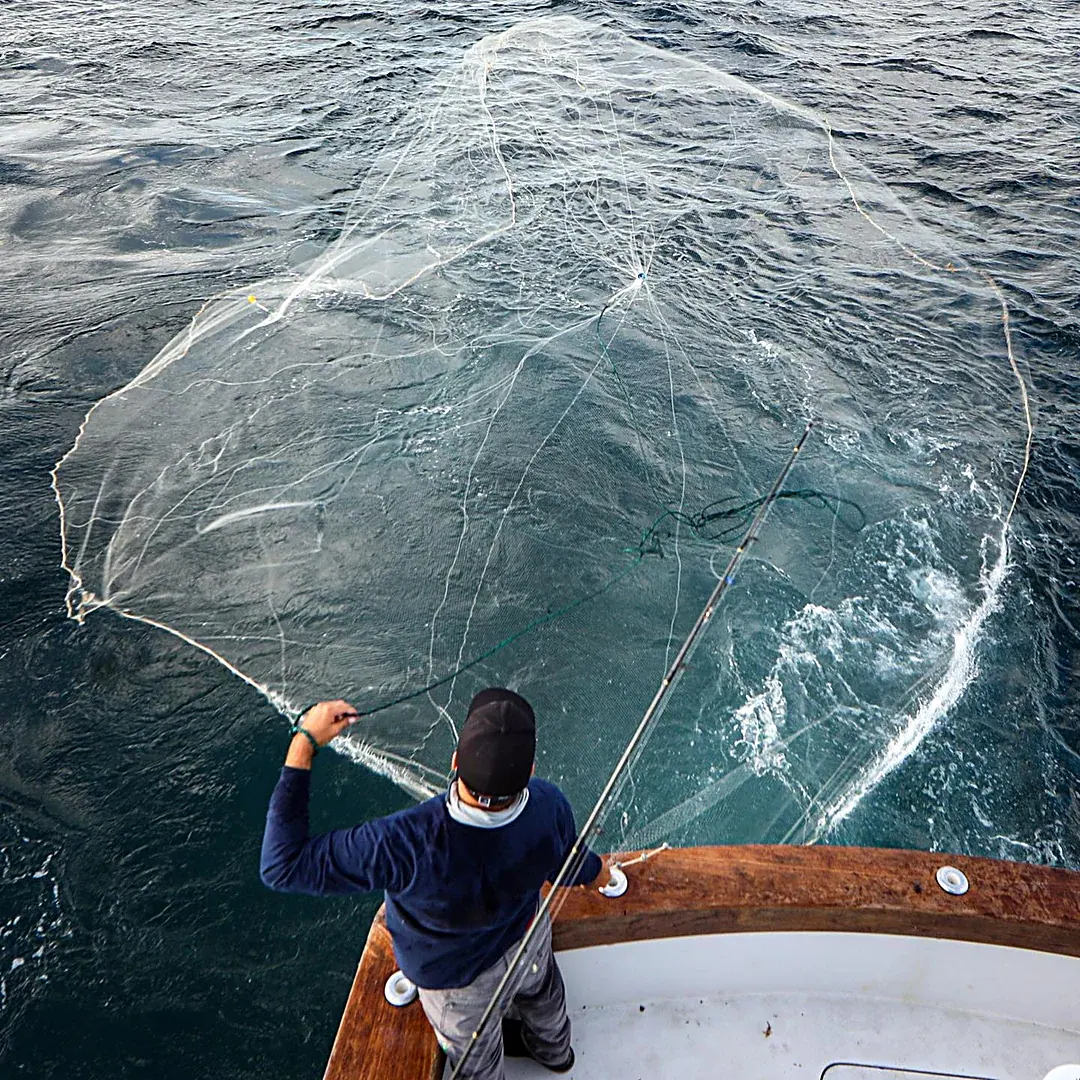
The spring fishery is a live-chum game, and it lives and dies on pilchards. If we have a good supply, we fish a normal kite spread with pilchards on the short lines and start a steady drip of live chum off the back of the boat. That means single pilchards going in continuously, the occasional handful, and every so often an injured one bounced off the gunnel to flutter down. The steady flow is what keeps the fish around, and it works best most of the time. We only switch to steady handfuls when we have bait to burn. Then we watch the spread. When fish start busting or raising on the chum, a big handful fires them up, and we pitch flat lines on spinners, usually a belly-hooked pilchard. Do not over-drop on a blackfin, because they usually swallow the bait quickly and a long drop gives them time to spit it. On a good push we have hooked as many as six blackfin over 25 pounds at the same time doing this. Goggle-eyes work well for blackfin on the kites and earn their keep on their own, especially when we don’t have live chummers, and they still get bit when the tuna come up on the chum. The same live-chumming approach raises sailfish, and we have watched schools of ten or more come up and ball the live chummers behind the boat.
We target blackfin on light tackle because that is where the fun is, and because these fish are sharp-eyed enough that lighter leaders get more bites. We run 30-pound fluorocarbon leaders and scale the hook to the bait and the conditions. A 4/0 light-wire circle hook is right for a pilchard, and we go up to a 6/0 for a bigger bait like a goggle-eye on the kite. A 20-pound class outfit turns a 25-pound blackfin into a real battle and is worth it.
The rest of the year, the footballs keep the action going. We pick them up on the troll with small feathers, or on the planers with strip, while working the drop-off and the humps and covering ground under the birds. It is simpler fishing than the spring chum game, but it puts good meat in the box and the bite can be steady.
How Blackfin Fight
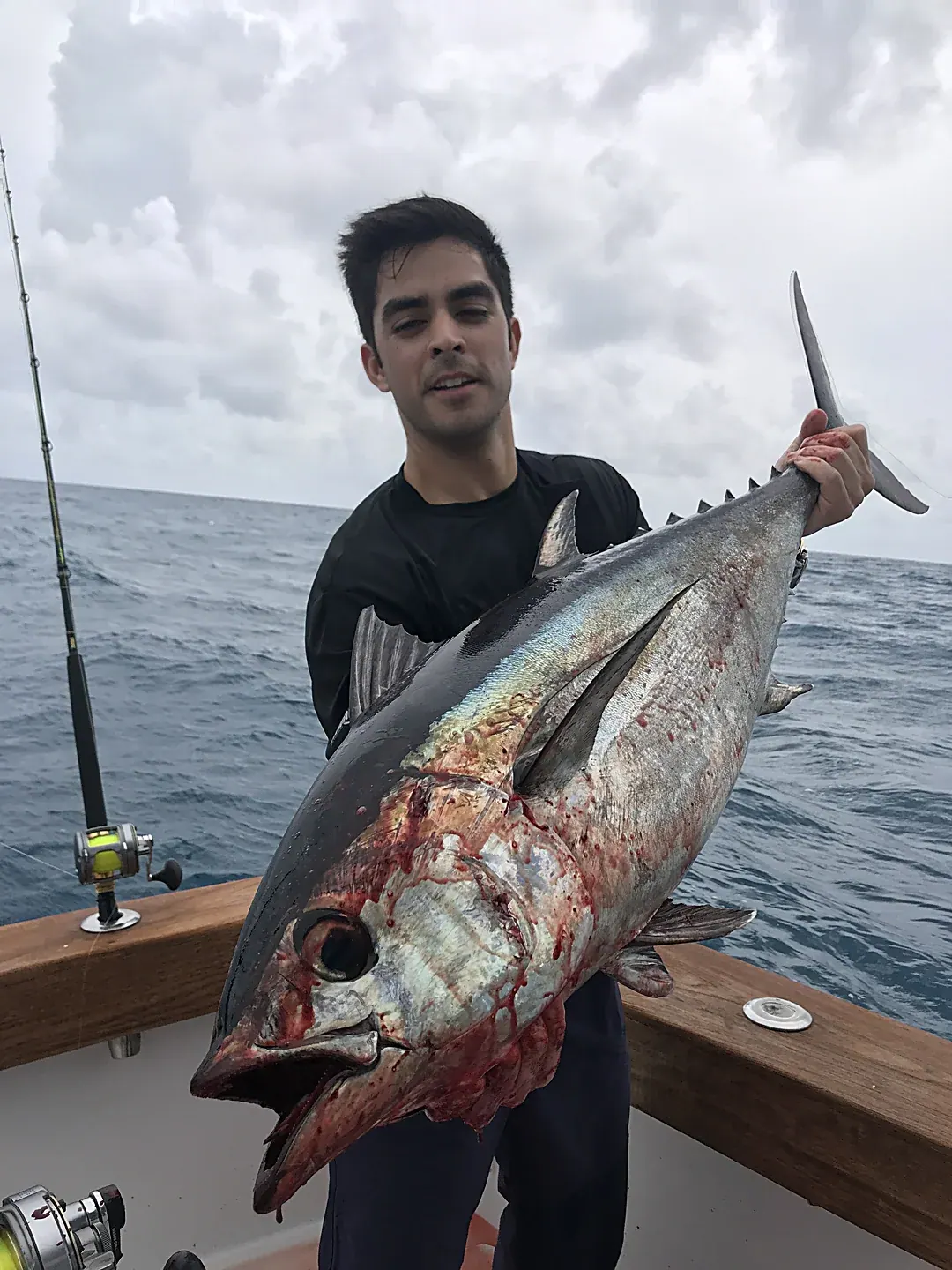
The hookup on the kites is usually an explosive boil, and sometimes they air out and you come tight immediately. Once they are on, they take off on a few good runs and then settle into a pinwheel, working in tight circles down deep. They will occasionally throw one big pinwheel circle and come up top early, but most of the time they settle deeper and make you lift them the hard way. Pound for pound they pull as hard as any tuna their size, which is why a spring fish on 20-pound tackle is a real fight.
Sharks are the biggest obstacle. Light tackle makes it hard to rush a blackfin, and the longer the fight runs the bigger the chance the fish gets eaten before it reaches the boat. So every fight is a balancing act between pressing hard enough to get the fish up and not pulling the hook, with a little luck on top. Losing a good one to a shark at color is part of the game out there, and it stings every time.
Tuna Fishing Charters in Miami
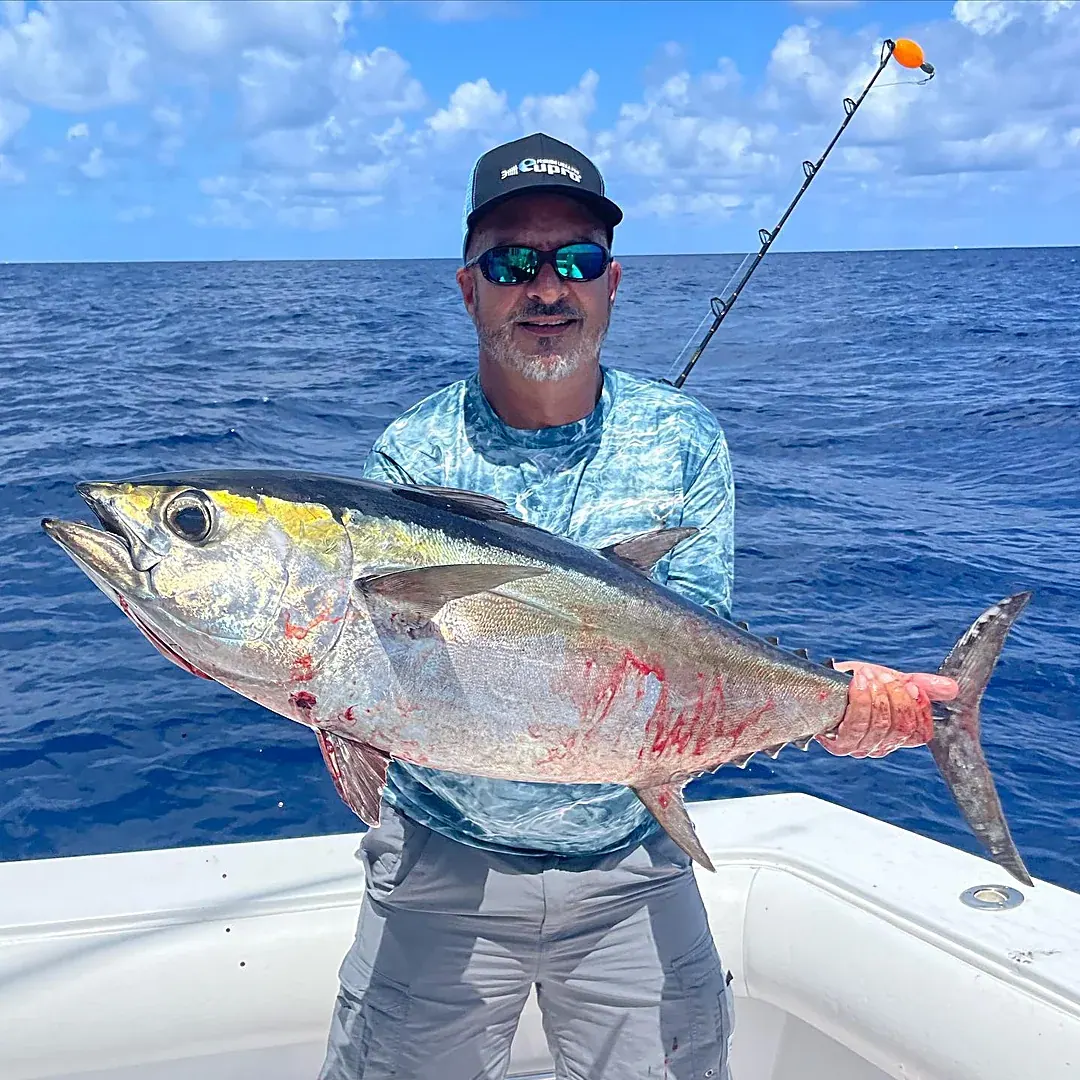
For us, blackfin fishing lives on two tracks. In spring, the kite and live-chum program off the edge is the deliberate way to put a customer on the big fish, and it doubles as some of the best sailfish action of the year. The rest of the year, the footballs come on the troll while we cover ground for the main event, and they are a welcome, reliable part of a deep-sea day. Either way the reward is the same at the dock: firm pink meat that is sushi-quality raw, lightly seared, or grilled, with no shortage to take home and sashimi cut right there if you want it. A football eats every bit as well as a spring heavyweight, so no blackfin goes to waste.