
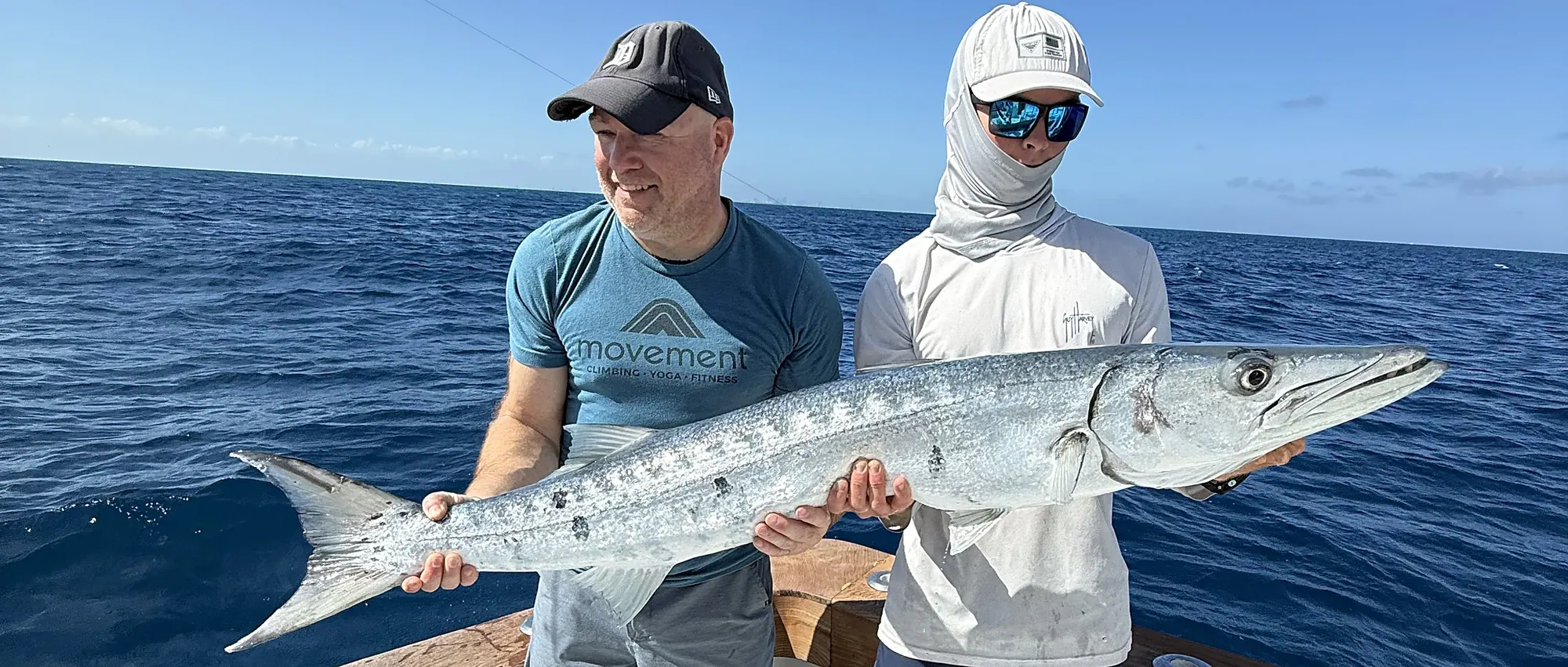
Barracuda are one of the most common fish you will see off Miami, and one of the most misunderstood. We catch them from the shallow flats behind the islands to a few thousand feet of water offshore, which is a wider range than almost anything else that swims here. Most of the time they show up on their own, as a bonus on a trip aimed at something else. When that happens, we are glad to see one or two. They are aggressive, fast, and acrobatic, and they are more fun than their reputation suggests.
Where Barracuda Live Off Miami
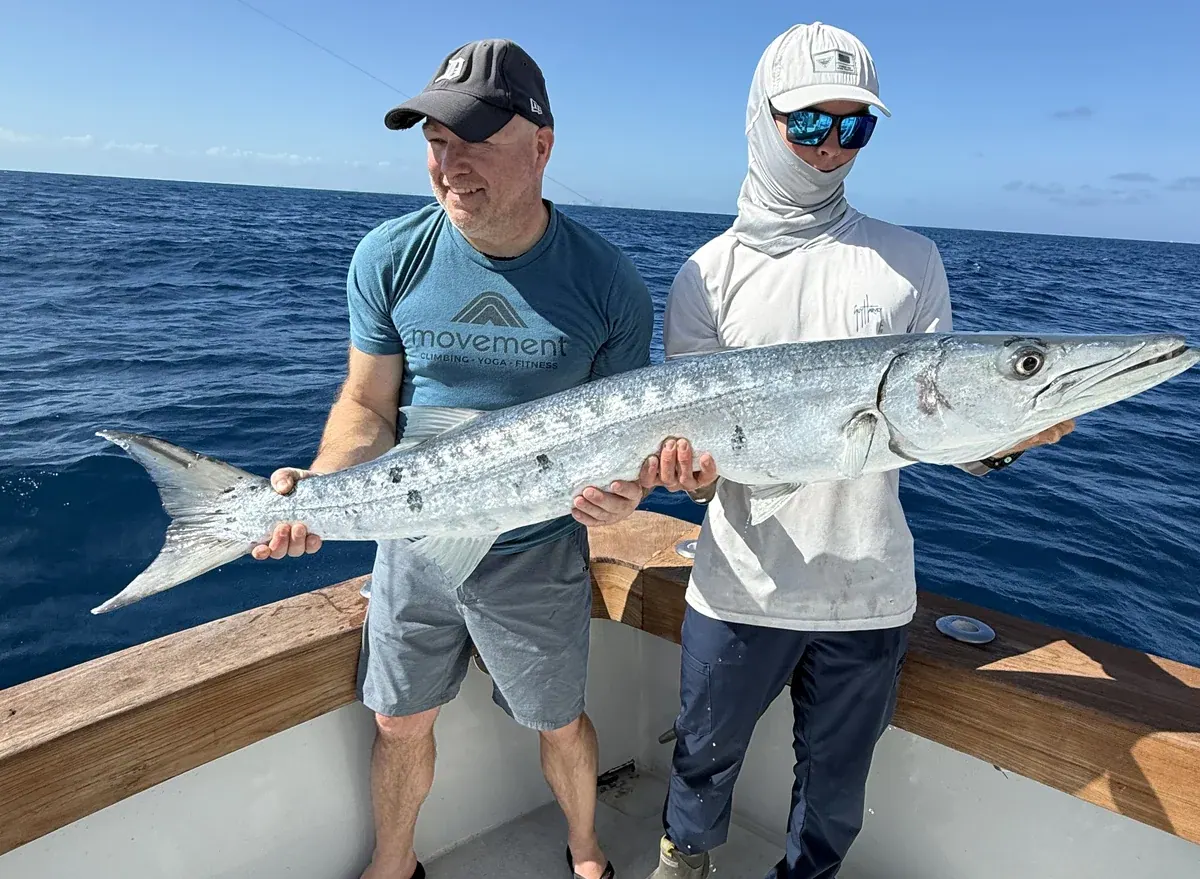
Barracuda have one of the broadest ranges of any fish we encounter. We find them on the shallow grass flats and back in the mangrove creeks of the backcountry, out on the reef, along the deeper edge, and offshore in water thousands of feet deep. Most of ours come from two places. The flats hold them in good numbers, and the reef edge produces them consistently through the year. A fish this adaptable is never far away, which is part of why they turn up on so many different trips.
How Barracuda Fight
Light spinning tackle suits a barracuda best. The strike is fast, the first run is hard, and the fish almost always jumps. A big barracuda pulls real drag and will test gear built for smaller fish. The lighter the tackle, the better the fight, which is why we put barracuda on spinning rods rather than the heavy conventional gear we save for wreck fishing.
How to Catch a Barracuda
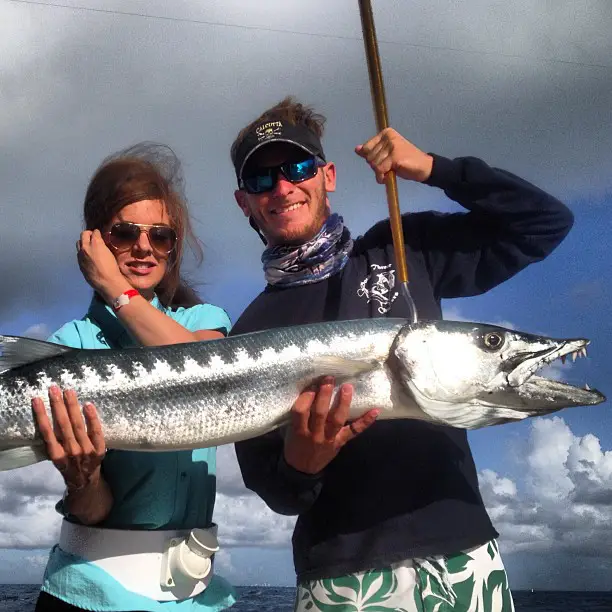
Barracuda are aggressive, and they will eat a wide range of presentations. On the flats, lures work well, and tube lures are a particular favorite. They take spoons and plugs readily too. On the troll along the reef, they will hit feathers, ballyhoo, and just about anything else moving through the water. If you spot one and want a bite that is close to guaranteed, live bait is the surest path. We see barracuda swim up at the bait spots all the time, and a pitched live bait rarely gets refused. For an artificial presentation, pitch a tube lure, a plug, or a hook rigged on wire at a fish you have spotted.
One rule holds across every method: use a wire leader. Barracuda have razor-sharp teeth and slice clean through monofilament, so wire is the difference between landing the fish and watching it leave with your bait.
Barracuda as Bycatch
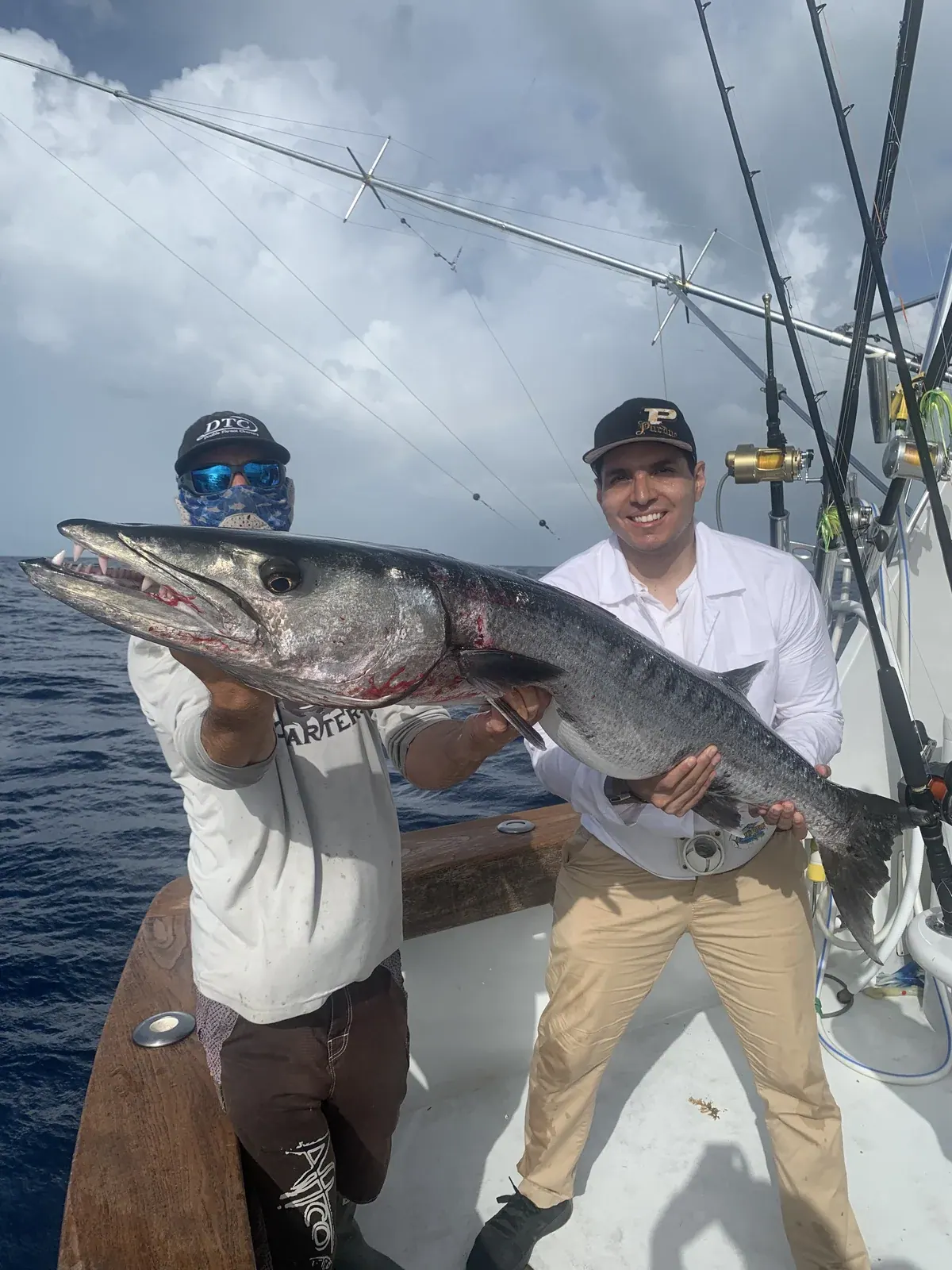
Barracuda have a downside, and it shows up when we are bottom fishing. When we are wreck fishing or planer fishing for meat fish like kingfish and grouper, a barracuda stops being a welcome bonus. They cut baits off before the target fish gets a look, and they come up on the planers in place of the fish we are after. Some days there are a lot of them, and a wreck full of barracuda can tax a meat-fishing trip quickly. The same teeth and aggression that make them fun on light tackle make them costly when we are trying to fill the cooler.
Barracuda Season in Miami
Barracuda are a year-round fish off Miami. We catch them in every month. If our fishing calendar has leaned on the summer and fall, that reflects when we tend to see the most of them, not a true season. A barracuda is a realistic catch on any trip, in any month, which is rare for a Miami species and worth keeping in mind when you plan a trip around something more seasonal.
Can You Eat Barracuda?
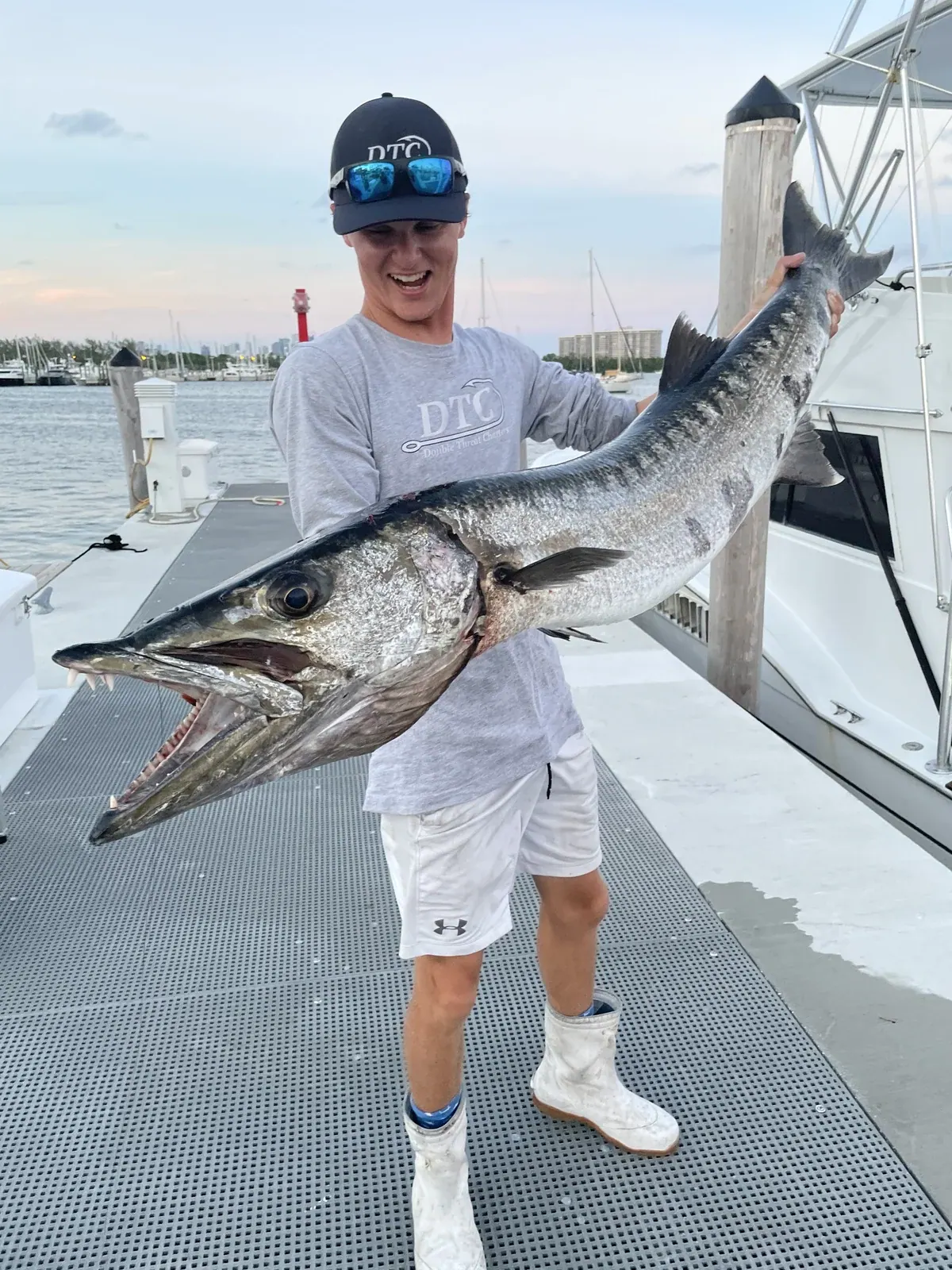
Barracuda are good eating. The meat is clean and white, and plenty of people target them for the table. Two things give anglers pause. The first is the slime. A fresh barracuda carries one of the worst-smelling slime coats of any fish we handle, and while it has nothing to do with the quality of the meat, it puts some people off before they reach the fillet. The second is ciguatera, and that one deserves a straight answer.
Ciguatera is a heat-stable toxin that builds up the reef food chain. It starts in algae, concentrates in the small fish that graze on it, and accumulates in the larger predators that eat those fish. Barracuda eat a lot of reef fish, so they carry real risk. That risk is not unique to barracuda. Any large reef or wreck predator can carry it, including black grouper, African pompano, and cubera snapper. Barracuda carry the reputation, and in our experience the share of barracuda actually affected is overstated relative to that reputation.
You cannot detect the toxin on the boat. It is tasteless, odorless, and colorless, and cooking does not break it down, so there is no way to look at a fillet and know. The old stories, including the one about feeding a scrap to your cat first, are folklore and nothing more. Test kits exist, but they are imperfect and miss lower concentrations, which is why most people decide they are more trouble than they are worth.
Our guidance comes down to judgment. Size is the most reliable lever you have. An older, larger fish has had more time to accumulate toxin, so a smaller barracuda off the flats is a lower-risk choice than a thirty-pounder pulled off a deep wreck. That is risk reduction and not a guarantee. In practice, few of our customers ask to keep a barracuda, and the ones who do generally take our guidance on which fish to keep and which to release.
Barracuda Regulations Off Miami
Florida sets specific barracuda rules for the South Florida counties, including Miami-Dade. The current slot limit as of June 2026 is 15 to 36 inches at the fork, with one fish over 36 inches allowed per person or vessel per day. The bag limit is two fish per person and six per vessel. We keep current with these limits and handle the regulations on every trip, so you do not have to track them yourself.