
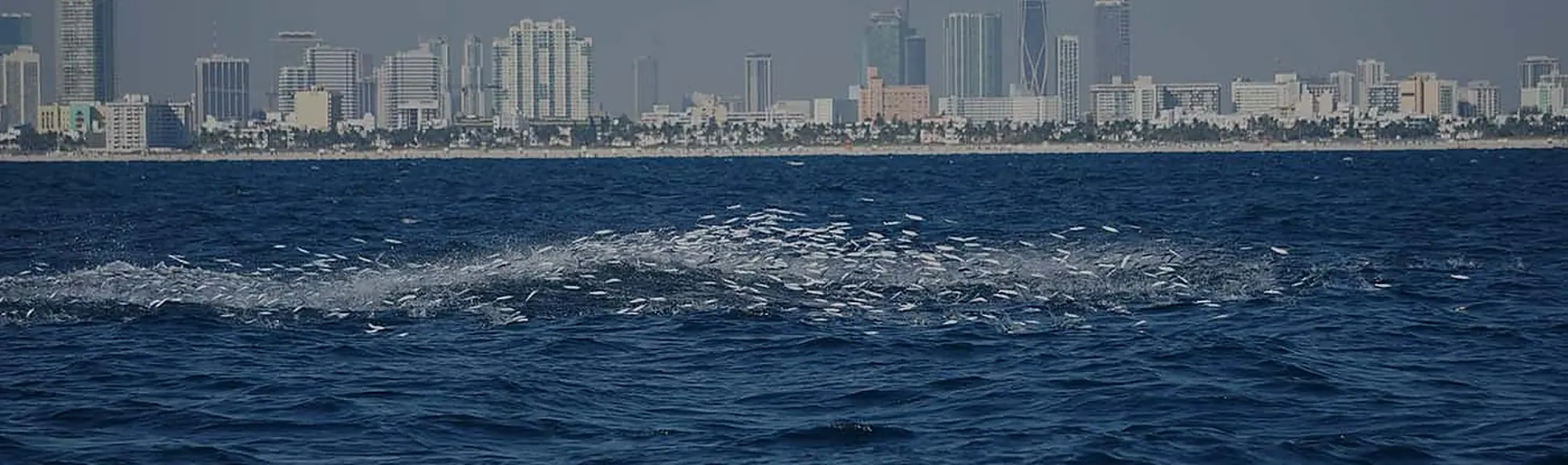
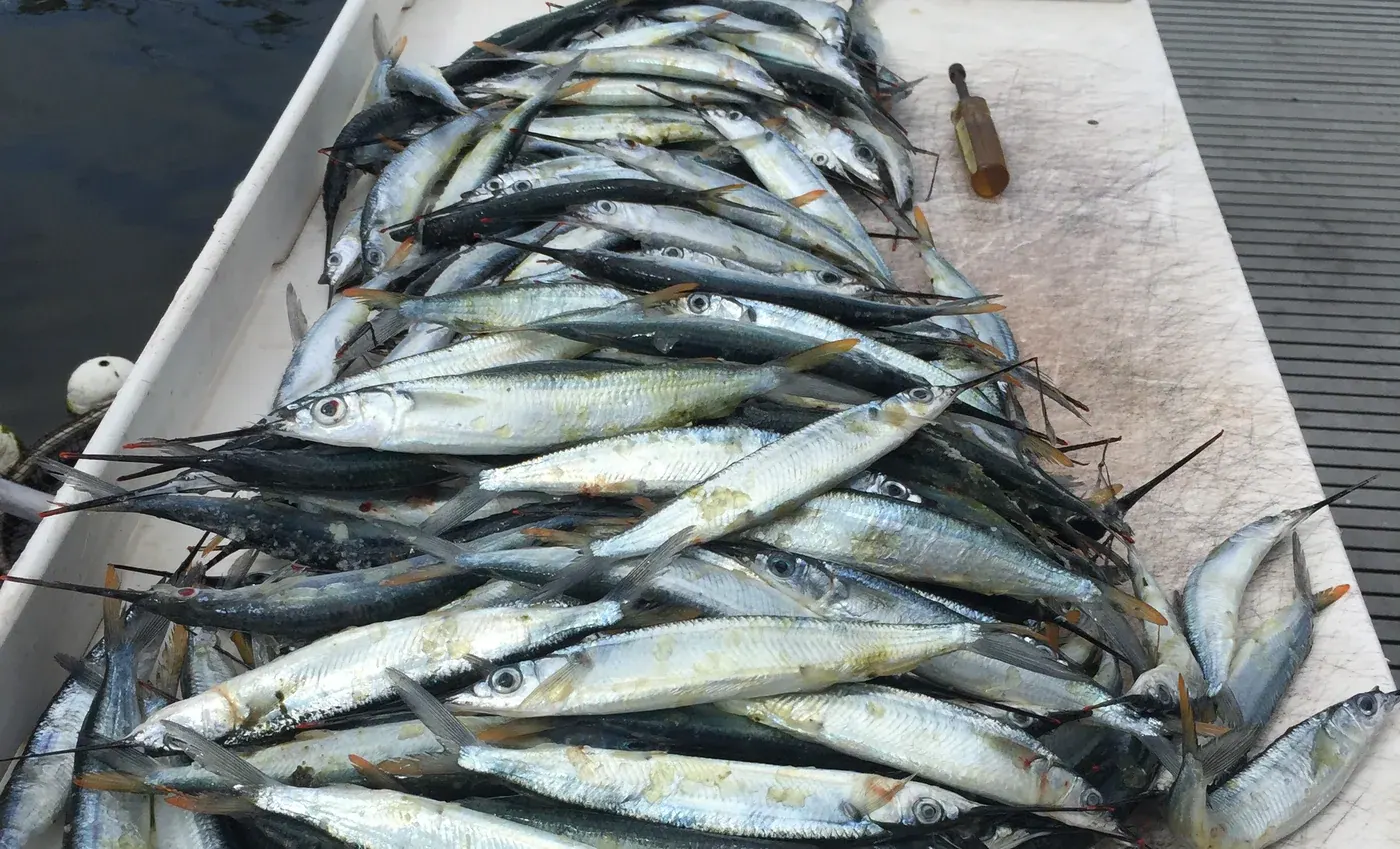
Almost everything that swims off Miami eats ballyhoo. The pelagics that hunt the reef edge see them in large schools constantly, and ballyhoo are an amazing bait dead, alive, and trolled. The bulk of the commercial ballyhoo fishery runs out of the Keys, but you can catch your own, and the only real trouble with the bait is that it is delicate.
Where and When to Find Them
Ballyhoo live on the reef and in the finger channels. They like cleaner water, and they are most commonly caught from Miami down through the Keys. The largest volume comes in the fall, from September through November. You can still catch some in the winter, they get thicker again in the spring, and some are around in the summer, though they taper off during the hottest months. The fall peak matters for more than supply. From October through December, sailfish feed heavily on ballyhoo along the edge of the reef, sometimes pushing shallow into twenty or thirty feet of water chasing large bait balls, and when that happens you want ballyhoo in the livewell to pitch at them.
Chum and Patience
The best way to catch ballyhoo is chumming and being patient. Anchor the boat and start a chum line, because they will follow the chum in close. Once they are behind the boat, you choose your tool based on what the baits are for.
The Cast Net for Volume
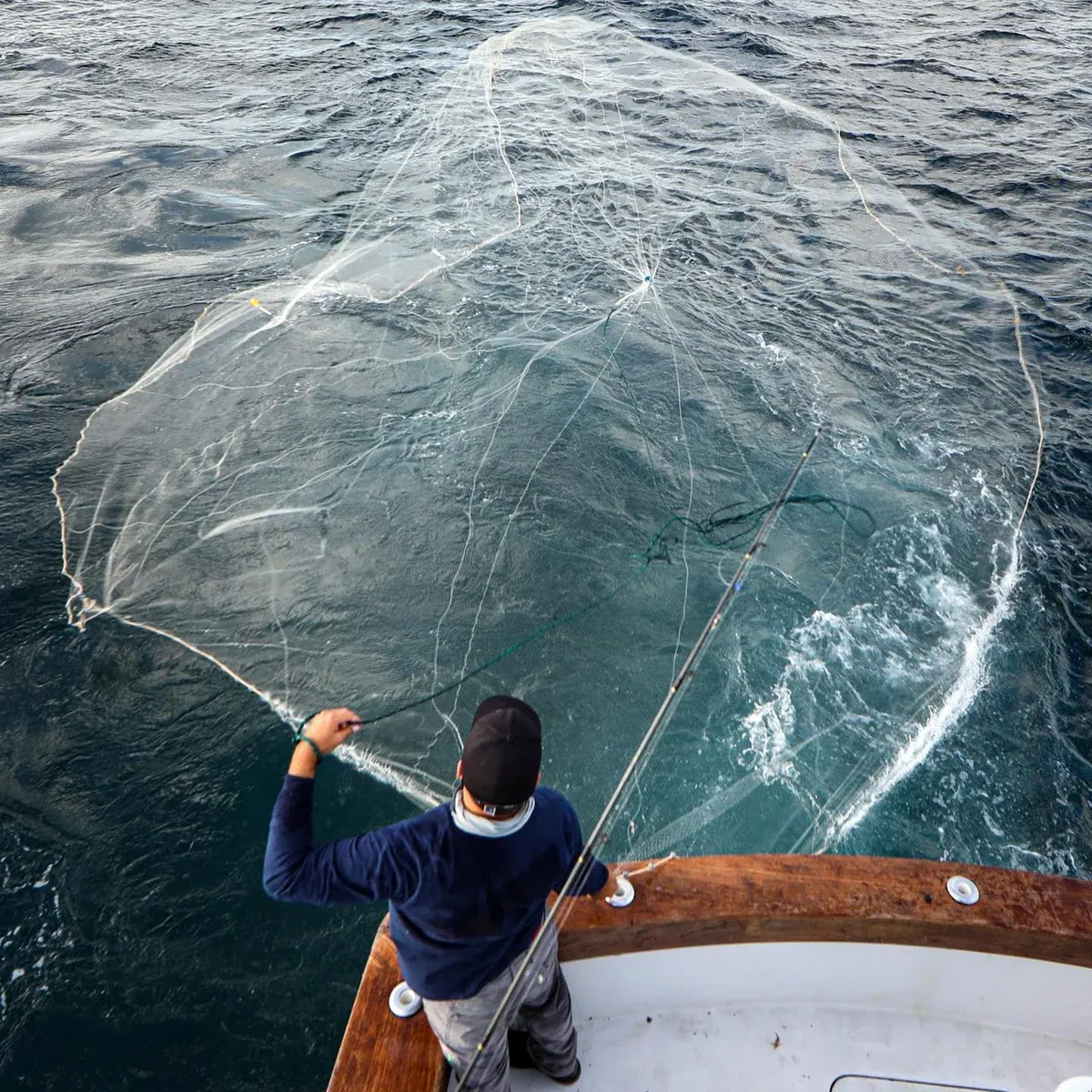
If you want to catch a lot of ballyhoo to freeze for troll baits and bottom baits, throw the cast net. We throw a twelve-footer. You can get away with a net as small as eight feet, and eight to twelve feet is the ideal range for a ballyhoo net. A lighter net is better, because you can throw it a little further back behind the boat. Thinner mesh is safer for the baits: three-eighths-inch works, and once you get into the half-inch range the mesh cuts into the bait pretty badly. If you do cast net them, be very quick about getting them out of the net and into the livewell, and do not let the leads crush them. If you need to fish live ballyhoo caught with the net, you can. Just do not expect them to last more than one cast, or about five minutes, before they should be changed out.
Hook and Line for Live Baits
If you want to fish ballyhoo alive, it is best to catch them on hook and line. We use small gold hooks under a float, tipped with shrimp, squid, or pieces of fish skin — bonito skin works great. Catching them this way takes more time, but the baits stay in much better shape, and you can fish them a lot longer when you set your spread. Cast-netted ballyhoo last even less time once they are fishing, which is the other reason to spend the time with the hooks. Sitting on the anchor catching ballyhoo one at a time is not always viable on a charter. If you are fishing a tournament, it is definitely worth having some.
Keeping and Freezing
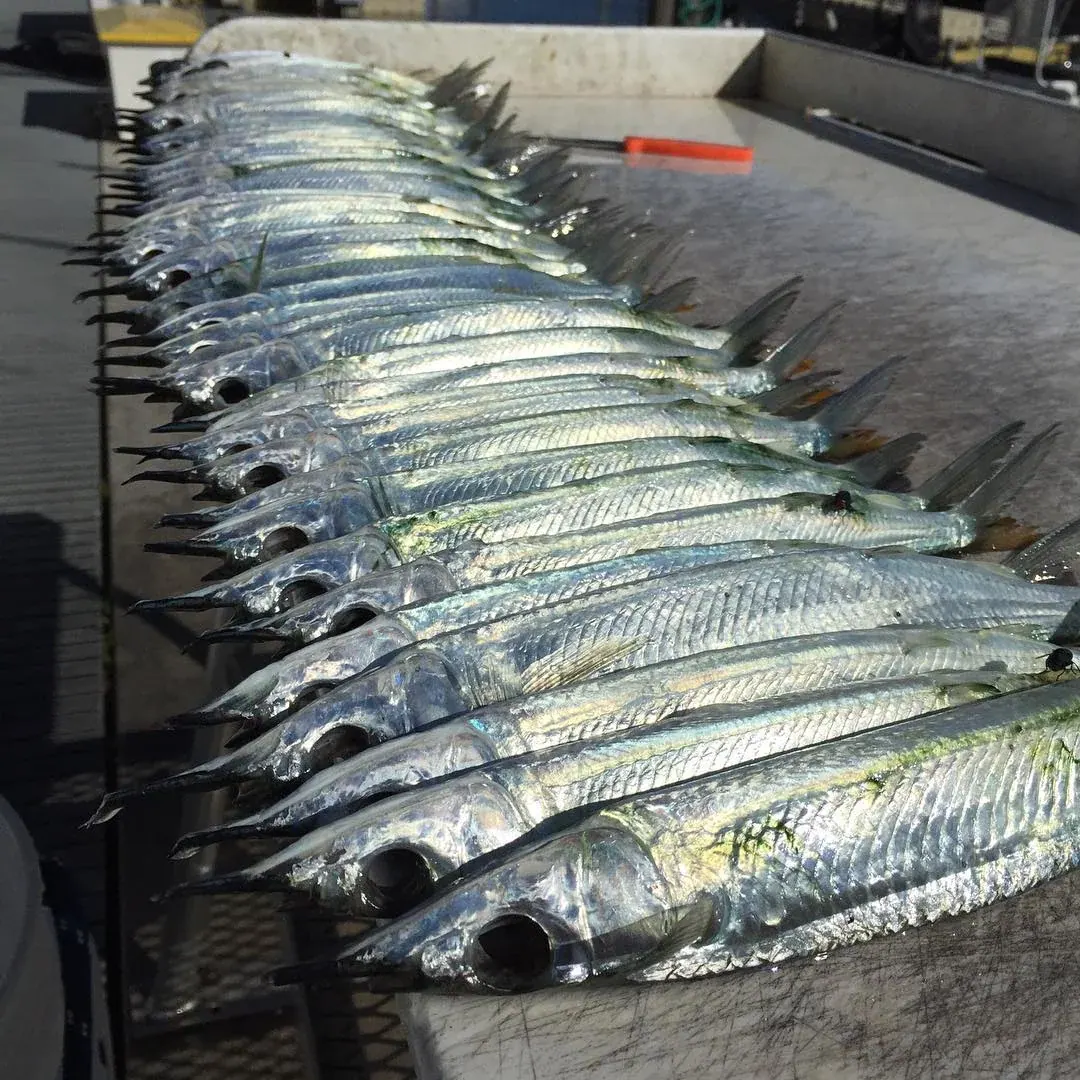
Ballyhoo do not typically go in our bait pens. When we have tried, they get their little noses stuck in the mesh, so if they have to sit in the slip, a poly tank is better than a mesh tank. The normal program is simpler than that — we catch them and use them the same day. For the freezer, we put them straight into a saltwater brine right when we first cast net them. Once we are back at the dock, we will add kosher salt and then vacuum seal them. We catch enough and are out there frequently enough that we try not to buy frozen ballyhoo.
Where Ballyhoo Work
Ballyhoo work great on the bottom, on flatlines, as pitch baits, dead on the troll, and cut into chunks. During fall they are a great match-the-hatch option: when a sailfish is pushing bait up shallow on the reef, a live ballyhoo is exactly what that fish is already eating. Ballyhoo need careful handling in the spread, on light tackle and sometimes light leaders, and a pitched ballyhoo is usually good for one or two casts before it is dead. They are also unique among our baits on days with no wind. When there is not enough breeze to fly a kite, ballyhoo can be very good outrigger baits. Ocean Reef runs a sailfish tournament each year where kite fishing is not allowed, and most of the boats fish ballyhoo and Spanish sardines, with a few threadfin mixed in. The one place ballyhoo are less than ideal is for kite fishing, because they are delicate and quick to be pulled out of the water. If we fly one at all, it fishes the short position only, with the leader set lower so the bait behaves more like a flatline. On the mid or long positions the nose pops out of the water and the ballyhoo flies into the air. If they were hardier, they would be one of the best baits, period.